Yellow angel trumpet flowers (Brugmansia) add dramatic color, heady fragrance, and tropical charm to gardens and containers. This guide highlights five standout yellow varieties and seeds, explaining how to grow and care for Brugmansias in American conditions. Learn which option fits your space, climate, and gardening goals, from compact dwarfs to tall, flowering shrubs that brighten yards through the warm season.
| Product | Type | Notes |
|---|---|---|
| Angels Trumpet Seeds, Brugmansia Suaveolens, Yellow Flowering Tropical Plant, 10 Pack | Seeds | Yellow pendulous blooms; full sun to partial shade; well-draining soil |
| Daybreak – Brugmansia Hybrid Angels Trumpet | Live Plant | Bright lemon-yellow flowers; large upright shrub; strong night fragrance |
| Versicolor – Brugmansia Hybrid Angels Trumpet | Live Plant | Color-changing blooms from yellow to white to peach; fragrant nights |
| Angels Gold Face Brugmansia Live Plant | Live Plant | Smaller, dense, double-yellow blossoms; reliable bloomer |
| Mango Crush – Brugmansia Hybrid Angels Trumpet | Live Plant | Pastel apricot-yellow to mango-orange; long-standing fragrance |
These options span seeds and live plants, enabling gardeners to choose the starting point that best matches their experience, space, and climate. Each selection thrives in bright light, appreciates well-drained soil, and benefits from regular watering and occasional pruning to encourage branching and more blooms. Read on to compare growth habits, care needs, and planting considerations for each yellow Brugmansia variety.
Angels Trumpet Seeds In Bright Yellow
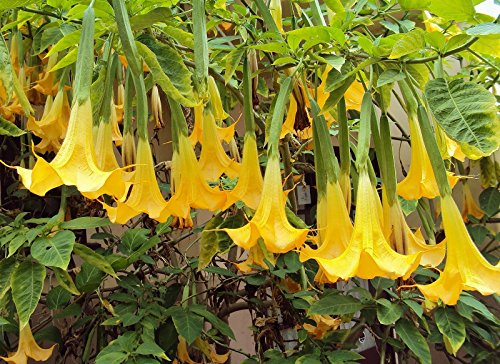
Angels Trumpet Seeds (Brugmansia suaveolens) with yellow flowers offer a flexible entry into Brugmansia cultivation. When started from seed, gardeners should expect a longer timeline to bloom, but seed-grown plants can become large, tropical shrubs with vivid yellow tubular blooms. Growing conditions favor full sun to partial shade and well-draining soil. Regular watering supports steady growth and robust flowering as plants mature. This option provides an economical way to establish a yellow Brugmansia in landscapes or containers, with the potential to reach a mature size that enhances garden structure. Monitor for frost risks in cooler regions and protect or overwinter indoors if temperatures drop dramatically. Maintenance includes light pruning to promote branching and routine fertilization to support bloom production.
Daybreak Brugmansia Hybrid Angelflower

Daybreak is a Brugmansia Hybrid recognized for its upright growth and large, fragrant yellow flowers. Maturing into a substantial tropical shrub around 10–12 feet tall, this cultivar provides a bold canopy and a striking contrast with dark green foliage. The flowers hang at a gentle angle and release a citrus-like fragrance at night, attracting nocturnal pollinators. Ideal planting locations include dappled afternoon shade with access to bright indirect light for 4–6 hours daily. Soils should be well-draining and rich in organic matter. Provide consistent moisture but avoid waterlogged conditions. Regular pruning supporting branching helps maintain size and encourages more abundant blooms. Fertilize with a slow-release bloom-boosting formula in spring and protect from frost in colder regions.
Versicolor Brugmansia Hybrid With Yellow To White Blooms

Versicolor is a historic Brugmansia hybrid famed for its color-changing blossoms as they mature from yellow to white to peach. The large, fragrant trumpet blooms hang at about a 30° angle, showcasing a contrasting white throat. This variety thrives in dappled afternoon shade with bright, indirect light for 4–6 hours daily. Like other Brugmansias, Versicolor benefits from well-draining soil rich in organic matter and steady moisture. Prune lightly to encourage branching and rebloom through the growing season. Fertilize in spring with a bloom-boosting formula and guard against frost to sustain year-after-year flowering in appropriate climates.
Angels Gold Face Brugmansia: Golden Fragrance And Petite Form

Angels Gold Face is a compact Brugmansia cubensis hybrid with a dense, self-branching habit and reliable blooms. The blossoms are pale pastel yellow that deepens to soft orange as they age, offering a warm, inviting color palette. This cultivar reaches about 6–8 feet in height, making it suitable for smaller gardens, container displays, or as an understory feature in larger landscapes. Plant in partial shade with fertile, well-draining soil. Provide ample irrigation while allowing the soil to dry slightly between waterings to avoid leggy growth. Like other Brugmansias, support with staking if needed and prune after flowering to maintain shape and encourage continued bloom. Fertilize in spring and protect from frost in colder regions.
Mango Crush Brugmansia: Apricot To Mango Orange Fragrance

Mango Crush offers a dramatic color progression from pastel apricot-yellow to mango-orange, with a long, nodding bloom form and a nocturnal fragrance reminiscent of tropical nights. This hybrid Brugmansia can reach around 12 feet in height, with a full, branching habit that creates a lush canopy. Plant in dappled afternoon shade to safeguard against heat stress while providing enough light for robust flowering. Use well-draining soil high in organic matter and water consistently to prevent drought stress. Pruning after flowering helps manage size and promotes additional bloom cycles. Fertilize in spring with a bloom-boosting product and protect from frost in cooler climates.
Buying Guide: Key Purchase Considerations And Comparisons
- Light and climate: Brugmansias prefer bright light with some shade in hottest regions. They thrive in USDA zones where nights stay above freezing for extended periods. In cooler areas, consider overwintering indoors or choosing frost-tliable varieties.
- Plant type and size: Seed-based options are more economical but slower to bloom and may produce variable plants. Live plants offer immediate impact but require transplanting and careful handling. Size matters for container gardening vs. in-ground beds.
- Flower color range: All listed options emphasize yellow hues. Some varieties change color with age (Versicolor), while others maintain a consistent shade (Daybreak, Mango Crush). Consider whether you want uniform color or color-shifting displays.
- Fragrance and bloom cycle: All Brugmansias are known for nocturnal fragrance. Bloom frequency depends on climate, care, and pruning. Some cultivars produce multiple bloom cycles per season; others may have longer intervals between flushes.
- Maintenance needs: Regular watering, well-draining soil, and annual feeding support abundant blooms. Pruning after flowering encourages branching and helps control size. Frost protection and mulch are essential in non-tropical regions.
- Toxicity and handling: Brugmansias are toxic if ingested and may irritate skin. Wear gloves when handling and keep away from pets and small children. Use protective measures when planting, especially in high-traffic gardens.
- Container suitability: Dwarf or starter-size plants are ideal for containers and balconies, with adjustments to watering frequency and soil mix. Ensure containers have drainage and are large enough to support mature root systems.
- Propagation options: Seeds offer an affordable route to growth, but grafting or cuttings can produce more predictable results for gardeners seeking specific traits or color stability.
All five selections offer striking yellow tones and night-blooming fragrance, making them ideal focal points in sun-drenched borders, entryways, or tropical-inspired container displays. While growing Brugmansias, gardeners should plan for seasonal maintenance, winter protection in cooler climates, and responsible handling due to their toxicity. With thoughtful placement and care, yellow angel trumpet flowers can provide a dramatic, fragrant centerpiece from spring through late summer and beyond in suitable zones.