Answering the query for reliable wireless soil moisture sensors that support irrigation control, this guide highlights five practical options. These devices help you monitor soil moisture in real time, trigger alerts, and automate watering in homes, patios, and gardens. Best for: hobbyists who want easy setup, mid-sized gardens needing remote access, and tech-minded gardeners seeking app-backed monitoring. The table below compares core features to aid quick decisions.
| Product | Use Case | Key Benefit |
|---|---|---|
| RAINPOINT Smart Digital Wireless Plant Moisture Meter (WiFi Hub) | Indoor/outdoor, remote monitoring | Real-time readings and alerts via RainPoint Home App |
| RAINPOINT Smart Digital Wireless Plant Moisture Meter (Two-Pack) | Two plants or zones, easy monthly monitoring | LCD display plus remote monitoring when paired with hub |
| NexusLab Wireless Soil Moisture Meter (3-Probe, 230 ft) | Larger gardens, multi-zone tracking | Expandable to 12 zones with broad RF range |
| Eden 25417 Wireless Soil Moisture Sensor | Bluetooth-based timer integration for simple setups | Bluetooth-based soil monitoring linked to timers |
| THIRDREALITY Smart Soil Moisture Sensor Gen2 (3-Pack) | Zigbee-based smart irrigation with hubs | Capacitive moisture sensing with stable data |
RAINPOINT Smart Digital Wireless Plant Moisture Meter with WiFi Hub

The device offers real-time soil moisture readings and supports remote monitoring via a 2.4 GHz Wi‑Fi hub. It works as a standalone meter or pairable with a RainPoint Wi‑Fi hub to enable app-based alerts and data logging. Best for indoor houseplants or small outdoor planters where you want immediate moisture insights and quick notification setup.
Who it’s best for: homeowners who prefer app-based control, and gardeners who want real-time irrigation nudges. Limitation: requires a compatible RainPoint Wi‑Fi hub for remote features.
RAINPOINT Smart Digital Wireless Plant Moisture Meter (Two-Pack)

This two-pack includes capacitive probes and a leave-in design for continuous soil moisture monitoring. It supports manual readings on the LCD and remote monitoring via a compatible Wi‑Fi hub. Best for gardeners with multiple plants or separate zones who want consistent moisture data across devices.
Who it’s best for: multi-plant setups or households wanting backup meters. Limitation: remote features rely on a compatible RainPoint hub (sold separately).
Nexuslab Wireless Soil Moisture Meter with LCD Receiver (3-Probe)
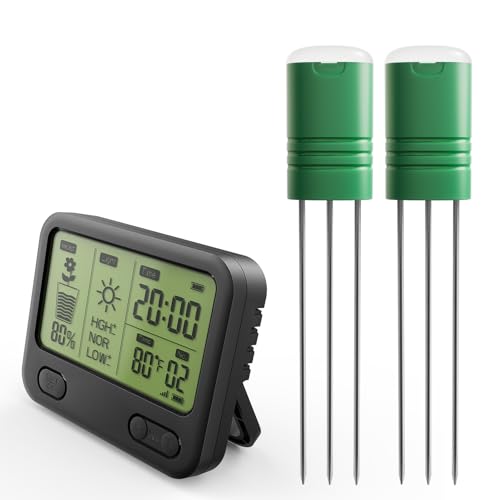
Equipped with three probes and a long-range RF connection, NexusLab enables expanded monitoring across larger spaces. It uses Time Domain Reflectometry (TDR) sensing for precise moisture readings and supports expansion up to 12 zones. Best for larger gardens or multiple beds where accuracy and range matter.
Who it’s best for: serious gardeners needing scalable, precise soil data. Limitation: range and setup complexity may be higher if expanding beyond the initial two sensors.
Eden 25417 Wireless Soil Moisture Sensor
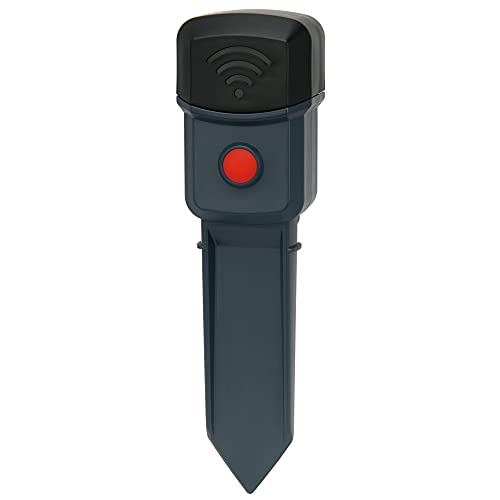
Designed for Bluetooth timer integrations, Eden’s sensor monitors soil moisture and links to Eden Bluetooth timers for simple automation. Best for users who want a Bluetooth-based, timer-driven irrigation setup in smaller areas or controlled environments.
Who it’s best for: users seeking straightforward Bluetooth automation with timer compatibility. Limitation: relies on Bluetooth timers and compatible ecosystems for full automation.
THIRDREALITY Smart Soil Moisture Sensor Gen2 (3-Pack)
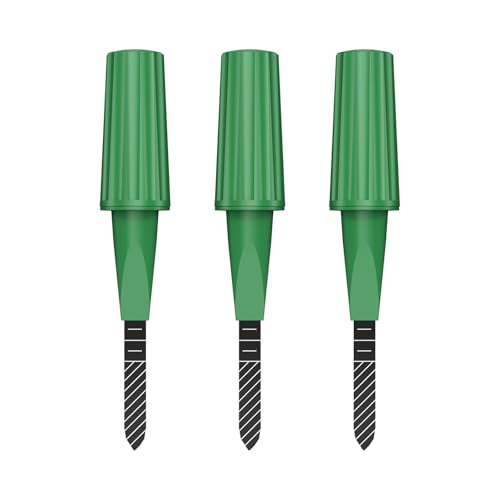
The Gen2 sensors use capacitive moisture monitoring for stability across soil types and require a Zigbee hub. This pack is optimized for stronger wireless performance and is compatible with hubs and ecosystems like SmartThings, Hubitat, Home Assistant, and more. Best for those using Zigbee-enabled smart homes seeking reliable irrigation data.
Who it’s best for: Zigbee-based smart-home users who want durable, stable readings. Limitation: requires a Zigbee hub to operate and synchronize with other devices.
Buying Guide
What should you consider when choosing a wireless soil moisture sensor for irrigation?
- Connectivity: Decide between Wi‑Fi, Zigbee, RF, or Bluetooth based on your existing smart home setup and desired remote access.
- Number of zones: If you manage multiple beds, pots, or an entire garden, choose a system that scales to multiple sensors.
- Sensor type and accuracy: Capacitive sensors tend to be more durable across soil types; TDR-based sensing offers high accuracy but may require compatible ecosystems.
- Remote monitoring: If you want app alerts and historical data, ensure the device supports a dedicated app or hub with cloud access.
- Durability and environment: Look for IP ratings or weather resistance for outdoor use and protection against heavy watering.
- Ease of setup: Some systems require hubs or gateways; others are standalone with direct Bluetooth or Wi‑Fi access. Consider your comfort level with tech.
- Integration with irrigation: If you want automated watering, verify compatibility with your sprinkler timer or irrigation controller and whether the sensor can trigger actions.
Practical considerations
- Placement: Insert probes deeply to the root zone but leave some sensor exposed for accurate readings. Avoid placing near heat sources or direct sun.
- Maintenance: Check probes for buildup or corrosion; replace batteries per manufacturer recommendations and verify firmware updates if available.
- Data interpretation: Use moisture thresholds appropriate for each plant type to avoid overwatering or underwatering.
Quick comparison by scenario
- Small indoor collection of houseplants: RAINPOINT with Wi‑Fi hub or Eden Bluetooth timer integration.
- Larger patio garden or raised beds: NexusLab with expandable zones and long-range RF.
- Zigbee-enabled smart home: THIRDREALITY Gen2 provides stable readings across multiple beds with hub support.
FAQ
- Do these sensors require a monthly subscription? Most do not; some require a hub or app for remote features, but ongoing fees are typically not needed.
- Can I use these sensors without internet access? Standalone meters work offline; remote monitoring usually requires a compatible hub or app with internet access.
- Are these sensors waterproof for outdoor use? Some are designed for outdoor use with IP ratings or weather protection; check each model’s specs.
- Is a Zigbee hub required for all options? Not for Wi‑Fi or Bluetooth models; Zigbee options require a compatible hub to function.
- Can multiple sensors share the same irrigation controller? Many systems support multiple sensors feeding a central app or hub; verify the exact limit for each model.