Whiteflies are a common troublemaker for indoor and outdoor plants, often signaling broader pest problems. The following select products are designed to target whiteflies and related pests, while protecting plant health and minimizing residue. This guide highlights five accessible options with organic or plant-safe formulations, explaining how each works, how to apply, and what to consider when choosing the right treatment for your garden or houseplants.
Summary of Selected Products
| Product | Brand | Key Benefit |
|---|---|---|
| Organic Insecticide & Fungicide | ARBER | Concentrate that disrupts pest life cycles and fights powdery mildew; versatile for foliage and soil zones |
| Insect Killing Soap Concentrate | Safer | Kills soft-bodied pests including whiteflies; OMRI-listed for organic use |
| Organic Insecticide Liquid Concentrate | ARBER | Liquid concentrate with organic biology to protect leaves and roots; flexible dilutions |
| Insecticidal Soap Ready-to-Use | Natria | Ready-to-use spray; effective for aphids, whiteflies, mealybugs, and mites |
| Eco-Safe Plant Protection | Environmental Plant Management | Broad spectrum insecticide and fungicide; includes whiteflies and mites in its scope |
ARBER Organic Insecticide & Fungicide

ARBER’s Organic Insecticide & Fungicide is designed to address both pests and powdery mildew on a broad range of plants. The plant-safe concentrate coats foliage and soil zones to disrupt pest life cycles, supporting healthy growth in houseplants, vegetables, roses, shrubs, and turf. It’s suitable for seedlings, established beds, containers, raised beds, and greenhouse starts. Application flexibility is a key feature—dilute in water and spray via pump, hose-end, or battery sprayers to cover foliage and roots, which helps after rain, during heat waves, or when introducing new nursery plants.
Key features address whiteflies by targeting their life cycle and providing protective coverage that can reduce ongoing outbreaks. When used as part of a broader pest management plan, it helps restore foliage vigor and can contribute to longer intervals between infestations.
Safer 5118-6 Insect Killing Soap Concentrate
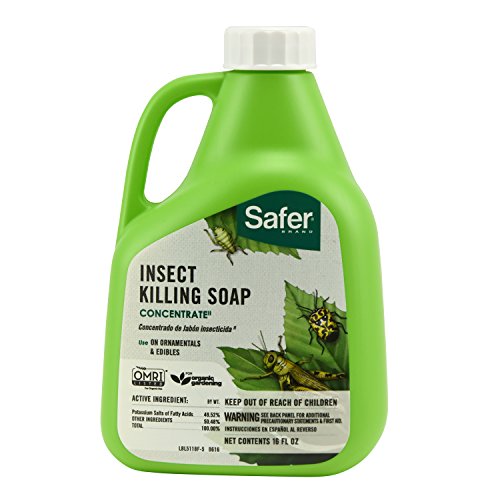
Safer’s Insect Killing Soap Concentrate is a versatile, gentle option for a wide range of plants, including flowers, herbs, vegetables, and houseplants. The product targets soft-bodied pests such as aphids, whiteflies, thrips, and spider mites, making it a strong choice for early-stage infestations or ongoing management. For best results, apply at the first sign of damage and repeat every 5-7 days while insects are present. It’s suitable for use up to the day of harvest, offering flexibility for edible crops.
As an insecticidal soap, it provides a physical mode of action that helps minimize residue concerns. It’s particularly effective in suppressing whitefly populations when used consistently as part of routine monitoring and treatment.
ARBER Organic Insecticide Liquid Concentrate

ARBER’s Liquid Concentrate offers a true organic biology-based approach to pest control. The formula penetrates foliage and soil to disrupt pest life cycles while supporting a balanced microbiome, allowing roots to thrive as pest populations decline. It’s customizable with dilution ratios to suit seedlings, herbs, roses, and shrubs, making it adaptable for both small indoor setups and larger outdoor beds. This product emphasizes rapid action against common pests such as whiteflies, aphids, and spider mites, while aiming to minimize synthetic residues.
For best results, tailors dilutions to plant type and infestation level, applying during early signs of trouble or post-repotting when plants are most vulnerable.
NATRIA Insecticidal Soap Ready-to-Use

Natria’s Ready-to-Use Garden Bug Treatment provides a convenient option for immediate action against common pests, including whiteflies, on indoor and outdoor plants. The ready-to-use bottle is designed for simple, on-the-spot applications, making it ideal for quick responses to early infestations. It’s suitable for organic gardening and can be used up to the day of harvest for edible crops. The product targets aphids, mealybugs, mites, whiteflies, and more, offering a straightforward solution for homeowners who prefer minimal preparation.
Because it’s ready to apply, it can be a practical companion to larger treatment schedules, enabling quick suppression while other measures (such as environmental controls) are put in place.
Eco-Safe Plant Protection

Eco-Safe Plant Protection is a broad-spectrum option that combines insecticidal and fungicidal action, including activity against mites, whiteflies, aphids, and thrips. The 8 oz concentrate is designed for flexible use—foliar spray, soil drench, or dipping—making it suitable for a variety of plant care routines. The product emphasizes natural ingredients and high first-application kill rates, with third-party efficacy verification. It can be a good fit for gardeners seeking a multi-answer solution that reduces multiple pest risks in one step.
Consider pairing Eco-Safe with regular monitoring and complementary cultural controls to maximize results against whitefly populations in different environments.
Buying Guide: Key Purchase Considerations And Comparisons
Whitefly management depends on plant type, infestation level, and cultivation setting. When choosing a product, weigh the following factors:
- Target pests: If whiteflies are the primary issue, select products with proven activity against whiteflies and eggs/larvae, such as insecticidal soaps or biologically-based concentrates.
- Plant safety: Look for plant-safe formulas and OMRI listings if you are growing edible crops or herbs. Consider dilutions and application methods that minimize contact with delicate foliage.
- Application flexibility: Sprays that cover both foliage and soil zones can improve coverage and address life stages that reside on leaves and in the root zone.
- Residue and harvest timing: For edible crops, prioritize products labeled for use up to harvest or those with minimal residue concerns.
- Resistance management: Rotate products with different modes of action to prevent pest resistance and maintain long-term efficacy.
- Integrated approach: Combine chemical or biological controls with cultural practices—such as quarantine of new plants, proper spacing, and improved airflow—to reduce whitefly outbreaks.
Usage tips to improve results:
- Apply at first sign of whiteflies for best suppression; repeat according to label directions until populations decline.
- Ensure complete coverage of the undersides of leaves where whiteflies often congregate.
- Water plants thoroughly before application if the label allows, to reduce plant stress and aid uptake of the treatment.
Overall, a balanced approach combining a few complementary products—starting with a rapid-action soap or contact killer and following with a preventive or protective concentrate—tends to yield the best control over whiteflies while supporting plant health.