Answering the search for dwarf, weeping white spruce options, this guide highlights five compact varieties suited for limited spaces, containers, or narrow landscapes. Best for low-maintenance screens, decorative focal points, and cold-ture gardening, these picks balance form, hardiness, and ease of care. The top contenders include pendulous, narrow, and dwarf conifers that stay manageable while delivering year-round interest. The buyer’s profile ranges from container gardeners seeking ornamental height to landscapers needing vertical solutions for tight plots. Below is a quick product summary to compare at a glance.
| Product | Best For | Key Benefit |
|---|---|---|
| Weeping White Spruce – Pendula | Containers or small yards | Elegant pendulous branches, very cold hardy |
| Pusch Dwarf Spruce – Pusch | Narrow spaces | Miniature spread, bright cones |
| Weeping White Spruce Tree – Pendula (5.5″ Pot) | Patio landscapes | Mature height around 10 feet, easy pruning |
| Bruns Pendula Weeping Serbian Spruce | Narrow beds | Fine texture, two-tone foliage |
| CAERULEA Dwarf White Spruce – Coerulea | Gravel or rock gardens | Silver-blue needles, compact pyramid |
Weeping White Spruce – Pendula (3-Year Plant)

Best for: Gardeners wanting a formal, narrow conifer with a dramatic pendulous habit. This plant is noted for a conical silhouette and drooping branches that create a sense of motion in winter landscapes. It also offers strong cold tolerance, making it suitable for zones down to –50°F. The form suits entryways, small courtyards, and as a vertical accent.
Why selected: Its formal, narrow shape and pendulous branches provide standout structure without occupying wide space. Gray-green foliage contributes subtle color through the seasons, while extreme cold tolerance supports hardier northern gardens.
Caution: Drooping branches can be sensitive to heavy snow; provide occasional light pruning or snow removal in regions with heavy winter accumulation.
Pusch Dwarf Spruce – Picea Abies ‘Pusch’

Best for: Narrow spaces and small plots needing evergreen structure with personality. This miniature spreading evergreen rarely exceeds about 1 foot tall, making it ideal for rock gardens, alpine displays, or container arrangements.
Why selected: The plant’s extremely compact growth and bright red cones on spring shoots add seasonal interest without crowding. It earned recognition as a collector’s conifer of the year in 2008, underscoring its distinctive appeal among dwarf spruces.
Caution: Its tiny size can make it sensitive to overly rich soils or transplant shock; ensure well-drained medium and gradual establishment after planting.
Weeping White Spruce Tree – Pendula (5.5″ Pot)

Best for: Patio or entryway plantings where a mid-height focal point is desired. With a mature height around 10 feet, it remains manageable in landscape beds or container-on-patio setups.
Why selected: This option emphasizes a strong, graceful pendulous habit and gray-green needles, combining visual drama with reliable cold tolerance. It complements other evergreens in mixed borders and can be pruned to maintain a desired height.
Caution: Requires regular watering during establishment; avoid saturated soil that can lead to root issues in poorly drained beds.
Weeping Cherry Blossom Tree Plant (UIOTER)

Best for: Flower-focused landscapes that crave spring color with a graceful weeping habit. This dwarf cherry blossom provides white spring blooms and a refined form suitable for small gardens and container planting.
Why selected: Although not a true spruce, it shares the weeping aesthetic and adds seasonal flowering. It’s a good option when a gardener wants a flowering complement to evergreen weepers in a mixed border.
Caution: This plant is ornamental and does not produce edible fruit; care should align with typical flowering tree maintenance and pruning practices to preserve shape.
Bruns Pendula Weeping Serbian Spruce
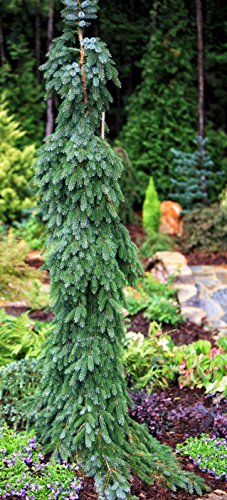
Best for: Narrow landscapes and vertical accents where a calm, fine-textured evergreen is desired. It grows slowly and stays compact, ideal for tight beds or as a component in a layered evergreen border.
Why selected: The two-tone foliage of green and silver plus spring cones offer a decorative flair not always found in weeping spruces. It complements other conifers with its delicate texture.
Caution: Growth is slow and steady; if you’re aiming for height quickly, this might not meet short-term goals. Provide good drainage to prevent moisture stress.
CAERULEA Dwarf White Spruce – Coerulea

Best for: Dwarf pyramid conifers in rock gardens or small landscapes where blue-silver needle color is a focal feature. Suited for cold climates with its –60°F hardiness.
Why selected: Its compact pyramid shape and striking silver-blue needles provide unique color contrast in mixed borders, making it a standout evergreen specimen in small spaces.
Caution: Color can be sensitive to extreme sun on hot days; provide some afternoon shade in hotter southern zones to preserve needle color intensity.
Buying Guide
- Space and growth rate: For very tight spots, choose ultra-compact dwarfs like Pusch and Coerulea. If you have a bit more room, Pendula forms a dramatic vertical accent with a manageable mature height.
- Cold hardiness: Most options here tolerate cold climates, with several rated for zones down to –50°F or –60°F, making them suitable for American winters.
- Color and texture: Silver-blue needles (Coerulea) and gray-green foliage provide year-round interest; combined with pendulous habit, texture varies across the season.
- Sun exposure: Full sun generally supports best color and habit; some varieties tolerate partial shade but may display slower growth or less vivid coloring.
- Soil and drainage: Well-drained soil is critical; avoid overly moist soils that can cause root rot in compact conifers.
- Maintenance: Pruning is typically light and optional for many dwarfs; heavy pruning can alter shape and health. Snow load may affect pendulous branches in heavy winters.
- Purpose in landscape: Decide if you want a focal structure, a border accent, or a container plant, then match the habit (pendulous, compact, or pyramid) to the space.
Frequently Asked Questions
- What is the best dwarf white spruce for a small container garden? The Pusch Dwarf Spruce is ideal for very small spaces due to its miniature spreading habit and compact size.
- Are these spruces cold-hardy for northern U.S. climates? Yes, most selections in this guide are described as hardy to very low temperatures, suitable for zones reaching into the negatives.
- Do these plants require frequent pruning? Generally no; most dwarf and weeping spruces maintain shape with minimal pruning, though light shaping can help emphasize form.
- Will these spruces tolerate full sun? In many cases, yes, but some varieties may benefit from some afternoon shade in hotter regions to preserve color and health.
- Can I plant these in the ground or in pots? Both options work. Plant in well-drained soil; use containers with drainage and avoid waterlogged pots.
- Do any of these produce fruit or flowers? Most spruces are evergreen conifers; the cherry blossom option is ornamental and does not yield edible fruit, focusing on flowering visuals.