Explore reliable water drip feeders that help keep potted plants healthy with minimal effort. This guide reviews five top options, highlighting how they manage watering cycles, ease of use, and suitability for different spaces—from apartments to sunrooms. Whether you want a timer-based system or simple self-watering globes, these picks aim to conserve water while ensuring steady soil moisture for thriving greenery.
Summary of Chosen Products
| Product | Brand | Type | Key Benefit |
|---|---|---|---|
| RAINPOINT Large Display Automatic Plant Waterer | RAINPOINT | Cycle & Soak Drip System | Customizable cycle-and-soak watering for efficiency |
| MOONSOUND Self Watering Globes | MOONSOUND | Watering Globes (10 pcs) | Low-maintenance, direct root watering |
| Automatic Plant Waterer Indoor (15 Pots) | beday | Self-watering Kit with Timer | Programmable, supports up to 15 pots |
| VIVOSUN Professional Drip Irrigation Kit | VIVOSUN | All-in-One Drip Kit | Precise, programmable irrigation with pump |
| Blumat Classic Self-Watering Stakes | Blumat | Self-watering Stakes | Low-profile, soil-based hydration |
Note: The selections emphasize varied approaches—cycle-based irrigation, gravity-aware globes, programmable timers, and soil-based drip stakes—to accommodate different plant types and living spaces.
RAINPOINT Large Display Automatic Plant Waterer
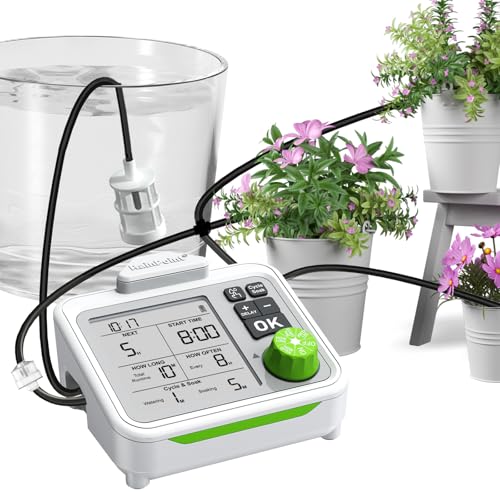
The RAINPOINT device offers Cycle & Soak and standard watering modes. It supports a broad range of plant sizes and allows scheduling from every 8 hours up to every 30 days. Watering duration ranges from 20 seconds to 20 minutes, and the system includes a manual button and a delay function to pause watering for 24, 48, or 72 hours. This flexibility helps tailor irrigation to varied pot sizes and soil moisture levels.
MOONSOUND Self Watering Globes
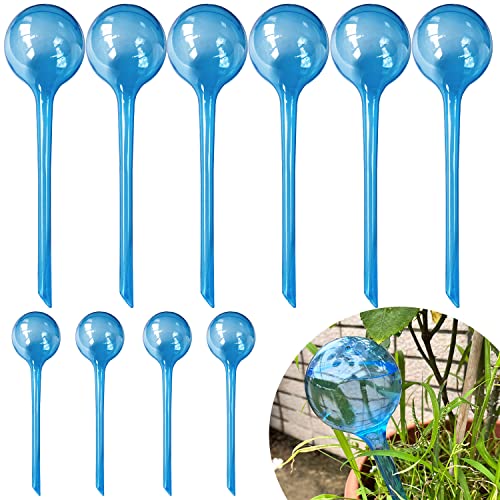
MOONSOUND’s 10-pack of self-watering globes provides a simple, decorative solution for indoor and outdoor plants. When installed near the root zone, each globe releases water gradually to meet the plant’s needs for several days or longer, depending on plant size. They minimize evaporation and runoff, making them a water-conserving option for busy households or travel.
beday Automatic Plant Waterer Indoor Self Watering System

This kit is designed to water up to 15 pots automatically. It emphasizes stable water pressure and reliable delivery to distant pots, enabling hands-off irrigation while you travel. The setup aims for predictable hydration, reducing the need for daily checks while maintaining plant vitality.
VIVOSUN Professional Drip Irrigation Kit

VIVOSUN’s system provides precision irrigation with a submersible 15W pump and regulator. It supports up to 20 irrigation times and offers both automatic and manual modes. The setup reduces soil scour and supports higher yield by delivering consistent moisture levels across a garden bed or multiple containers, suitable for more serious plant care setups.
Blumat Classic Self-Watering Stakes
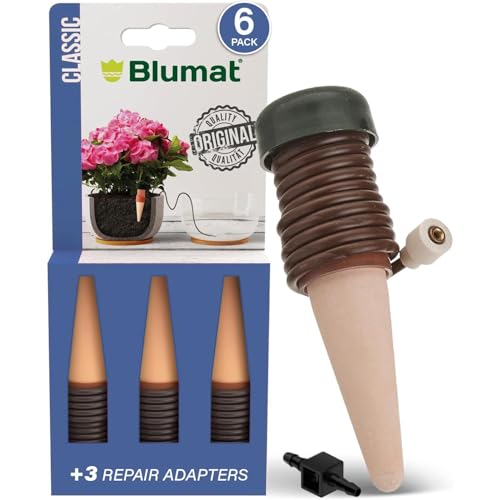
Blumat stakes use a ceramic cone-driven siphon to deliver water from a reservoir into the soil. They offer a compact, low-profile solution ideal for both indoor and outdoor pots. The system adapts to various plant needs by adjusting the water intake via the ceramic cones and accompanying adapters, ensuring gradual hydration without overwatering.
Buying Guide: Key Purchase Considerations
When selecting a water drip feeder, consider plant type, pot size, and location. For apartments and limited spaces, compact systems or globe-based options can be ideal, while larger setups benefit from programmable timers and pumps. Reliability and ease of use are crucial for hands-off care, especially for travelers or busy households. Water source accessibility, power options, and potential for remote monitoring should align with your lifestyle and home network. Finally, evaluate maintenance needs, such as refilling reservoirs, cleaning emitters, and replacing worn components to maintain performance over time.
Watering Method and Control
Cycle-and-soak methods optimize soil saturation and water efficiency, whereas continuous or gravity-fed options provide steady moisture. Decide whether you need a schedule-driven approach, manual overrides, or Wi-Fi/app control for remote management.
Capacity and Coverage
Consider how many pots you want to irrigate and their distance from the water source. Larger reservoirs cover longer trips away from the faucet and help ensure that distant plants receive adequate moisture.
Power and Durability
Solar-powered units reduce wall outlet dependence, while USB or plug-in models offer consistent performance. Check weather resistance for outdoor installations and the durability of tubing and emitters in your climate.
Soil Type and Plant Needs
Different soils retain water differently. Plants with shallow roots benefit from gentle, higher-frequency watering, while deep-rooted species may require deeper moisture delivery. Look for adjustable flow rates and emitter types to suit your plant mix.
Maintenance and Replacement Parts
Choose systems with readily available replacement parts, clear documentation, and simple maintenance routines. Regularly inspect emitters for clogging and ensure reservoirs are clean to prevent algae or mineral buildup.