Looking for a reliable walk-behind lawn trimmer to tackle large yards, dense brush, or uneven terrain? This guide highlights five capable models designed for property owners who need power, stability, and maneuverability. Each pick targets a different use case—from heavy brush clearance to effortless, self-propelled mowing—so you can choose the best fit for your yard. The following options prioritize wide cutting paths, durable decks, and robust engines to handle tough trimming tasks.
| Product | Best For | Key Benefit |
|---|---|---|
| BILT HARD Walk Behind String Trimmer | Heavy mowing and brush | 170cc engine, 22″ cutting path |
| SENIX 22-Inch Gas Walk Behind | Large properties | 160cc engine, durable wheels, adjustable height |
| BILT HARD Self-Propelled Walk Behind | Effortless mowing | Self-propelled, 22″ cut, 170cc |
| Powerhorse High-Wheeled Walk-Behind | Stability on uneven ground | 173cc engine, 22″ cut |
| Earthquake 160cc Walk Behind Mower | Heavy weeds and brush | 14″ wheels, 22″ cut, Viper engine |
BILT HARD Walk Behind String Trimmer, 170cc

Best for: Property owners needing a robust, wide-cut trimmer for heavy mowing tasks. The 170cc 4-cycle OHV engine provides ample cutting power, and a one-piece steel deck adds stability to minimize vibration on thick grass and weeds. The 22-inch cutting swath helps reduce passes, especially in sizable yards. The 14-inch flat-free wheels improve maneuverability on uneven ground.
Why selected: This model combines high cutting power with a sturdy build and large swath, making it a practical choice for farms, large lawns, and brush clearing. The easy-start recoil helps with reliable starts in tough conditions. A potential limitation is that it is heavier than push mowers, requiring more strength to move in tight spaces.
SENIX 22-Inch Gas Walk Behind

Best for: Large properties with dense weeds. The 160cc 4-cycle engine powers a 22-inch cutting swath using a heavy-duty .155-inch line, making quick work of overgrown areas. The 14-inch rubber wheels help with stability on uneven terrain, and the steel deck supports durability during extended use.
Why selected: It balances professional-grade power with practical comfort features like adjustable cutting height. Choose this if you frequently mow substantial areas with brush. Limitation: slower for very light maintenance tasks where a lighter tool would suffice.
BILT HARD Self-Propelled Walk Behind

Best for: Yard owners who want to minimize pushing effort. This model uses a self-propelled drive system to move the mower at about 1.9 mph, letting you guide rather than push through thick grass and weeds. The 22-inch cutting diameter and 170cc engine deliver consistent performance across varied terrains.
Why selected: The self-propelled feature reduces user fatigue, making it a strong choice for larger properties or users who need to cover more ground with less physical strain. Caution: You’ll want some space to maneuver behind the unit, as it is larger than standard push mowers.
Powerhorse High-Wheeled Walk-Behind

Best for: Users needing solid endurance and stable control on sloped or rugged ground. The 173cc engine delivers reliable power, and the 22-inch cutting path helps cover larger areas in fewer passes. Rear wheels contribute to smoother steering and better balance.
Why selected: It provides dependable performance with a straightforward design that’s suitable for frequent mowing sessions. Limitation: Heavier machines can require more storage space and effort to move in tight areas.
Earthquake Walk Behind String Mower With 160cc Viper Engine
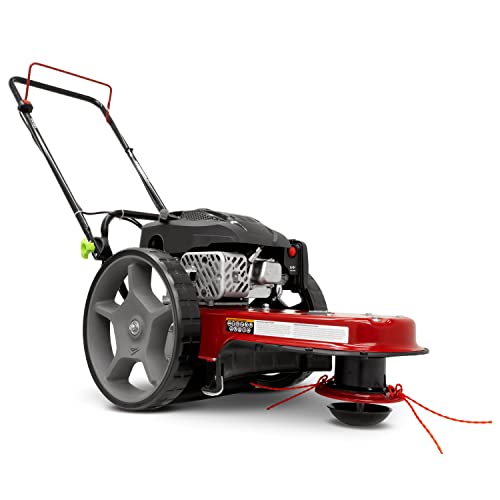
Best for: Heavy-duty weed and brush clearing where a robust engine and large cut width are essential. The 160cc Viper engine powers a 22-inch cutting diameter with 14-inch never-flat wheels for easy rolling over challenging terrain.
Why selected: The Hurricane-like cutting head and tool-less height adjustment offer versatility for varying ground conditions. Caution: The device may be heavier and require more maintenance than lighter models.
Buying Guide
What size engine do I need?
For large properties or thick brush, look for engines in the 160–173cc range. Higher displacement provides more torque to cut dense growth. For smaller yards, a 120–140cc model may be sufficient but may require more passes.
What cutting width should I choose?
22 inches is common for walk-behind models and balances speed with maneuverability. Wider cuts reduce trips across the yard but can be harder to steer on tight corners or slopes.
Why choose self-propelled versus push?
Self-propelled models reduce user fatigue and are ideal for large lawns or uneven terrain. Push models are lighter and simpler, suitable for flatter areas or users who prefer full manual control.
How important are wheels and deck design?
Wide, never-flat wheels improve stability on rough ground. A steel deck adds durability and reduces vibration, helping with long mowing sessions. A foldable or ergonomic handle can aid storage and comfort.
What safety features matter?
Look for a reliable bail/engagement mechanism and a head designed to minimize weed wrap. Easy-access controls and clear instructions reduce chances of accidental operation or damage during maintenance.
FAQ
- What is a walk-behind trimmer? It is a powered, wheeled mower attachment designed to trim tall grass and brush with a broad cutting path.
- Who should buy a self-propelled model? Best for users with large lawns or hills who want to reduce pushing effort.
- Is a heavier model harder to store? Heavier units require more storage space but often offer greater stability and cutting power.
- Can these trimmers handle brush and weeds? Yes, models with 160–173cc engines and 22-inch cuts are designed for dense growth.
- Do I need special maintenance? Regularly check the air filter, spark plug, and cutting line; follow the manufacturer’s maintenance schedule.
- Are replacement parts readily available? Most models use standard components (gas engines, steel decks, nylon lines) with widely available parts.
Quick Comparison
- BILT HARD Walk Behind: Best overall power and durability for rough, large yards.
- SENIX 22-Inch: Best for large properties with adjustable height and robust wheels.
- BILT HARD Self-Propelled: Best for reducing manual effort on bigger lawns.
- Powerhorse High-Wheeled: Best for stability on uneven ground.
- Earthquake 160cc Hurricane: Best for challenging brush and weed tasks with a hurricane head design.