Underground rain collection systems offer a discreet way to capture, detain, and infiltrate stormwater, protecting landscapes from flooding while recharging the groundwater. This guide reviews five leading underground or near-underground options, highlighting installation considerations, materials, and performance features to help American homeowners and professionals choose confidently.
Summary of chosen products:
| Product | Brand | Key Benefit | Installation Style |
|---|---|---|---|
| NDS Flo-Well Dry Well Kit | NDS | Detains and infiltrates excess water with a gravel-free base | Underground, with 4″ pipe connections |
| SQUEEZE master 50 Gallon Barrel | SQUEEZE master | Heavy-duty, load-bearing underground-ready design | Underground-ready assembly |
| 50 Gallon Flo Dry Well Kit (Maxx-Supply) | Maxx-Supply | High-capacity, gravel-free dry well for rain gardens and bioswales | Connects to 4″ pipes, underground-friendly |
| WADEO Rainwater Collection System | WADEO | Downspout diverter with adjustable flow and filtering | Above-ground/ground-level ready, adaptable to underground drains |
| Rain Barrel Connector Kit with Diverter | Generic | Modular connection for multiple underground or surface barrels | Flexible, fits standard downspouts |
NDS Flo-Well Dry Well Kit With Side Panels
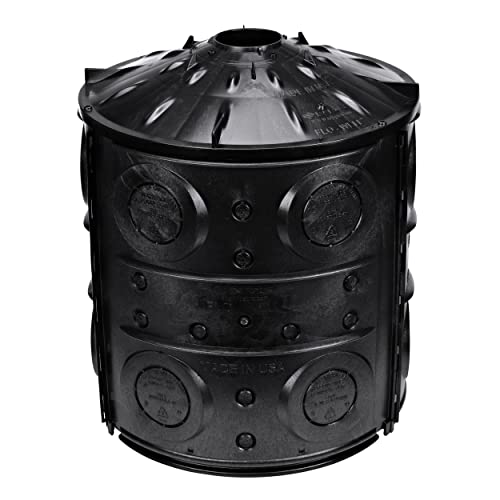
The NDS Flo-Well Dry Well Kit is designed to collect, detain, and infiltrate excess yard water. Installed underground, it channels runoff into the ground gradually, reducing surface pooling after heavy rains. It connects to 4″ sewer and drain piping through the top cover knockout, with 12 side-panel knockouts for additional 4″ connections. The system can be buried or stacked up to 8 feet deep, and it is constructed to support pedestrian traffic, including lawn tractors. A gravel-free base minimizes excavation and material handling while delivering up to 250% more detention volume than traditional gravel-filled wells, making it a practical option for flood-prone landscapes.
Key features include: underground detention and infiltration, flexible piping options through knockout points, and high load-bearing capability. This unit is suited for residential or commercial sites needing underground detention with minimal soil disturbance. Installation should consider soil permeability, depth restrictions, and local code compliance for stormwater management.
SQUEEZE Master 50 Gallon Underground Rainwater System

The SQUEEZE Master system features a reinforced multi-rib structure with 31 circular ribs and a pyramid-style three-piece assembly, delivering strong load-bearing performance for underground installation. The barrel is made from a durable 4% glass fiber and 96% HDPE blend, providing enhanced toughness and corrosion resistance for long-term underground use. Its knoc-down installation design and secure clip mechanism enable straightforward assembly, while a 3/4 inch flexible connector and scored lines facilitate easy cutting for custom piping layouts. This setup is designed to resist underground pressures and maintain water quality for non-potable uses.
Considerations include material compatibility with soil chemistry, potential root intrusion in shallow underground placements, and the availability of compatible fittings for your chosen piping system. This model suits long-term underground rainwater storage with a focus on structural integrity and ease of assembly.
Maxx-Supply 50 Gallon Dry Well Kit

This 50-gallon system is positioned as a gravel-free dry well with a focus on rainwater collection and infiltration. It is described as a French drain kit alternative, suitable for residential and commercial drainage projects, rain gardens, and bioswales. The unit detains and gradually releases stormwater into the ground and connects to 4-inch pipes via top and side knockouts, offering installation flexibility for a range of layouts. It is marketed as an eco-friendly option for flood prevention and landscape protection, reducing soil erosion and stormwater overwhelm in yards and driveways.
When evaluating this option, consider site grading, soil permeability, and proximity to foundations. The gravel-free approach simplifies installation but may require careful management of soil compaction during backfilling to preserve performance.
WADEO Rainwater Collection with Downspout Diverter

WADEO offers a downspout rainwater collection system with adjustable flow control and a built-in filter. The system fits residential downspouts sized 2×3″ or 3×4″ and includes a five-position valve to regulate water collection (closed, 20%, 50%, 80%, 100%). The filter removes large leaves and debris before water enters the storage container, which helps prevent clogs and maintain water quality. The construction uses UV-resistant PP material for durability and chemical resistance, with emphasis on corrosion resistance and impact resistance in outdoor conditions. The kit includes a five-foot hose for flexible routing to barrels or buried storage when permitted by local codes.
For underground configurations, consider how the diverted water will be routed once collected, including the potential for odor control, filtration maintenance, and safe connection to underground storage nodes. This product is best suited for systems that begin with surface collection and then extend to subsurface storage or infiltration strategies.
Rain Barrel Connector Kit With Diverter

This connector kit provides a complete solution for linking multiple rain barrels or redirecting rooftop runoff into underground storage or irrigation systems. The kit includes hose fittings, washers, and adapters to accommodate standard downspouts and garden tanks. It emphasizes compatibility with common residential rain barrels and garden tanks, enabling easy installation with basic tools. The product is designed to work in both above-ground and underground configurations, permitting scalable setups for larger rainwater harvesting networks on diverse properties.
When evaluating, assess the number of barrels needed, the anticipated rainfall capture, and the ease of future expansions. The flexibility of this kit makes it a practical foundation for a multi-barrel underground storage network, particularly in properties with limited space or aesthetic constraints.
Buying Guide: Key Considerations for Underground Rain Collection
- Soil and site assessment: Evaluate soil permeability, depth to groundwater, and proximity to foundations. Poor soils can hinder infiltration and increase installation complexity.
- Detention and infiltration goals: Choose systems based on whether the primary aim is flood reduction, groundwater recharge, or irrigation storage. Gravel-free designs reduce excavation but need correct sizing for detention volume.
- Material durability: Opt for UV-resistant, corrosion-resistant materials (HDPE blends, UV-stabilized plastics, reinforced composites) to withstand underground conditions and soil chemicals.
- Piping compatibility: Ensure 4″ sewer and drain or Schedule 40 pipes are compatible with top and side knockouts, and verify available adapters for your layout.
- Load-bearing considerations: If the structure will be buried shallowly or placed under foot traffic or lawn equipment, confirm the unit’s load rating and depth limits (e.g., up to 8 feet or more).
- Maintenance access: Plan for cleanouts and filters to reduce sediment buildup and maintain water quality for non-potable uses.
- Code and permit awareness: Local stormwater regulations may affect underground installations, detention requirements, and discharge pathways. Check code compliance before installation.
- Expandability: Consider systems that allow multiple barrels or additional dry wells to scale storage as needs grow or rainfall patterns shift.
Underground rain collection offers a discreet, multipurpose approach to stormwater management. By evaluating site conditions, material durability, and installation flexibility, property owners can select a system that efficiently detains, stores, and infiltrates rainfall while protecting landscapes and infrastructure.