Answering irrigation needs precisely, these tubing options suit different gardens, climates, and install styles. This guide highlights five reliable choices ideal for small to medium systems, from root-fed drip lines to main supply tubing. Best for compact vegetable plots, ornamental beds, and container setups, these options balance durability, flexibility, and ease of use. The following summaries help you compare main lines, feeder tubes, and emitter-ready tubing at a glance.
| Product | Diameter | Best For |
|---|---|---|
| Raindrip 016010T | 1/4 inch | Small drip systems, low-flow emitters, planters and borders |
| Rain Bird T22-100S | 1/4 inch | Main feeder or branch lines for compact landscapes |
| Riboud 50 FT 1/2 Inch | 1/2 inch | Main supply lines for larger beds or zones |
| Raindrip R257BRVT | 1/4 inch | Brown tubing for low-profile drip systems |
| Raindrip 052020P | 1/2 inch | Main lines with emitters along tubing |
The table above summarizes core options for typical garden setups. Read on for detailed product-by-product analyses, including who each tubing is best for, key features, and practical cautions. All entries focus on common, non-proprietary drip irrigation workflows to help you design a reliable irrigation layout.
Raindrip 016010T 1/4-Inch Drip Irrigation Supply Tubing

Best for small drip setups and feeder lines to low-flow devices. This 1/4-inch tubing is ideal for trees, shrubs, flower beds, groundcover, vegetable gardens, and planters when paired with compatible drip emitters. It serves well as a main line in compact systems or as a feeder from a larger supply. The tubing coil arrives shrink-wrapped for quick access. Caution: Verify compatibility with your specific emitters and fittings to avoid leaks at connectors.
- 1/4 inch irrigation tubing for feeder lines or main lines
- Connects to drip irrigation parts with barbed fittings
- Durable black polyethylene, suitable for various landscapes
Who this is best for: Home gardeners building a compact drip network, containers, or small landscape beds who need a flexible, easy-to-route tube with reliable connections.
Rain Bird T22-100S Drip Irrigation 1/4″ Tubing
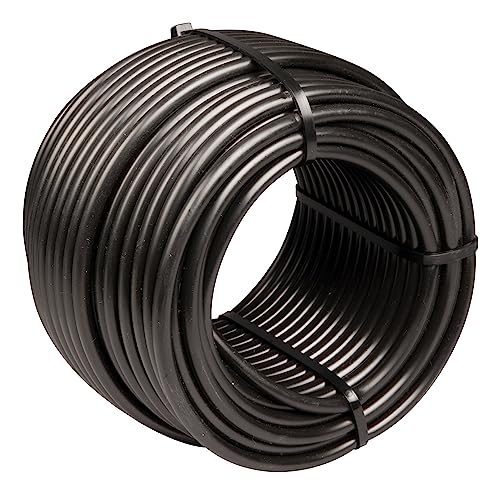
Best for flexible, rugged tubing that’s easy to unroll and stake in beds or landscapes. This 100-foot roll works as a main line or branching conduit to micro-watering devices, with a textured finish that improves grip during fittings. Choose this if you want better handling and straightforward connections for modest landscapes. Limitation: It’s a single 1/4″ line; plan additional tubing if you need broader coverage or multiple zones.
- Rugged, flexible 1/4″ tubing
- Textured finish enhances handling and connections
- Suitable as main line or branch line in small systems
Who this is best for: Gardeners who value easy installation and dependable handling for multiple emitters along a single line, in small to medium beds.
Riboud 50 FT 1/2 Inch Drip Irrigation Tubing Main Line

Best for medium-to-large zones needing a robust main line. The 1/2″ tubing has an inner diameter of 13 mm and outer diameter of 16 mm, making it sturdier and less prone to kink under pressure changes. It comes with 1/2″ straight connectors and 6-way connectors to link multiple runs. Best for year-round outdoor use in various weather conditions. Caution: Ensure compatibility with your existing barbed fittings and emitters.
- 1/2 inch tubing with thick walls (3 mm)
- Includes straight and 6-way connectors
- Durable material designed for varied weather
Who this is best for: Those building longer main lines or distributing water across several zones in a larger yard or terrace.
Raindrip R257BRVT 1/4-Inch Tubing, 50-Foot

Best for brown-treated, low-profile drip layouts. This 1/4-inch vinyl tubing is designed to branch off from a main supply line to feed drip devices or used as a feeder line in small systems. It supports a variety of watering areas—from trees and shrubs to pots and hanging baskets. Caution: vinyl tubing can be less UV-stable than higher-grade alternatives; consider shading or burying to extend life in sunny locations.
- 1/4 inch tubing for feeder lines or emitters
- Durable vinyl with virgin content
- Versatile for many garden layouts
Who this is best for: Gardeners who want a brown, inconspicuous tubing for drip lines in mixed plantings and containers.
Raindrip 052020P 1/2-Inch Tubing
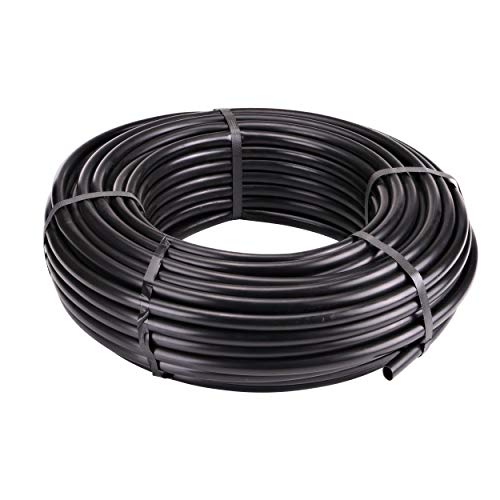
Best for main supply lines and distributing water along tubing with emitters. The 1/2-inch tubing is ideal as a main feed or a feeder line in larger drip systems. It offers compatibility with typical drip parts and allows you to insert emitters to create a dripper line. Caution: Ensure proper pressure management to prevent leaks at joints in long runs.
- 1/2 inch tubing suitable as main or feeder line
- Can attach emitters directly along the tubing
- Durable polyethylene construction
Who this is best for: Home irrigation setups that require longer runs with emitters spaced along a single tubing path.
Buying Guide: Key Considerations For Tubing Selection
Choosing irrigation tubing depends on system size, plant layout, and water pressure. Use these practical questions to guide your selection.
- What diameter do I need? – 1/4″ tubing is ideal for feeder lines and emitters; 1/2″ tubing works well for main lines that feed multiple zones.
- Is the tubing compatible with my fittings? – Check barbed connectors, quick-connects, and emitters to avoid leaks and seal failures.
- How will tubing be exposed or buried? – UV resistance and weather tolerance matter for outdoor exposure; burying can extend life.
- What climate is typical in my garden? – In hot climates, thicker-walled tubing reduces deformation under pressure.
- How many zones or lines will I run? – Plan main lines and feeders to minimize pressure drop and ensure consistent output.
FAQ
- Q: Can I mix 1/4″ and 1/2″ tubing in the same system?
A: Yes, but plan transitions carefully to manage pressure and ensure proper emitter flow. - Q: How do I prevent leaks at connections?
A: Use appropriate barbed fittings and clamps, and ensure clean, deburred ends before insertion. - Q: Is UV exposure a concern for tubing?
A: Yes; consider UV-stable variants or bury tubing to shield it from sun exposure when outdoors. - Q: How long does tubing last in outdoor irrigation?
A: Durability varies by material and climate; durable vinyl or polyethylene often lasts multiple seasons with proper care. - Q: Should I use a separate main line for each zone?
A: For larger landscapes, multiple mains reduce pressure loss and improve emission consistency across zones. - Q: Do these tubes require special tools to install?
A: Most installations use standard barbed fittings and simple hand tools; some kits include necessary connectors.