Choosing the right tubing is essential for efficient drip irrigation. The following 5 products represent reliable 1/4-inch and 1/2-inch options, suitable for gardens, planters, and landscape zones. This guide compares flexibility, durability, and installation ease to help you select the best main or feeder lines for your system.
Summary of Selected Products
| Product | Brand | Length / Key Feature | Notes |
|---|---|---|---|
| MIXC 1/4 Inch Blank Distribution Tubing Drip Irrigation Hose | MIXC | 50 ft roll | High flexibility; year-round use; good as main line or branch line |
| (100′ Roll) 1/4-Inch x Irrigation/Hydroponics Dripline | One Stop Outdoor | 100 ft | 6-inch emitter spacing; 1/2 GPH per emitter |
| Rain Bird T22-250S Drip Irrigation 1/4″ Blank Distribution Tubing | Rain Bird | 250 ft | Textured finish for easier handling |
| Raindrip 052020P 1/2-Inch Drip Irrigation Tubing | Raindrip | 1/2 inch | Versatile main or feeder line; attaches to drip parts |
| Hourleey 50 Feet Blank Distribution Tubing | Hourleey | 50 ft | High flexibility; durable PVC; broad compatibility |
MIXC 1/4 Inch Blank Distribution Tubing Drip Irrigation Hose
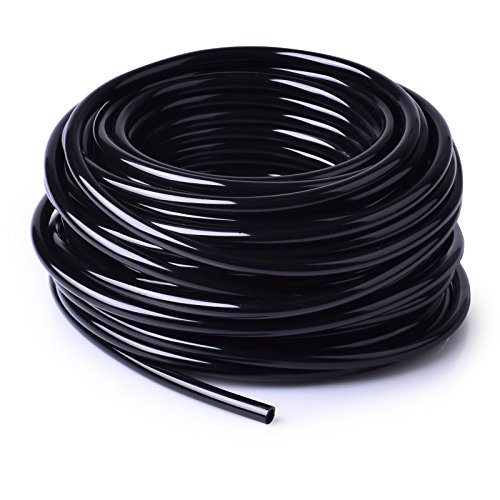
The MIXC 1/4 inch blank distribution tubing is designed for flexible, year-round use in various environments. Its high flexibility aids installation around corners and into tight spaces without excessive elbow fittings. This tubing works well as the main line in small drip systems or as a branch element off larger 1/2″ tubing, supporting efficient micro-watering in garden beds, ground covers, or landscaped areas. It’s built to withstand weather conditions when buried or left on the surface.
One Stop Outdoor 1/4-Inch Dripline With Emitter Spacing
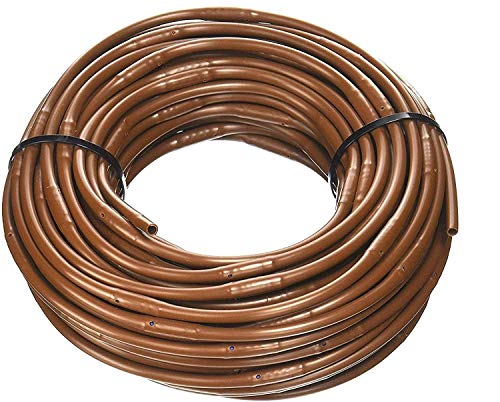
This 100-foot 1/4-inch dripline features pre-inserted emitters spaced at 6 inches, delivering about 1/2 GPH per emitter. It’s designed for easy installation and compatibility with standard 1/4-inch barbed fittings. The tubing’s durable construction is built to resist common landscaping chemicals and fertilizers, making it suitable for a variety of outdoor irrigation tasks, from trees and shrubs to flower beds and ground covers.
Rain Bird T22-250S Drip Irrigation Tubing

Rain Bird’s 250-foot black distribution tubing is rugged and flexible, designed to unroll smoothly and stake easily. It serves well as a main line or as a feeder line from larger 1/2″ tubes. The tubing’s textured finish improves grip and makes connection tasks faster, simplifying the setup of drip zones across lawns or beds while maintaining durability in varying weather conditions.
Raindrip 052020P 1/2-Inch Tubing
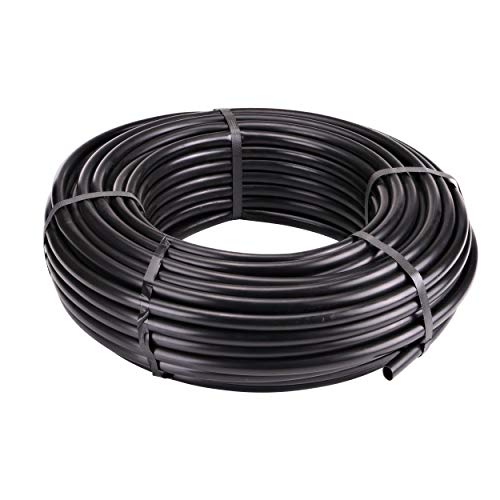
Raindrip 1/2-inch tubing is a versatile main or feeder line for drip irrigation systems. It supports punching in emitters to distribute water directly along the tubing, making it suitable for trees, shrubs, flower beds, ground covers, vegetables, and planters. Its polyethylene construction handles exposure to sunlight and chemicals commonly found in garden settings, offering dependable long-term use.
Hourleey 50 Feet Blank Distribution Tubing

Hourleey’s 50-foot blank distribution tubing offers high flexibility and durability in a compact length. Made from PVC, it resists bending without kinking and integrates with standard 1/4-inch fittings. This tubing is ideal for compact drip setups, container gardening, or small landscape features where space is limited but reliable water delivery is essential.
Buying Guide: Key Purchase Considerations
- Tube size and compatibility: Choose 1/4-inch tubing for emitters and micro-lines, or 1/2-inch tubing for main lines. Ensure fittings match your system’s barb sizes to prevent leaks.
- Flexibility and installation: Flexible tubing reduces the need for many elbows or adapters, which minimizes pressure loss and installation time. Consider tubing that remains flexible in your climate and soil conditions.
- Durability and weather resistance: Look for materials that withstand UV exposure, chemicals from fertilizers, and temperature fluctuations. Buried versus surface installation may influence material choice.
- Emitter integration: Some lines come with pre-spaced emitters; others are blank and require you to insert emitters. Match the method to your design goals and maintenance plan.
- Length and coverage: Longer rolls provide better coverage for larger beds but require planning for routing and water pressure. Shorter runs are easier to manage in small spaces.
- System compatibility: Ensure the tubing works with your existing drip components, such as drip emitters, connectors, and mainlines. Compatibility reduces leaks and simplifies maintenance.
- Cost vs. value: Durable tubing may have a higher upfront cost but saves time and replacement effort over years of use. Balance budget with expected longevity.
- Maintenance considerations: Choose tubing that’s easy to clean, replace, or extend if your landscape changes. Clear labeling of sections can help ongoing maintenance.
When selecting tubing, assess your landscape scope, climate, and watering needs. A mixed approach—using 1/4-inch line near plants and 1/2-inch main lines for broader coverage—often provides flexibility and efficiency for American gardens and yards. This approach helps conserve water while delivering uniform moisture to roots where it matters most.