Choosing the right trellis can dramatically improve yields and plant health in your vegetable garden. This guide highlights five sturdy, user-friendly options suited for different garden sizes and climbing crops. Whether you garden in a raised bed, a small backyard, or a larger plot, these trellises offer strong support, rust resistance, and easy assembly. The buyers below are best for: compact spaces and quick setups; larger plants like tomatoes or gourds; indoor or outdoor use; and budget-conscious, long-lasting setups.
Summary table of selected products:
| Product | Best For | Material/Design | Key Benefit |
|---|---|---|---|
| MQHUAYU U-Shape Garden Trellis | Raised beds with dual planting space | Metal arch with rust-resistant coating | Stable U-frame with adjustable height |
| 7Queen Cucumber Arch Trellis | Vines and beans in beds or pots | Upright arch with equal tees and cross connectors | Strong, easy to assemble and clamp-free |
| Hoyejyou 62″ Tall Cucumber Trellis | Tall climbers and space-efficient beds | Plastic-coated steel core, rust-proof | High stability with adjustable height |
| Miuezuth Trellis Netting | Vertical growing for delicate crops | Polyethylene netting, UV stabilized | Lightweight, reusable, supports heavy loads |
| Growia 48×48 U-Shape Trellis | Compact beds and raised beds | Powder-coated steel frame | Easy assembly and rust-resistant coating |
MQHUAYU U-Shape Garden Trellis for Raised Bed
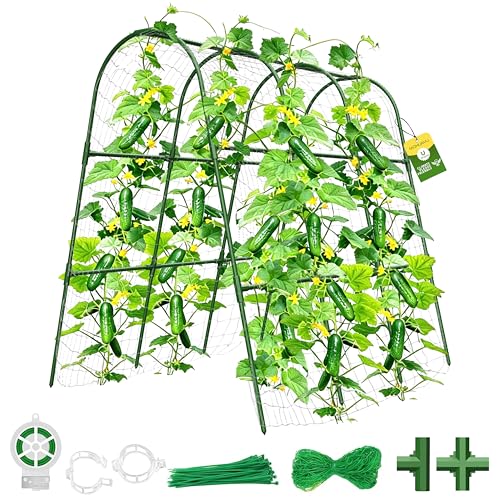
The MQHUAYU U-Shape Garden Trellis is designed for stability and space efficiency. Its U-frame supports plants on both sides, making it ideal for narrow raised beds or rows where you want maximum vertical growth with minimal horizontal footprint. The rustproof design uses a stainless steel core with a protective exterior coating, reducing oxidation risk and plant burn. An upgraded cross-shaped connector simplifies assembly and disassembly, which helps when you need to reposition as plants grow. Best for raised-bed gardeners who want durable support with flexible height adjustments.
Best for: raised-bed gardeners who need a stable, wide arch that accommodates multiple vines. Choose this if you want a low-maintenance, durable structure that lasts several seasons.
Caution: while robust, the arch design requires anchoring in loose soil to prevent wobble in very windy conditions.
7Queen Cucumber Trellis for Plant Climbing

The 7Queen cucumber trellis focuses on an upgraded stability design with equal tees and cross connectors. This setup improves installation convenience and rigidity, helping vines like cucumbers, beans, tomatoes, and even some flowering climbers stay upright through the growing season. The design is versatile for both raised beds and containers, allowing gardeners to direct vertical growth with confidence. Best for vines that demand steady support without frequent adjustments.
Best for: gardeners who want a strong, plug-and-play trellis that resists movement and keeps plants supported as they mature. Better for: medium to heavy-vine crops in small to mid-sized spaces.
Caution: ensure the connectors are fully seated during installation to prevent minor wobble in tall plants.
Hoyejyou 62″ Tall Cucumber Trellis

The Hoyejyou trellis features a tall 62-inch arch with a rustproof, plastic-coated steel core. This construction provides heavy-duty support for tall climbers while minimizing heat transfer to the stems, reducing scorch risk. An upgraded cross-shaped connector simplifies setup and disassembly, with adjustable height and length to fit your plant growth. Best for: gardeners with limited ground space who still want elevated, walk-under coverage for pruning and harvests.
Best for: tall vegetables like cucumbers and beans in tight spaces. Choose this if you need a weather-resistant, long-lasting frame that adapts as plants grow.
Caution: taller designs may require staking in very windy areas to prevent top-heaviness in storms.
Miuezuth Trellis Netting for Climbing Plants

Miuezuth Trellis Netting provides a heavy-duty yet flexible support system for cucumbers, tomatoes, beans, and other climbing crops. Made from UV-stabilized polyethylene, the netting helps improve air circulation, light exposure, and space utilization. It is designed to withstand heavy loads while remaining safe for delicate leaves and stems. A practical choice for gardeners who prefer a net-like framework over rigid frames. Best for: those growing fast-growing vines that benefit from a large, reusable grid.
Best for: vertical crop schemes and multi-plant setups in larger beds or tunnels. Limitations: may require a separate frame or posts to secure the netting in a specific layout.
Growia 48×48 Cucumber Trellis for Raised Bed

The Growia 48×48 trellis emphasizes quick assembly with no tools required, thanks to easy-connect joints. Its powder-coated steel frame offers rust resistance and durability across seasons. Sized 48×48 inches, it suits medium-sized beds and containers, supporting cucumbers, beans, tomatoes, and other climbing crops. Best for: gardeners who want a sturdy, compact frame that goes up fast and stores easily when not in use.
Best for: budget-conscious buyers seeking a reliable, low-maintenance solution for smaller beds. Caution: ensure adequate anchoring in windy locations to prevent movement during storms.
Buying Guide: Key Considerations For Trellises
What should you look for when choosing a trellis? Consider purpose, space, and plant type. For raised beds and narrow spaces, U-shaped or arch designs maximize vertical growth while preserving ground area for roots. For larger crops like pumpkins or watermelons, look for higher, sturdier frames and rust-resistant coatings. Material matters: powder-coated steel, stainless steel cores with protective coatings, or high-strength polymers can influence durability and weather resistance. Installation ease matters too, especially if you rotate crops annually or frequently reconfigure layouts.
Space And Height: How Tall Do You Need?
Assess your garden height and headroom. Taller trellises (around 7 feet) provide room for vines to grow with less crowding, but may require more anchoring. Shorter, 4–6 feet options are often easier to fit into compact raised beds and containers. Choose a height that accommodates the typical vine you plan to grow, plus a little extra for seasonal growth.
Material Durability: Rust, Weather, And Weight
Rust resistance is essential for outdoor use. Look for powder coatings, PE coatings, or stainless cores. If you live in a humid or coastal area, rust-proof designs will extend the life of your trellis. Heavier, stronger frames support heavier crops like squash and tomatoes, but require secure anchoring.
Installation And Adjustability
Consider how easy it is to assemble, adjust height, or reconfigure. Interlocking joints and cross-shaped connectors reduce installation time and improve stability. If you plan to rotate crops, modular designs that allow height and length adjustments are advantageous.
Plant Type And Layout
Match the trellis to your crop. Cucumbers, beans, and tomatoes benefit from vertical support. Netting works well for vines with irregular growth or for crops that require more surface area. For dense plantings, consider a wider arch or multiple panels to avoid crowding and promote airflow.
Budget And Longevity
Cheaper options can be sufficient for one season, but more durable frames pay off in multi-year use. Weigh the upfront cost against expected lifespan, maintenance needs, and the volume of crops you expect to support.
Installation Tips
Anchor trellises into solid ground or use stabilizers in soft soil. Ensure posts or legs are level for even load distribution. When possible, align posts with the prevailing wind direction to minimize movement during storms. For netting, secure edges firmly to posts or frames to prevent sagging under heavy fruit loads.
Maintenance Tips
Regularly inspect joints and connectors for looseness. Clean coatings with mild soap and water to remove dirt. For metal frames, check for any signs of rust or wear and recoat if necessary to extend life.
Frequently Asked Questions
- What trellis height is best for tomatoes? – A height around 6 to 7 feet is often ideal to allow vertical growth and easy access for pruning.
- Can I use trellis netting for cucumbers? – Yes, trellis netting provides a grid that cucumbers can climb, especially when space is limited.
- Are metal trellises weatherproof? – Many are coated to resist rust, but it’s important to check coating quality and wind resistance for outdoor use.
- How do I install a freestanding arch trellis? – Place posts firmly in the ground or weighted bases, level the arch, and secure connectors as directed by the manufacturer.
- Should I choose a U-shape or an A-shape trellis? – U-shape designs typically offer better side-by-side planting options and stability for raised beds; A-shape can be adequate for single-row setups with proper anchoring.