Looking for a reliable tiller to prepare garden beds, lawns, or raised beds? This guide highlights five top garden tillers and cultivators, focusing on power, maneuverability, and ease of use. Each option suits different buyers—from corded power users to cordless convenience for tight spaces. Read on to compare features, best uses, and potential limitations to help you choose with confidence.
Summary table of selected products
| Product | Best For | Key Feature | Depth / Width |
|---|---|---|---|
| Sun Joe TJ603E | Power users seeking solid corded performance | 6 rust-proof steel tines, 12-Amp motor | Up to 8 in depth, 16 in width |
| MZK TC16A08 | Efficient prep for medium gardens | 16 in width, 8 in depth with 6 blades | 16 in width, 8 in depth |
| Alloyman 21V Cordless | Cordless convenience for tight spaces | 360 RPM, 9 in width, 6.6 in depth | 9 in width, 6.6 in depth |
| YDlawn 20V Cordless | Budget-friendly cordless option | 2 × 4.0Ah batteries, 7 in depth, 9 in width | 9 in width, 7 in depth |
| TaskStar Cordless Rototiller | Lightweight, easy garden tasks | 48 steel tines, 360 RPM | 9 in width, 7 in depth |
Sun Joe TJ603E Corded Tiller

The Sun Joe TJ603E is a corded electric tiller designed for strong, routine soil prep. It uses six steel tines to break up compact soil and prepare garden beds. This model offers a 12-amp motor and 16-inch tilling width, with a 3-position wheel depth adjustment for precise control. It is best for gardeners who want reliable power without the hassles of gas engines, and who have easy access to an electrical outlet. A folding handle aids storage and portability, which is helpful for gardeners with limited shed space.
Best for: Home gardeners with medium to large plots who prefer steady, corded power and straightforward maintenance. Why selected: robust steel tines and a wide tilling path enable faster bed prep than smaller tillers, reducing overall labor. Caution: cord management matters; keep the cord away from tines and water, and avoid use in extremely rocky soil where tines may wear faster.
BARAYSTUS Rotary Cultivator (57 Inch)

The BARAYSTUS Rotary Cultivator is a long-handled, adjustable tiller designed for easy ground aeration and soil mixing. It features a light, durable aluminum head with stainless steel handle poles, and interchangeable components for multiple cultivating tasks. This option is best for small-space gardeners who value maneuverability and adjustable reach, plus the ability to reseed or mix soil with minimal effort. Caution: hand tools require proper grip and technique to avoid strain, especially in dense clay soils.
MZK 16-Inch Electric Tiller / TC16A08

The MZK TC16A08 offers a 16-inch working width and 8-inch tilling depth, powered by a 13.5-amp motor and 24 steel tines. The design emphasizes efficient soil cultivation, ideal for pre-tilled beds, breaking up clumps, and aerating for better seed-to-soil contact. It balances power with user-friendly handling, making it suitable for average backyard plots. Caution: avoid tilting into very rocky soil, which can dull blades and reduce performance over time.
Alloyman 20V Cordless Tiller
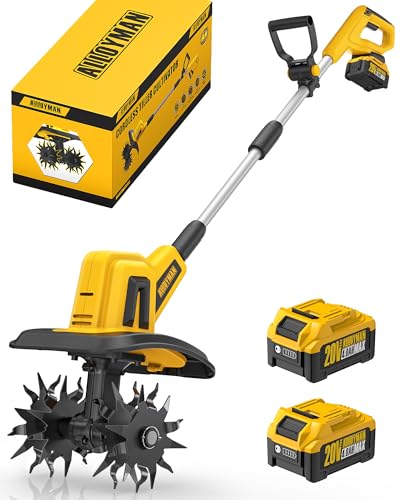
The Alloyman cordless tiller runs at up to 360 RPM, with 4 durable steel tines and a 9-inch tilling width. It’s ideal for gardeners who need mobility and access to tight spaces without being tethered to an outlet. The design includes an adjustable auxiliary handle for ergonomic use, making it a practical choice for people with limited storage or who regularly work in raised beds. Caution: cordless runtime will vary with battery capacity and terrain; consider spare batteries for longer sessions.
YDlawn 20V Cordless Tiller Cultivator

The YDlawn cordless model pairs two 20V 4.0Ah batteries with a 48-tine setup to till up to 7 inches deep and 9 inches wide per pass. This configuration suits small to medium garden beds and tight spaces where power outlets are scarce. It is especially appealing to beginners and casual gardeners seeking easy, low-maintenance operation. Caution: battery life depends on soil density; heavy clay may reduce runtime and depth achieved per pass.
Buying Guide: What To Consider Before You Buy A Garden Tiller
- Power source: Corded tillers deliver consistent power without worrying about battery life, but require proximity to outlets. Cordless models offer mobility and convenience in confined spaces but depend on battery capacity and charge cycles.
- Tilling width and depth: Choose a width that fits your bed size and a depth that matches soil conditions. Wider and deeper tills cover more ground but may be harder to control in small plots or rocky soil.
- Number of tines and blade design: More tines generally mean faster soil breakdown; rust-resistant steel tines provide durability. Some models feature curved or angled tines for easier turning and better soil mixing.
- Weight and ergonomics: Lightweight, well-balanced designs reduce user fatigue. Look for adjustable handles or auxiliary grips to accommodate different user heights and avoid strain.
- Maintenance: Electric tillers require less maintenance than gas models but still benefit from tines inspection and cleaning after use. Folding or compact designs improve storage in small spaces.
- Intended use: For large plots or heavy clay, a more powerful, wider tiller is beneficial. For raised beds, portable cordless models may be preferable to reach tight corners.
Frequently Asked Questions
- What is the best tiller for beginners? A lightweight, cordless model with a reasonable width and depth is typically easiest to start with and allows gradual skill development.
- Do tillers work on clay soil? Yes, but you may need more power and a wider tilling width; consider repeated passes and proper soil conditioning for best results.
- Is a corded tiller better than a cordless one? Corded tillers provide consistent power for longer sessions, while cordless tillers offer greater mobility in tight spaces.
- Can I till under wet conditions? It’s best to wait for dry soil to avoid compaction and reduce the risk of clogging or blade wear.
- How do I maintain tiller tines? Regularly clean after use, remove soil and debris, and inspect for wear. Replace tines if they show noticeable damage or bending.
- Are cordless batteries interchangeable between models? Battery compatibility varies by manufacturer; check the product’s battery compatibility before mixing models.