Thyme ground cover blends fragrance, low maintenance, and striking foliage to create a living carpet for pathways, rock gardens, and lawn alternatives. This guide reviews top thyme seeds and plant options ideal for ground cover, with practical planting tips, growth expectations, and design ideas to help American gardeners select the best fit for sun, soil, and climate. Each product below is evaluated for germination, spreading habit, drought tolerance, and pollinator appeal.
Summary of selected products:
| Product | Brand | Key Benefit | Link |
|---|---|---|---|
| PLANTMEW Creeping Thyme Seeds | PLANTMEW | High germination, fragrant, drought-tolerant | View Product |
| Creeping Thyme Seeds (20,000 seeds) | BuggyBeds | Extensive coverage, perennial growth | View Product |
| Purple Creeping Thyme Seed (20,000) | BuggyBeds | Dense ground cover, purple blooms | View Product |
| Lemon Thyme Seeds (500) | KVITER | Aromatic ground cover with drought tolerance | View Product |
| Purple Creeping Thyme Seed Pack | Mixrug | Perennial, extensive coverage, versatile planting | View Product |
Keep in mind: successful thyme ground cover depends on full sun, well-drained soil, and spacing that accommodates spreading. The following sections present five top picks, each with practical planting notes and design ideas to help you create a durable, fragrant landscape that requires minimal maintenance.
PLANTMEW Creeping Thyme Seeds

This selection emphasizes high germination for creeping thyme (Thymus serpyllum), making it ideal for filling gaps between stepping stones, along walkways, or as a lawn substitute. It thrives in full sun and tolerates poor, well-drained soil, which suits xeriscaping and busy gardeners. Once established, it becomes drought-tolerant and forms a fragrant mat that releases an appealing herbal scent when walked upon. The plant also supports pollinators, drawing bees and butterflies to the garden.
Creeping Thyme Seeds (20,000)

BuggyBeds offers a large batch of creeping thyme seeds designed for broad ground coverage. The perennial growth habit ensures the plant returns year after year, building a dense, low-growing mat. Expect fragrant foliage and a touch of purple blooms as it establishes. This option is versatile for rock gardens, between stepping stones, lawn alternatives, and weed suppression along borders, driveways, or pathways.
Purple Creeping Thyme Seed Pack

This option highlights a purple-flowered form of creeping thyme suitable for ground-cover beds and edging. It shares the same perennial, low-growing characteristics as other creeping thymes, delivering a dense mat that tolerates drought once established. It is particularly attractive for pathways and borders where a splash of color enhances the landscape while keeping maintenance low.
KVITER Lemon Thyme Seeds

KVITER’s lemon thyme seeds introduce a citrusy aroma to the ground cover mix. While lemon thyme (Thymus pulegioides) typically grows upright, it can spread to form a fragrant, evergreen mat that works as a perennial ground cover in sun-drenched landscapes. Germination occurs in 7–14 days under ideal conditions. It reaches 6–12 inches tall and is best planted in full sun with well-drained soil. The result is a versatile herb for borders, herb gardens, walls, and containers, with the added benefit of edible leaves for cooking.
Mixrug Purple Creeping Thyme Seeds

Mixrug’s purple creeping thyme seeds deliver a robust ground-cover solution, emphasizing a perennial growth pattern and extensive coverage for walkways, rock gardens, and borders. This variety supports bees and butterflies with aromatic leaves and delicate purple blooms. It thrives in sunny spots with well-drained soil and benefits from spacing that allows lateral spread, creating an attractive, weed-suppressing layer over time.
Mixrug Creeping Thyme Flower Seeds
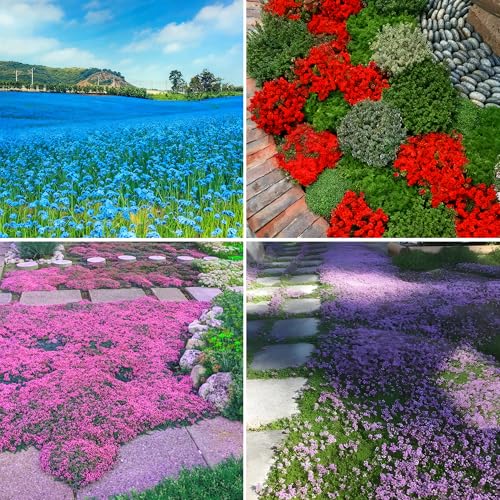
Mixrug’s mix of creeping thyme seeds emphasizes perennial growth with dense, low mats and purple blooms. The seeds are described as easy to sow with high germination rates, making them a practical choice for filling bare patches and revitalizing garden spaces. They are edible and aromatic, offering culinary uses and potential for sachets or homemade herbal remedies. The plant’s attractiveness to pollinators enhances garden biodiversity while delivering a durable surface for foot traffic.
Buying Guide: Key Purchase Considerations
- Sun and soil requirements: Most thyme ground covers prefer full sun and well-drained soil. Avoid heavy clay or consistently wet soils, which can lead to root rot or slow establishment.
- Growth habit and spread rate: If you want a fast-creating carpet, choose high-germination, low-maintenance varieties with proven creeping or mat-forming behavior. Consider spacing and intended use (walkways, borders, lawn substitutes).
- Perennial vs annual: Perennial creeping thyme provides year-after-year ground cover with less replanting. Some selections emphasize dramatic blooms or stronger fragrance—prioritize based on design goals.
- Fragrance and pollinator value: Fragrant foliage and blooms attract bees and butterflies, contributing to garden biodiversity. If pollinators are important, look for varieties noted as pollinator-friendly.
- Edible and culinary use: Several thyme varieties offer edible leaves or scented flowers. If you plan to harvest leaves for cooking, lemon thyme and common creeping thyme are practical choices.
- Maintenance needs: Choose drought-tolerant cultivars for water-wise landscapes. Once established, many thyme ground covers require minimal mowing or trimming, reducing maintenance.
- Purchase size and seed count: For larger installations (pathways or expansive beds), bulk-seed options (20,000+ seeds) can be more economical, though germination may vary with seed quality and storage.
Design tips to maximize success with thyme ground cover:
- Prepare a well-drained seedbed or soil mix enriched with organic matter before sowing. Rake lightly to ensure good seed-to-soil contact.
- After sowing, keep the soil evenly moist until germination (this often occurs within 7–14 days, depending on variety and conditions).
- Incorporate a light mulch to reduce erosion and help retain moisture, then remove mulch as plants establish to prevent suppression of germination.
- Edge paths and stepping-stone areas with thyme to create a defined, fragrant border that also helps suppress weeds.
- For larger areas, consider staggered planting or hydroseeding where appropriate to ensure even coverage.