Throw and grow food plots offer deer managers a fast, low-effort way to establish high-protein forage with minimal equipment. This article surveys top no-till and throw-and-grow seed blends designed to attract and sustain deer across seasons. Each option below emphasizes rapid germination, attractive nutrition, and adaptability to varying soils and shade. The selections spotlight blends that can be spread with simple tools, reducing labor while expanding hunting plots or personal feeding zones. Read on to compare blends, ingredients, and intended seasons to help choose the best fit for property size, terrain, and deer pressure.
Product Overview
| Product | Brand | Type | Key Benefit |
|---|---|---|---|
| Throw & Gro No-Till Forage | Evolved Habitats | No-Till Forage | Fast-growing, high-protein mix for personal plots |
| 7 Card Stud Adaptive Food Plot Seed | Evolved Harvest | Adaptive Forage Blend | Broad-season, high-protein forage mix |
| No Till Annual Mix | Hit List Seed | Annual No-Till Mix | Easy germination, versatile for all-season use |
| Imperial No-Plow Food Plot Seed | Whitetail Institute | No-Plow Seed | Specially selected grains and brassica for hard-to-access areas |
| No-Plow Deer Food Plot Seed | Whitetail Institute | No-Plow Seed | Fast-acting, highly nutritious annual forage |
Throw & Gro No-Till Forage for Deer

Designed for quick establishment with minimal disturbance, Throw & Gro No-Till offers a nutrient-dense mix that targets deer protein and mineral needs. The blend combines tetraploid ryegrass, forage clovers, and brassicas chosen to deliver palatable, fast-growing forage. It’s positioned as a personal plot option, allowing property owners to create a dedicated feed area without heavy tillage equipment. The no-till formula expands planting opportunities to spots previously considered marginal, such as compact soils or lightly shaded patches. This product emphasizes speed, simplicity, and accessibility for novice plotters while still delivering forage quality that deer find appealing throughout multiple seasons.
Key considerations include soil health and sun exposure. The mix thrives with light to moderate sunlight and benefits from a simple, scatter-seed approach that minimizes soil disruption. While no-till planting reduces labor, it’s important to monitor weed pressure and re-apply seed as needed to maintain continuous forage. This option helps introduce deer to a predictable food source, supporting consistent movement and hoof traffic around the plot.
7 Card Stud Adaptive Food Plot Seed

The 7 Card Stud blend is marketed as highly adaptive, combining a diverse mix of triticale, oats, winter peas, clover, chicory, turnips, and radishes. This broad-season forage is designed to attract deer across early, mid, and late seasons, making it a robust choice for varied climates. The high protein and mineral content is intended to promote regular deer activity on the plot, with a sweet taste that enhances palatability. Because the blend features multiple crop types, it can tolerate fluctuations in weather and soil conditions better than single-species mixes. This makes it suitable for properties that experience inconsistent rainfall or cooler growing seasons.
When planning, consider rotation and occasional reseeding to maintain optimal forage density. The mixture aims to hold deer on the property by providing a steady food source that remains appealing through different hunting windows. While the blend is versatile, site selection matters: choose areas with sufficient light to support the more diverse flora and ensure adequate moisture to support a broad range of plants.
No Till Annual Mix

This no-till annual mix emphasizes a quick germination profile with clover, brassica, oats, rye, and related forage species. It’s positioned as an easy entry point for both beginners and experienced plotters, requiring minimal equipment to establish and maintain. The blend provides attractive nutrition and is designed to appeal to deer through the hunting season, offering a reliable habitat staple that can be replenished within a single growing cycle. For landowners with limited access or challenging terrain, this mix presents a practical option for creating a productive plot without heavy soil preparation.
Practical considerations include seed-to-soil contact and timely irrigation if rainfall is scarce. Because the mix contains diverse plant types, it can sustain varying moisture levels, but some species may require light maintenance to ensure uniform emergence. Regular monitoring supports early weed suppression and helps keep deer on the property as seasons shift.
Imperial No-Plow Food Plot Seed

Whitetail Institute’s Imperial No-Plow is tailored for areas that are difficult to access with farming equipment. The mix includes specially selected cereal grains, annual clovers, brassica, radish, and lettuce, designed to create dense, nutritious forage without disturbing the soil extensively. This makes it a favorable choice for remote clearings, logging roads, and shaded patches where traditional tilling isn’t feasible. The blend aims to deliver consistent performance across different environments, thanks to its adaptable seed set and proven track record in attracting deer stress and traffic.
A key attribute is its suitability for replacing or supplementing existing vegetation with a no-till approach. For best results, plant into a prepared seed bed when possible or apply minimal ground preparation to improve seed-to-soil contact. Regular scouting ensures that the plot remains weed-free and that deer pressure remains balanced with forage availability across seasons.
No-Plow Deer Food Plot Seed
Whitetail Institute’s No-Plow blend focuses on a fast-acting, highly nutritious annual forage suitable for areas hard to access with equipment. The combination of cereal grains, annual clovers, brassica, radish, and lettuce creates a versatile, attracting forage that deer find irresistible. The no-plow approach reduces soil disruption while supporting rapid establishment, enabling landowners to create or augment plots in confined or remote spaces. The mix is designed to deliver reliable hoof traffic and sustained nutrition across hunting seasons, making it a practical option for property managers seeking efficient results with limited machinery.
Users should consider site shading, soil moisture, and weed competition. In shaded quarters or drought-prone areas, supplemental irrigation or periodic reseeding may be necessary to preserve plot density and palatability throughout the year.
5 Card Draw Food Plot Seed
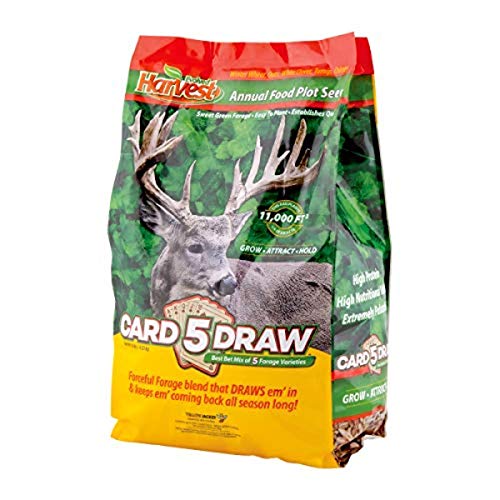
The 5 Card Draw blend emphasizes a mix of oats, wheat, perennial white clover, turnip, and chicory, designed to deliver a sweet tasting, protein-rich forage. This mix is positioned as adaptable to a range of soil conditions and planting schedules, offering flexibility for land managers who want reliable forage across multiple seasons. The inclusion of chicory and turnips provides a broader nutritional spectrum, appealing to deer with varying dietary preferences. The blend aims to balance palatability with long-term soil health, supporting sustainable plot management over time.
Farmers and wildlife managers should weigh the balance of annual versus perennial components and consider fall planting with subsequent spring maintenance. Regular reseeding may be necessary to uphold forage density and to maintain deer visitation patterns through the year.
Buying Guide: Key Purchase Considerations
- Site conditions: Assess sun exposure, soil health, and access for equipment. No-till mixes excel in reduced-disturbance zones but benefit from light soil preparation where possible.
- Seasonal strategy: Choose blends designed for multi-season interest (early, mid, late season) to maintain deer traffic and nutrition year-round.
- Seed diversity: Blends that mix cereals, legumes, brassicas, and forbs offer broader nutritional profiles and resilience to weather fluctuations.
- Germination and establishment: No-till and throw-and-grow methods rely on seed-to-soil contact and sometimes moisture; ensure consistent moisture or plan for irrigation in dry periods.
- Management considerations: Weed pressure, re-seeding frequency, and occasional fertilization can optimize plot density and longevity.
- Plot size and accessibility: For remote plots, prioritize blends with strong adaptability to shade and marginal soils to maximize yield per acre.
- Environmental impact: Opt for blends that promote soil health, reduce erosion, and support local wildlife habitat beyond deer.
In summary, the featured blends provide varied approaches to throw-and-grow food plots for deer, balancing rapid establishment with long-term forage quality. By aligning seed choices with site conditions and seasonal goals, land managers can create reliable, low-effort plots that sustain deer movement and nutrition without heavy tillage equipment.