Answering the most common buyer question: what terrarium lighting best supports reptile health and natural behaviors? This guide highlights five practical options suitable for a range of reptile needs, from basking to ambient illumination. Each product is evaluated for its target user, standout features, and any limitations. Whether you keep small geckos or larger bearded dragons, you’ll find lighting that helps reptiles metabolize vitamin D3, regulate body temperature, and reduce stress.
Buyer interests at a glance. The table below compares the five selected products on key points: light spectrum, intensity controls, best-use scenarios, and notable limitations.
| Product | Best For | Key Features | Limitations |
|---|---|---|---|
| Pawfly 6 W Terrarium Light | Smaller tanks (6″–10″), budget setups, day/night cycling | Full spectrum (6500K white, 450nm blue, 660nm red); 6 brightness levels; day/night modes; sunrise/sunset simulation | Lower overall wattage; may not be sufficient for larger species |
| Pawfly 11 W Terrarium Light | Mid-size tanks (12″–18″), enhanced color accuracy | Full spectrum; 6 brightness levels; two lighting modes; sunrise/sunset simulation | Higher power than 6W model; setup suitability depends on enclosure |
| QZQ T5 UVB Reptile Light Fixture Combo Kit | Bearded dragons, tortoises, lizards needing UVB and UVA | 10.0 UVB output; curved reflector for strong UVB/UVA; energy efficient; includes mounting options | Requires proper placement to avoid overexposure; installation complexity |
| Exo Terra Repti-Glo 2.0 13-Watt | Low-UV requirement species, planted terrariums | Full spectrum daylight with high CRI; 6700K color temperature; good for general lighting | Limited UVB output; not ideal for strong basking needs |
| Fluker’s Repta-Clamp Lamp (8.5″) | Beefy heat source for basking lamps; larger enclosures | Up to 150W incandescent/ceramic heat emitters; easy clamp setup; on/off switch | Heat-focused, not a full spectrum UVB solution; depends on separate UVB source |
Pawfly 6 W Terrarium Light

The Pawfly 6 W light integrates a full spectrum that combines 6500K white, blue and red LEDs to simulate daylight and dusk. It offers 2000 lux, 40 PAR, and a CRI around 90, which helps display authentic colors and reduce visual stress for inhabitants. Best for small enclosures and hobbyists who want a compact, adjustable day/night cycle. The unit includes six intensity levels and two basic modes—Daytime (all lights on) and Night (blue light only). A three-second hold turns the lights off for a true reset. Consider this option when space and budget are constraints.
Who it’s best for: keepers with 6″–10″ tanks or terrariums seeking a budget-friendly, extendable light with day/night transitions. Why chosen: compact form, full-spectrum mix, and adjustable brightness support essential reptile behaviors without complicating the setup.
Caution: ensure proper placement to avoid overheating sensitive species; verify that the blue component does not over-illuminate nocturnal animals.
Pawfly 11 W Terrarium Light

The Pawfly 11 W model extends the same spectrum and color balance as its smaller sibling but is designed for 12″–18″ terrariums. It offers 6500K white, 450 nm blue, and 660 nm red with a luminance of 2000 lux and 40 PAR, plus six brightness levels. Daytime mode keeps all lights on, while Night mode uses blue light only. The M button cycles through modes; a long press shuts everything down. Best for mid-sized setups that require stronger output without increasing energy usage dramatically.
Who it’s best for: reptile keepers with medium tanks who want more robust, yet controllable, lighting that still supports natural day/night cycles. Why chosen: higher wattage yields better coverage and more consistent color rendering in larger habitats.
Caution: keepers should ensure light placement provides even coverage to prevent basking spot overheating or shadowed zones.
QZQ T5 UVB Reptile Fixture Combo Kit
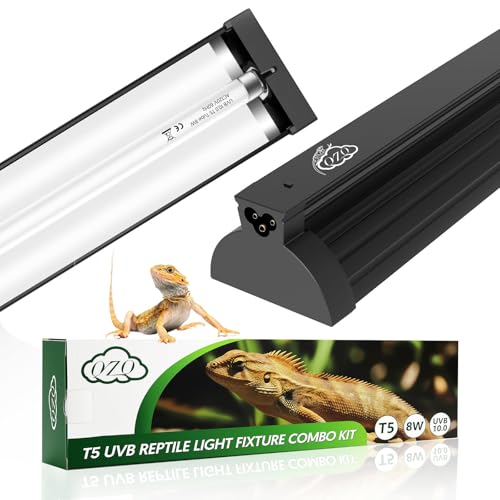
The QZQ T5 UVB fixture delivers a robust 10.0 UVB output with a high-reflector design to maximize UVB and UVA exposure. The kit includes a 5.9-foot detachable power cord, a convenient on/off switch, and multiple mounting accessories for flexible installation. UVB/UVA balance supports calcium absorption and metabolic health, while energy efficiency reduces ongoing power use. This setup is particularly beneficial for species requiring strong UV exposure to support bone health and natural behaviors like basking and feeding.
Who it’s best for: reptile owners seeking a reliable UVB-dedicated kit to support calcium metabolism and vitamin D3 synthesis in desert and basking species. Why chosen: strong UVB output, polished reflector, and long installation options enhance efficiency and practicality.
Caution: improper distance from the basking area can cause overexposure; follow recommended mounting guidelines to avoid skin or eye irritation of animals.
Exo Terra Repti-Glo 2.0 13-Watt
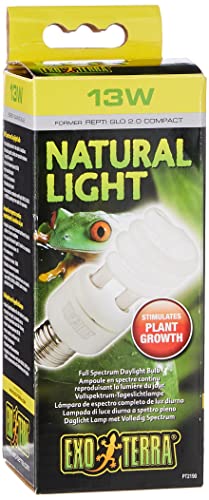
The Exo Terra Repti-Glo 2.0 is a compact 13-watt full-spectrum daylight lamp with a high CRI (98) and a color temperature around 6700K. It is well-suited for planted terrariums and for animals with modest UV requirements, such as snakes, frogs, and nocturnal species. This bulb emphasizes natural daylight simulation to support day-night rhythms in a low-UV environment. It’s a solid choice when the primary need is color rendering and ambient visibility rather than high UV output.
Who it’s best for: keepers with smaller or heavily planted terrariums, or species that don’t rely on intense UV exposure. Why chosen: excellent color rendering and broad applicability for non-UV-focused setups.
Caution: not ideal for species that require strong UV exposure for vitamin D3 synthesis or calcium absorption; pair with a dedicated UVB source if needed.
Fluker’s Repta-Clamp Lamp
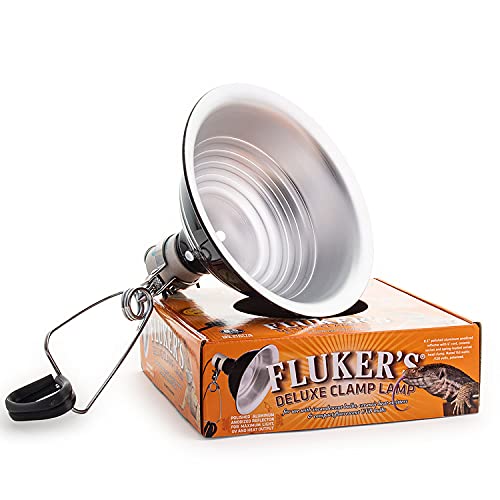
The Fluker’s Repta-Clamp Lamp provides a durable heat source for basking, with an 8.5-inch clamp design and UL/CUL approval. It supports up to 150 watts for incandescent bulbs or ceramic heat emitters, enabling strong basking climates in larger enclosures. The integrated on/off switch and secure clamp simplify placement and daily operation. This fixture is best used as a primary heat source in conjunction with a separate UVB or daylight system.
Who it’s best for: keepers needing a powerful basking heat option, particularly for larger terrariums or enclosures requiring intense heat. Why chosen: dependable heat delivery, simple control, and compatibility with a range of lamps.
Caution: this is a heat-focused accessory and should be paired with a UVB or daylight lamp to provide a balanced lighting environment; monitor temperatures to avoid overheating.
Buying Guide: Practical Lighting Choices For Reptile Habitats
What should you prioritize when selecting terrarium lighting?
- Species needs: Some reptiles require strong UVB for calcium metabolism; others rely more on ambient daylight and heat. Match the spectrum and intensity to the animal’s natural habitat and basking behavior.
- Tank size and setup: Larger enclosures benefit from higher wattage options or fixtures with wider coverage. Smaller tanks favor compact, adjustable units to avoid shadow zones.
- Day/Night cycle: Look for lights with built-in or programmable day and night modes to support circadian rhythms and reduce stress.
- UVB considerations: If UVB is essential, choose a dedicated UVB fixture with appropriate distance guidelines. Co-locate with a separate daytime or basking light when needed.
- Ease of installation: Some fixtures include mounting hardware and cords for flexible placement. Others may require more setup to achieve even coverage.
- Energy efficiency and heat output: High-output UVB and daylight lamps can generate heat; ensure temperature levels in the enclosure stay within species-specific ranges.
Frequently Asked Questions
- What kind of lighting do reptiles need?
Reptiles typically need a combination of daylight or full-spectrum light, UVB for calcium metabolism, and a heat source for basking. The exact mix depends on the species and enclosure.
- How close should UVB lights be to my reptile?
UVB lamp distance depends on the lamp type and the species. Follow the manufacturer’s guidelines and adjust as the animal grows or as you observe basking behavior.
- Can I use a regular household lamp for reptiles?
A general lamp may provide light and heat, but reptiles often require UVB and specific spectrum ranges. Use purpose-built terrarium lighting and pair with appropriate heat sources as needed.
- Is it better to use a single light or multiple lights?
Multiple lights can deliver targeted heat, daylight, and UVB more evenly, supporting a wider range of behaviors and territory usage within the enclosure.
- What are the signs of lighting problems in a terrarium?
Signs include lethargy, avoidance of basking zones, color changes, or unusual sleeping patterns. If you notice issues, recheck spectrum, intensity, and placement.
- How do I choose between UVB lamps and full-spectrum daylight lamps?
UVB lamps are essential for calcium metabolism in many reptiles; full-spectrum daylight lamps help with visibility and circadian rhythms. Combine them as appropriate for your species.