Powdery mildew can compromise the look and health of many plants, from ornamentals to edible crops. This guide highlights five systemic and strong-contact fungicides designed to tackle powdery mildew, plus related leaf spot and other common fungal diseases. Each option provides varying levels of preventive protection, ease of use, and compatibility with organic gardening standards. Explore products that balance efficacy with plant safety for American gardens and landscapes.
Summary Table of Chosen Products
| Product | Brand | Type | Powdery Mildew Coverage | Notes |
|---|---|---|---|---|
| Earth’s Ally Disease Control | Earth’s Ally | Concentrate/Fungicide | Yes | Natural formula, safe for people and pets; broad disease coverage |
| Gravex 20 EW Fungicide | Atticus | Systemic Fungicide | Yes | Contains myclobutanil; curative + preventive |
| Grower’s Ally Fungicide Spray | Grower’s Ally | Ready-to-Use | Yes | OMRI-listed; citric-acid based |
| Grower’s Ally Fungicide Concentrate | Grower’s Ally | Concentrate | Yes | Same great protection; doubles as a gallons-friendly option |
| Trifecta Crop Control Ready-to-Use | Trifecta | Ready-to-Use | Yes | All-natural, plant-based; broad pest and powdery mildew control |
Earth’s Ally Disease Control Concentrate

Earth’s Ally Disease Control Concentrate is a natural, citric-acid–based fungicide designed to treat and prevent powdery mildew, downy mildew, blight, and other common plant diseases. This concentrate supports plant health by offering broad disease protection without harsh residues. It is marketed as safe for people, pets, and the planet, making it a convenient choice for homes with children, pets, or edible crops. The product emphasizes preventative use in addition to treatment, helping to maintain foliage health and appearance across a range of ornamentals, fruits, vegetables, and trees.
Key features include: treatment and prevention of powdery mildew and other fungal problems, a natural formulation, and a safety profile focused on minimal residues. The product is presented as a safer alternative to aggressive chemical fungicides, and it emphasizes compatibility with a wide variety of plants from roses to edibles. For best results, follow the label directions regarding dilution, application timing, and reapplication schedules.
Atticus Gravex 20EW Fungicide

Gravex 20 EW Fungicide (16 oz) delivers 19.7% myclobutanil for broad-spectrum fungal control, including powdery mildew on ornamentals and lawns. The formulation supports both curative and preventive action, helping to curb ongoing infections and halt new growth of fungi. Gravex is positioned for turf and landscape use, offering effective management of diseases like brown patch, scab, and red thread, in addition to powdery mildew and black spot on ornamentals. Its microemulsion concentrate (MEC) format aids mixing stability and tank-mix compatibility with other products.
Key considerations: Gravex provides a strong active ingredient familiar to professionals, with emphasis on consistent performance even in variable weather. The label outlines application timing, compatibility with other fungicides, and soil vs. foliar targets. Users should read the label to ensure proper use around edible crops and to confirm local regulatory allowances for myclobutanil-based products.
Grower’s Ally Fungicide Concentrate

Grower’s Ally Concentrate is a versatile fungicide designed for indoor and outdoor use to combat powdery mildew, alternaria blight, root rot, and other fungal threats. The concentrate format enables mixing for larger areas and extended seasonal use. It is paired with a formulation that emphasizes low pollutant content; the product is FIFRA 25(b) exempt and OMRI Listed, aligning with organic gardening practices. By forming a protective barrier on leaf surfaces and roots, it helps prevent pathogen development while remaining gentle on plant tissue.
Considerations include the product’s suitability for organic gardens and the emphasis on preventing disease through preventive spraying. The label commonly recommends regular applications on high-risk crops and timing relative to humid or wet conditions, with attention to any local restrictions on organic inputs and the need for reapplication after rain or irrigation.
Grower’s Ally Fungicide Spray for Plants

This Ready-to-Use formulation from Grower’s Ally targets powdery mildew and other common fungal issues with a practical spray-on approach. It’s designed for both indoor and outdoor use, offering convenience for homeowners who want quick, on-site protection without mixing. The product highlights organic-compliant attributes and a focus on safe handling for households with kids and pets. It is positioned as a reliable, pre-mixed option that delivers protective coverage across a broad range of plants, including ornamentals, vegetables, and fruit crops.
Key takeaways include its compatibility with OMRI-listed organic gardening and its emphasis on preventing mildew formation when used proactively. Users should follow spray intervals and proper coverage routines to maximize protective benefits, especially on dense foliage or high-humidity environments where mildew tends to thrive.
Trifecta Crop Control Ready to Use
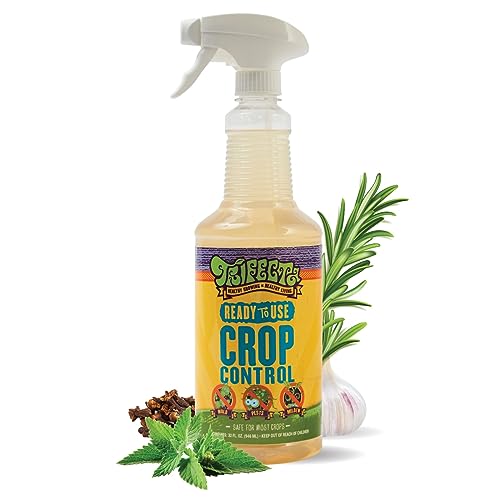
Trifecta Crop Control Ready to Use is an all-natural, plant-based solution designed for indoor and outdoor crops. It targets powdery mildew, botrytis, and various pests, making it a multi-purpose option for integrated pest management. The product emphasizes safety for edible crops and reduced environmental impact, using essential oil formulations that can act as both a fungicide and pest control agent. It is positioned as a simple, fast-acting option suitable for gardeners seeking a non-synthetic approach.
Considerations include its suitability for organic gardens, potential effects on beneficial insects, and the need for repeat applications in humid conditions. While ideal for organic and low-residue gardening, some users may require longer residual protection than synthetic fungicides provide, depending on climate and plant species.
Buying Guide: Key Purchase Considerations for Powdery Mildew Control
- Active ingredients and modes of action: Systemic fungicides (which are absorbed by the plant) can provide longer-lasting protection but may require more careful rotation to prevent resistance. Non-systemic or organic-based products emphasize safety and environmental impact but may need more frequent applications.
- Plant safety and site suitability: Consider whether products are labeled for edible crops, ornamentals, trees, or lawns. Look for OMRI listings for organic gardening and avoid products with harsh residues on edible harvests unless clearly permitted.
- Preventive vs. curative use: Some products are designed to prevent mildew by creating protective barriers, while others target existing infections. A combination approach—prevention at humid periods and targeted treatment when mildew appears—often yields the best results.
- Application logistics: Ready-to-use sprays are convenient for quick applications, while concentrates offer cost efficiency for larger areas. Check mixing instructions, spray schedules, and compatibility with other products for tank-mixing.
- Environmental considerations: In addition to safety for humans and pets, evaluate pollutant content and impact on beneficial insects. Organic and low-residue options may align with sustainable gardening goals.
- Climate and plant type: Powdery mildew severity varies with humidity, temperature, and plant species. Choose products proven effective for the specific hosts (roses, ornamentals, vegetables, fruit trees) and adjust timing around peak mildew seasons.
- Label compliance: Always follow the product label for dilution rates, safety gear, pre-harvest intervals, and local regulations. Misuse can reduce efficacy or create safety concerns.
In summary, these options offer a mix of natural, organic, and conventional fungicides that address powdery mildew with varying degrees of systemic action, convenience, and environmental impact. For best results, select one or two products suitable for your plant types and climate, rotate modes of action to reduce resistance risk, and adhere to label directions for safe, effective protection throughout the growing season.