Systemic tree insecticides protect trees by moving through the plant’s vascular system, delivering protection from the roots to the leaves. This guide highlights top options designed to combat common tree pests, explaining how each product works, where it’s best used, and what to consider before buying. The selections focus on long-lasting protection, ease of application, and suitability for different tree types and climates.
| Product | Brand | Formulation | Highlights |
|---|---|---|---|
| Bonide Annual Tree & Shrub Insect Control with Systemaxx | Bonide | Concentrate | Root systemic movement; year-long protection; roses, fruit, nut, and ornamental trees |
| Bonide Systemic Granules Insect Killer | Bonide | Granules | Internal control; easy to apply; container and hanging-basket friendly |
| BioAdvanced 12 Month Tree & Shrub Insect Killer | BioAdvanced | Concentrate | One-year protection; systemic uptake; rainproof performance |
| Acecap 25-Pack Systemic Insecticide Tree Implants | AcecapHywean | Implants | Season-long control; minimal exposure; long-lasting in evergreen trees |
| Monterey Fruit Tree & Vegetable Systemic Soil Drench | Monterey | Soil drench | Broad pest control; protects fruit and nut trees; also usable on vegetables |
Below are five carefully chosen products that address common systemic needs for trees, from ornamentals to fruit-bearing varieties. Each product section offers key usage notes, target pests, and practical application tips to help homeowners select the right option for their landscape.
Bonide Annual Tree & Shrub Insect Control With Systemaxx
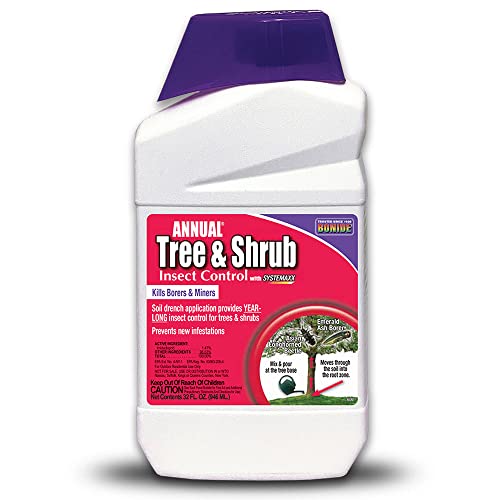
Bonide’s Annual Tree & Shrub Insect Control with Systemaxx uses a water-dissolvable concentrate that moves through the root zone and up into the tree. This systemic action provides protection from borers, miners, aphids, and other listed pests for listed fruit, nut, and ornamental trees and shrubs, including roses and apple trees. The product is designed to deliver protection to new growth as well, helping maintain vigor in stressed seasons. For best results, apply according to label directions and water in thoroughly to ensure movement through the root system.
Bonide Systemic Granules Insect Killer

This product offers a ready-to-use granular format that delivers systemic protection from inside the plant against aphids, whiteflies, miners, and scales on trees, flowers, and shrubs. It’s particularly convenient for container plantings or landscapes with mixed plantings where quick, even distribution is desired. Granular applications can be ideal when you want to treat root zones with minimal foliar exposure, though timing should align with root uptake and weather conditions for optimal movement.
BioAdvanced 12 Month Tree & Shrub Insect Killer

BioAdvanced’s 12 Month Tree & Shrub Insect Killer provides a full year of protection by systemic uptake from the roots to the leaves. It targets common pests such as Japanese beetles and aphids, offering a broad spectrum approach for landscape trees and shrubs. The product’s long-lasting formulation helps reduce the need for frequent re-application, making it a practical option for busy homeowners. Ensure thorough application and allow sufficient time for the active ingredient to translocate within the plant.
Acecap 25-Pack Systemic Insecticide Tree Implants

Acecap Hywean’s systemic insecticide implants offer season-long control with a minimal exposure profile. Designed to be inserted into the tree, these implants provide extended protection for up to two seasons in evergreen trees and are particularly useful for homeowners seeking a low-impact, long-acting solution. The implants reduce the need for surface spraying and can be an attractive choice for sensitive landscapes where chemical drift is a concern. Follow installation guidelines to ensure proper placement and effectiveness.
Monterey Fruit Tree & Vegetable Systemic Soil Drench

Monterey’s systemic soil drench is designed for broad protection across fruit and nut trees, while also being suitable for certain vegetables and herbs. As a soil-drench formulation, it relies on root uptake to move the active ingredient through the plant. This can provide long-lasting defense against a wide range of pests, including aphids and beetles. It’s important to follow soil-drench application rates and ensure even distribution around the root zone for uniform translocation.
Buying Guide
Key factors to consider when choosing a systemic insecticide for trees include:
- Tree type and age: Some products are formulated for mature trees, while others are suitable for young or ornamental trees. Verify compatibility with your species.
- Pest profile: Identify the most common pests (aphids, beetles, borers, scales) in your area and choose a product with proven activity against those pests.
- Formulation and application method: Concentrates vs. granules vs. implants each require different handling, mixing, and application steps. Consider your preferred method and landscape setup (soil drench, root injection, or trunk implants).
- Duration of protection: Look for products labeled to provide protection for a full season or a full year, depending on your maintenance plan and climate.
- Environmental and non-target impact: Some formulations minimize foliar drift and soil residue. Check label directions for safe use near pollinators and water sources.
- Rainfastness and weather considerations: Rainproof or weather-resistant formulations help ensure efficacy after rainfall or irrigation.
- Safety and handling: Follow label instructions for mixing, storage, and protective equipment to protect children, pets, and bystanders.
- Regulatory compliance: Ensure the product is approved for use in your state and on the specific tree species you manage.
In practice, homeowners should tailor product choice to their landscape realities: tree species, infestation history, climate patterns, and the desired balance between ease of use and duration of protection. For layered protection, some gardeners use a systemic treatment for long-term control alongside targeted spot treatments for urgent pest outbreaks. Always follow the product label for application timing, dilution, and safety measures to maximize effectiveness while minimizing environmental impact.