For American gardeners seeking efficient, back-saving weeding, standing root-removal tools offer a practical solution. This guide compares five popular tools designed to extract weeds with their roots intact, reducing regrowth and soil disruption. Each option is evaluated on design, durability, and user-friendliness to help you choose the best fit for lawns, flower beds, and vegetable plots.
| Product | Brand | Main Benefit |
|---|---|---|
| Walensee Weed Puller | Walensee Store | Three-claw design; 39″ handle; foot pedal for root extraction |
| Grampa’s Weeder | Grampa’s Weeder Store | Classic stand-up design with a long 45″ handle; durable |
| Fiskars 4-Claw Stand Up Weed Puller | Fiskars | Ergonomic 39″ handle; easy-eject mechanism |
| Walensee Rotary Cultivator | Walensee | 2-in-1 weeder and soil aerator; star-shaped tines |
| WORKPRO Weed Puller Tool | WORKPRO | Long adjustable handle; 4-claw steel head; foot pedal |
Introduction continues: This article focuses on tools designed to minimize bending and kneeling while efficiently uprooting weeds. Each product section provides a concise overview, then highlights core features and practical notes for use in typical American gardens, from lawns to raised beds.
Walensee Weed Puller
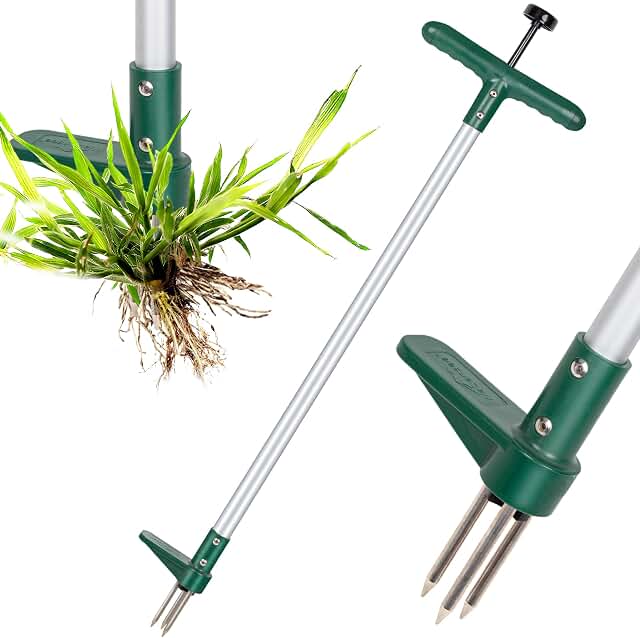
The Walensee Weed Puller offers a stand-up design with a 39-inch handle to minimize bending. A foot pedal provides leverage to drive three steel teeth into the root zone, allowing the tool to grasp the weed and extract it at the root. The 3-claw configuration is intended for use in a variety of soil conditions and supports weed varieties such as crabgrass, thistle, and burdock. Built from durable stainless steel, this tool emphasizes longevity and low maintenance for garden beds and lawns alike.
Grampa’s Weeder

Grampa’s Weeder is the original stand-up weed puller with a long 45-inch handle and a classic four-claw head. This design emphasizes ease of use, backed by decades of tradition. The tool is promoted as an easy way to remove weeds and their roots without bending or kneeling, a benefit for gardeners with lower-back concerns. While marketed as durable and simple, it relies on proper technique and regular maintenance to sustain performance over time.
Fiskars 4-Claw Stand Up Weed Puller

The Fiskars 4-Claw Stand Up Weed Puller features a 39-inch ergonomic handle and an easy-eject mechanism. Its four-claw design enhances root contact for a broad range of weed types, and the lightweight construction supports extended use in lawns and garden beds. The device emphasizes quick weed removal with minimal bending and uses leverage to extract roots effectively, though performance may vary with very dense soils or deeply entrenched weeds.
Walensee Rotary Cultivator

The Walensee Rotary Cultivator blends a cultivator with a soil aerator in a 2-in-1 design. The star-shaped rolling tines are adjustable to adapt to lawn and garden tasks, including reseeding and light cultivation. While not a single-weed puller, it supports controlled soil disturbance that can loosen compaction and assist subsequent weed removal. This tool is suitable for larger areas where multiple weed management steps are planned in sequence.
WORKPRO Weed Puller Tool

The WORKPRO Weed Puller Tool emphasizes an adjustable long handle (33″ or 46″) with a four-claw steel head and a foot pedal for easier extraction. It is marketed for detaching weeds and pulling them by the roots, with a focus on lawn and garden use. The detachable dandelion picker feature adds versatility for stubborn, taproot-dominant weeds. As with other stand-up pullers, effectiveness depends on soil conditions and correct technique to maximize root removal.
Buying Guide
- Length and ergonomics: Longer handles reduce bending but require good balance and control. Look for ergonomic grips and a comfortable reach that suits your height.
- Root capture mechanism: Claw design, foot pedal, and leverage determine how effectively roots are pulled from different soils. More teeth and robust steel generally improve performance in tougher ground.
- Material and durability: Stainless steel heads resist rust and wear, while sturdy handles ensure longevity in frequent use across seasons.
- Soil type compatibility: For compacted or clay soils, tools with strong leverage and deeper teeth perform better; sandy soils may require lighter, quicker pulls to prevent breakage.
- Maintenance: Regular cleaning after use, drying to prevent rust, and occasional sharpening or replacement of teeth can extend tool life.
- Multi-function options: Some tools pair weed pulling with soil aeration or cultivation features. Consider whether you want a dedicated root-puller or a combination tool for broader garden tasks.
- usage scenarios: Lawn, flower borders, vegetable patches, and raised beds each have distinct weed profiles. Choose a tool whose design aligns with your typical targets (dandelions, crabgrass, thistles, etc.).
In summary, standing root-removal tools provide a practical way to manage weeds with reduced physical strain. Selection should balance handle length, claw design, material durability, and soil conditions to optimize root removal and long-term garden health.