Answering the need for reliable irrigation, these pressure regulators help keep sprinkler systems operating at a stable, safe pressure. They’re ideal for homeowners installing drip systems, landscape sprinklers, or garden irrigation where pressure fluctuations can reduce efficiency or damage lines. The top picks below are best for different setups: drip-only systems, mixed sprinkler-drip networks, all-in-one kits, and low-flow installations. Each product includes a brief rationale, who it’s best for, and a practical caveat.
Product comparisons at a glance
| Product | Best For | Key Benefit | Who Should Buy |
|---|---|---|---|
| Senninger Pressure Regulator 25 PSI | Low-flow systems (drip, soaker hoses) | Compact, constant 25 PSI output; reliable for precise distribution | Gardeners and landscapers needing steady low-flow performance |
| Orbit 30 PSI Drip Regulator 1″ MPT | Complete 3-in-1 solution | Integrated filter and Drip-Lock adapter for streamlined installs | Those seeking an all-in-one regulator with minimal leakage points |
| Rain Bird PRS05030S Drip Retrofit Regulator | Risers and retrofits | 30 PSI regulation for micro-watering devices | Existing drip manifolds converting to low-volume drip |
| Breezliy 2-Pack 25 PSI Pressure Regulator | Drip irrigation expansions | 2-pack value; compatible with 3/4″ hose connections | Budget-conscious setups needing multiple regulators |
| Habitech Drip Irrigation Faucet Adapter Kit | All-in-one faucet connection kits | Includes filter and backflow preventer with a regulator | New installations requiring turnkey setup |
Senninger Pressure Regulator 25 PSI
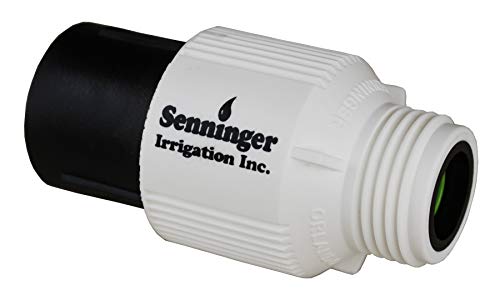
The Senninger PRLG 25 PSI regulator is designed for low-flow irrigation. It maintains a constant 25 PSI output across a flow range of 0.5 to 7 GPM, supporting solid-set systems, drip lines, and soaker hoses. This unit is suitable for residential and commercial installations where steady pressure improves distribution uniformity and efficiency. The regulator is tested for accuracy and is trusted for reliable performance. Best for: low-flow irrigation where predictable emitter flow matters. Caution: ensure compatibility with your existing 3/4″ connections to avoid adapters that can introduce leaks.
Orbit 67798 Drip Irrigation Pressure Regulator

This Orbit 3-in-1 unit combines a 30 PSI regulator, 120-mesh stainless steel filter, and a Drip-Lock adapter into one compact design. It eliminates multiple connection points that can leak and offers straightforward maintenance with a direct water flow path. Best for: users who want a single assembly to simplify installation and reduce leak points. Caution: the integrated design is convenient, but verify the Drip-Lock compatibility with your drip emitters and manifolds.
Rain Bird PRS05030S Drip Retrofit Regulator

The Rain Bird PRS05030S provides a straightforward 30 PSI regulation specifically for retrofitting half-inch risers or existing shrub spray systems into a low-volume drip setup. It is designed to maximize the performance of micro-watering devices by maintaining consistent pressure and avoiding over-watering. Best for: converting existing irrigation lines to drip without complex changes. Caution: verify your existing riser compatibility to ensure a snug fit and avoid flow restrictions.
Habitech Drip Irrigation Faucet Adapter Kit
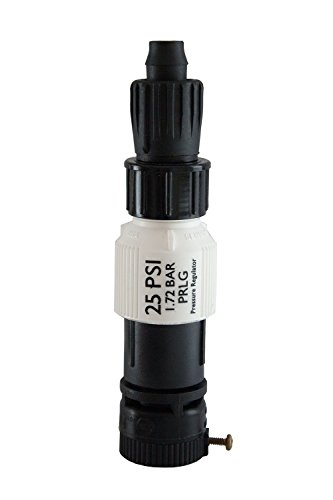
Habitech offers an all-in-one faucet adapter kit that connects 1/2″ tubing to a faucet or hose. It includes a backflow preventer, a 150-mesh filter, and a Senninger 25 PSI regulator pre-installed, providing a ready-to-use drip irrigation solution. Best for: new installations needing a turnkey setup with filtration and pressure regulation. Caution: size compatibility with your faucet and tubing must be confirmed to ensure a proper seal and function.
OGGOGOE Drip Regulator 25 PSI

The OGGOGOE 25 PSI regulator provides a universal 3/4″ hose thread inlet with 3/4″ male outlet, designed to integrate with standard hoses, sprinklers, and drip fittings. It maintains optimal pressure for drip irrigation, protecting emitters from surges while ensuring even distribution. Best for: upgrading or adding a regulator to existing drip layouts. Caution: verify thread compatibility with your specific hose fittings to prevent mismatches.
Buying Guide: Selecting the right sprinkler system pressure regulator
- Regulation range and accuracy: Look for regulators specified to hold a consistent output (commonly 25 or 30 PSI) within your system’s operating range. If your layout includes higher flow zones, ensure the regulator supports the desired GPM range.
- Connection size and type: Most residential regulators use 3/4″ garden hose threads (FHT/MHT). Confirm inlet and outlet sizes to avoid adapters that can introduce leaks.
- System type compatibility: Drip irrigation benefits from regulators rated for low flow, while sprinkler lines may require different ranges. Some units integrate filters or backflow preventers for cleaner water and safer operation.
- All-in-one vs. modular: All-in-one units reduce leak points but limit configurability. Modular kits offer flexibility for upgrades but may require more fittings.
- Materials and durability: Brass and high-quality plastics resist corrosion and wear in outdoor conditions. Lead-free options are preferable for potable water connections.
- Installation considerations: Consider whether you want pre-assembled kits (faster setup) or modular parts (customizable configurations) to fit your landscape layout.
Practical installation tips
- Place regulators close to the water source to prevent high pressure from reaching downstream components.
- Use filters upstream of regulators to prevent clogging from sediment and debris.
- Test system pressure with a gauge after installation and adjust as needed to maintain the recommended operating pressure.
- For drip systems, pair regulators with emitters rated for your target flow to maximize efficiency and uniformity.
Common questions buyers ask
- Do I need a regulator for every drip line? Not always; many systems can use one centralized regulator, but multiple branches may benefit from individual regulators for consistent pressure.
- Will a regulator reduce my water usage? Indirectly, by preventing over-pressurization and emitter over-watering, regulators help improve distribution efficiency.
- Can I install a regulator on a faucet or hose bib? Yes, many regulators are designed for 3/4″ hose thread connections and work well with standard outdoor spigots.
- What’s the difference between a regulator and a filter? A regulator controls pressure; a filter removes debris. Some units combine both for convenience.
- How do I know which PSI is right for my system? Check emitter and sprinkler specifications; many drip components operate optimally around 25-30 PSI.
- Are brass regulators safer for potable water? Brass units are common and durable; ensure compliance with local codes and NSF lead-free requirements.
Frequently asked compatibility notes
When selecting a regulator, verify thread standard (FHT vs MHT) and compatibility with your hose or piping layout. Some kits include adapters or filters that simplify setups, especially for novice installers. If your landscape includes both drip emitters and conventional sprinklers, a regulator with adjustable output or separate regulators for each zone can help maintain uniform performance across zones.
Summary of the top picks
- Senninger 25 PSI regulator: Best for consistent low-flow irrigation in drip systems.
- Orbit 30 PSI 3-in-1 regulator: Best for streamlined installs with built-in filtering and Drip-Lock connection.
- Rain Bird PRS05030S: Best for retrofitting existing risers to drip-friendly pressure.
- Breezliy 2-Pack 25 PSI regulators: Best for multi-zone drip setups on a budget.
- Habitech faucet adapter kit: Best for turnkey installations with filtration and backflow prevention included.
Frequently asked questions (quick answers)
- What pressure should my sprinkler system run at? Generally 25-30 PSI for drip and low-flow zones, but check your emitter specifications.
- Can I use a regulator with a standard garden hose? Yes, most regulators use 3/4″ hose thread connections compatible with standard hoses.
- Do regulators wear out? They can, especially in harsh outdoor conditions; inspect seals and connections during seasonal maintenance.
- Is a filter always necessary? For drip systems, a filter helps prevent emitter clogging; for open sprinklers, a simple regulator-alone setup may suffice.
- Can regulators fix pressure spikes from water hammer? A regulator helps prevent spikes but may not completely eliminate water hammer in long runs.