Finding the right solar electric fence charger for horses means balancing portability, reliability, and power. This guide highlights five top-rated options designed to keep horses safe in pastures, paddocks, and strip grazing setups. Each pick emphasizes weather resilience, battery life, and easy installation so you can compare quickly and choose the best fit for your property.
| Product | Brand | Coverage | Output | Key Strength |
|---|---|---|---|---|
| ANDMON 10 Miles Solar Fence Charger | ANDMON | Up to 2 miles | 0.11J | Portable, reliable day/night mode |
| Realpoultry S1000 1J Solar Fence Charger | Realpoultry | Up to 40+ miles | 1J stored | Long-range, remote use |
| ANDMON MINI400 30 Miles | ANDMON | Up to 30 miles | 0.4J | Day/Night mode, easy install |
| Gallagher S30 Solar Charger | Gallagher | 4–20 miles typical to ideal | 0.2J | Rugged, weather-resistant |
| PLOWIC 10 Miles Solar Charger | PLOWIC | Up to 10 miles | 0.2J | Ultra-portable, 8KV output |
ANDMON 10 Miles Solar Fence Charger

The ANDMON unit is designed for strip grazing and portable use. It energizes up to 2 miles of fence and includes a built-in solar panel and GEL battery for extended performance in poor light. The charger emphasizes quick installation and mobility, allowing you to relocate protection as pastures rotate. Its rugged construction supports frequent transport between paddocks, while a reliable battery management system ensures continuous power 24 hours a day, 28 days or more in some conditions.
Features highlighted include a compact footprint, simple mounting on steel posts, and a focus on consistent energy delivery in variable weather. This makes it a practical option for horse owners who need a dependable, moveable fencing solution without sacrificing performance during cloudy days or low sun.
Realpoultry S1000 Solar Fence Charger

The S1000 model is notable for its high-output design and long-range capability. It stores up to 1 joule and, with an efficient low-impedance system, can power extensive fencing—up to an estimated 50 miles depending on wire configuration and strand count. It’s well-suited for rotational grazing and travel across larger properties. A 12V/12AH sealed lead-acid battery and a 15W solar panel support multi-day operation in remote settings, while built-in solar panels simplify installation on steel posts for quick deployment.
Users should consider whether the higher range matches their fencing layout and whether the installation context benefits from the included battery and solar panel combination. For horse properties seeking robust coverage, this model offers a strong balance of reach and portability.
ANDMON MINI400 30 Miles Solar Fence Charger
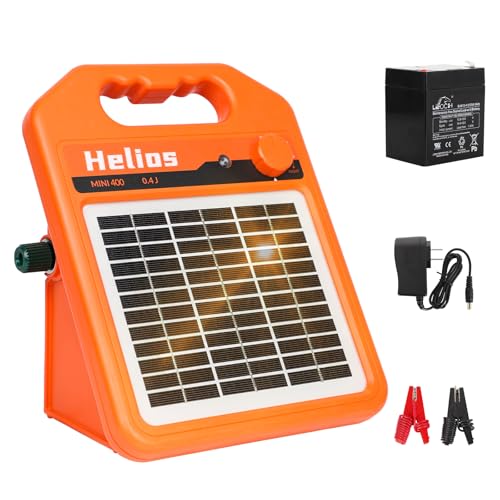
The MINI400 delivers substantial coverage with a 0.4 joule stored energy and a 0.3 joule output. It can energize up to 30 miles of fence, making it a solid choice for larger pastures or properties with multiple paddocks. The device includes a day/night mode for energy efficiency and supports both solar power and a DC charger, offering flexibility in various installation environments. Setup is straightforward, and compatibility with different post types helps fit diverse fence layouts.
Consider the climate and light availability since longer periods without sun can affect performance. The dual-power option helps ensure fence continuity during cloudy spells, making this a practical option for horse owners seeking strong, reliable power in a compact form.
Gallagher S20 Solar Electric Fence Charger

The S20 uses lithium battery technology for improved efficiency and faster recharge, paired with a high-efficiency solar panel to perform reliably under varied weather. It’s designed for easy portability with a carry handle, making it ideal for strip grazing and rotational pasture management. The charger is compact yet capable of powering multiple small to mid-sized fencing setups and is suitable for horses requiring secure perimeter control. Intelligent energy management adapts output to maximize fence uptime in rain or shine.
Key considerations include ensuring the solar panel orientation captures sufficient sunlight during winter months and evaluating whether the 2-mile typical range aligns with the property’s fencing configuration. For smaller operations or seasonal pastures, this model offers dependable, low-maintenance performance.
PLOWIC 10 Miles Solar Fence Charger

The PLOWIC unit emphasizes portability and a strong 8KV output, powering up to 10 miles of fence. It features a compact, travel-friendly design with a 5W solar panel and a 10,400mAh lithium battery, enabling 24/7 operation. The charger claims resilience in a range of temperatures and weather conditions, making it suitable for properties that experience seasonal changes. It’s particularly appealing for owners who need a light, mobile charger that can be relocated across paddocks as grazing plans shift.
Buying Guide: Key Purchase Considerations And Comparisons
When selecting a solar electric fence charger for horses, consider these factors to ensure you choose a model that matches your property, horse safety needs, and maintenance preferences.
- Coverage Versus Fence Layout: Assess the total miles of fencing and the wire type (single strand vs. multi-strand) to determine the required energy and impedance. Higher mileages require larger stored energy or efficient solar panels for consistent output.
- Output Energy: Measured in joules, higher values generally enable stronger shock and longer effective reach. For horses, a balance between safety and deterrence is essential. Overkill can be unnecessary in well-maintained areas.
- Power Source Flexibility: Models with both solar and DC charging options offer reliability during extended overcast periods. If your property has minimal sun exposure seasonally, a dual-power option can be valuable.
- Portability and Installation: For rotation grazing or frequent pasture changes, portable units with simple mounting are advantageous. Look for rugged weatherproofing and lightweight designs for ease of movement.
- Battery Type and Management: Lithium and GEL lead-acid batteries each have pros and cons. Lithium often offers faster charging and longer life, while GEL batteries are known for stability in varying temperatures.
- Climate and Temperature Range: Ensure the charger operates within your regional temperatures. Some units advertise operation in extreme cold or heat, which matters for year-round protection.
- Ease of Use and Maintenance: Check for straightforward installation, clear instructions, and readily available replacement parts or panels in case of wear or damage.
- Durability and Case Design: A rugged, UV-resistant enclosure with a weatherproof seal protects internal electronics from rain and dust, extending device life in pasture environments.
- Warranty and Support: A solid warranty and responsive customer support can be decisive when servicing electrical equipment used to protect horses.
Ultimately, the best solar fence charger for horses balances pasture size, grazing strategy, climate, and the need for mobility. In practice, owners with multiple paddocks often benefit from combining a high-output model for perimeter boundaries with lighter, portable units for rotational grazing. Always ensure proper installation, appropriate fence grounding, and adherence to safety guidelines to minimize risk and maintain reliable protection.