For American lawns, knowing the soil’s pH and nutrient balance is essential to keep grass green, durable, and resilient. This article reviews five widely available soil testing kits that help homeowners quickly assess grass-friendly conditions at home. Each option offers unique strengths—from fast colorimetric results to lab-grade analyses—so you can pick the kit that best fits your lawn’s needs and your budget.
Summary of chosen products:
- Rapitest Soil Test Kit for Gardens, Vegetables, Flowers and Lawns (Luster Leaf) — Quick at-home results for pH, N, P, K using color comparators. Includes components for 20 tests.
- MySoil Soil Test Kit — Comprehensive nutrient and pH analysis with tailored recommendations; professional-style results in 6–8 days.
- 2-in-1 pH & Nitrogen Soil Test Kit (Sooenben) — Dual-function strips for pH and nitrogen; foiled packaging; simple at-home testing.
- AKSBTEC 4-in-1 Soil Test Kit — 40 tests; measures pH, N, P, K with a color chart; designed for repeated lawn and garden use.
- Soil Test Kit 140 Test (Dewilde Trading Co) — Broad analysis including pH, ammonia nitrogen, phosphorus, potassium; emphasized for comprehensive fertility insight.
Rapitest Soil Test Kit For Lawns And Gardens
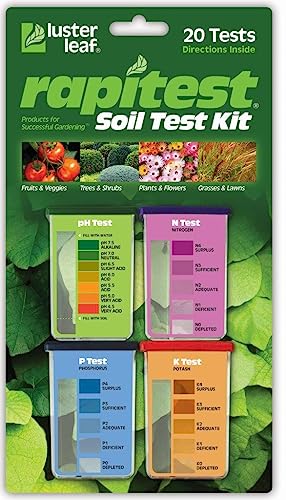
Rapitest provides quick, at-home results for soil pH and essential nutrients—nitrogen, phosphorus, and potassium. The kit uses an easy-to-use capsule system and patented color comparators. It includes all components needed for 20 tests, with five tests allocated for each variable. This setup supports testing multiple lawn zones or garden beds across the season.
MySoil Complete Lawn & Garden Soil Test Kit
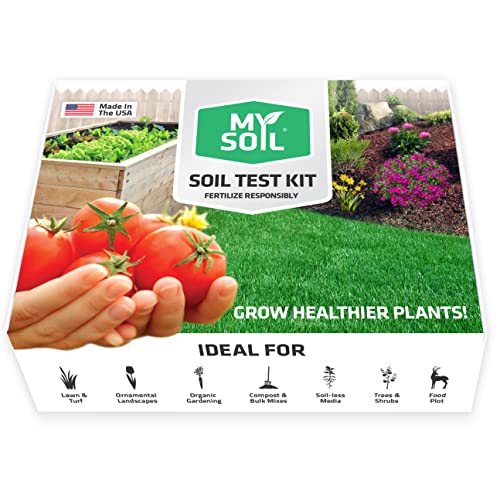
MySoil emphasizes professional-grade analysis with clear, actionable recommendations. It measures 13 plant-available nutrients and pH, delivering results in about 6–8 days. The kit is suitable for lawns, turf, vegetables, flowers, compost, trees, and even soil-less media, making it versatile for a wide range of lawn care scenarios.
2-in-1 pH & Nitrogen Soil Test Kit (Sooenben)

This all-in-one kit combines pH and nitrogen testing in one convenient package. It uses sealed foil-winished strips and a straightforward process: collect a soil sample, mix with water, dip the strip, and compare colors after a short wait. The kit includes test strips, a test tube with a scale, a soil sample spoon, and an instruction manual for quick setup and ongoing monitoring.
AKSBTEC 4-in-1 Soil Test Kit

AKSBTEC’s 4-in-1 kit covers pH, nitrogen, phosphorus, and potassium with 40 total tests (10 per element). It’s designed for repeated use across lawns, vegetable patches, and garden beds. Users mix soil with water, apply reagents, and compare colors against a chart for fast, at-home insights into soil fertility and fertilizer planning.
Dewilde Soil Test Kit 140 Tests

The Dewilde 140-test kit offers a comprehensive analysis, including pH, ammonia nitrogen, phosphorus, and potassium. As a liquid-based test, it provides a holistic view of soil health, helping gardeners tailor fertilizer regimens to grass and other lawn components. It’s positioned for long-term monitoring and broader landscape projects.
Buying Guide: Key Considerations For Grass Or Lawn Soil Testing
- Scope of analysis — For basic lawn care, pH plus N, P, K is often enough to guide fertilizer. For higher precision, consider kits offering 13 plant-available nutrients or lab-grade analyses.
- Speed vs. accuracy — Colorimetric drop tests yield immediate results, while mail-in or lab-style analyses provide detailed nutrient breakdown but take days to weeks.
- Sample coverage — If you have a large yard, choose a kit with enough tests to sample multiple zones (shade vs. sun, different soil types, or recently renovated areas).
- Ease of use — Look for clear instructions, minimal tools, and pre-measured reagents. Foiled or sealed strips help preserve accuracy in varying climates.
- Repeatability and consistency — Some kits include reference charts or color blocks designed to minimize subjective interpretation of colors.
- Long-term monitoring — For ongoing lawn care, a kit with many tests and simple resampling over time helps track soil improvement after amendments.
- Recommendations vs. data — Some kits provide actionable fertilizer recommendations; others deliver raw data with third-party interpretation guidance.
- Budget and value — Compare the number of tests per kit, the variety of nutrients measured, and whether replacement reagents are available.
How to Choose For Grass Health
Lawns typically respond to pH adjustments in the range of 6.0 to 7.0. If your soil is too acidic or alkaline, nutrient availability drops. For most American lawns, correcting pH first can dramatically improve nutrient uptake and turf vigor. A kit that blends easy at-home testing with clear fertilizer guidance helps homeowners implement timely amendments, seasonal reseeding, and ongoing lawn maintenance.
Interpreting Results: What To Do Next
Use the nutrient readouts to inform fertilizer applications, compost use, and irrigation adjustments. If pH is outside the ideal range, apply lime (to raise pH) or elemental sulfur (to lower pH) as recommended by the kit or local extension guidelines. If nitrogen is low but potassium is high, you might favor slow-release nitrogen sources to prevent rapid top growth and stress. For phosphorus-deficient readings, consider phosphate-rich amendments appropriate to your lawn type.
Coverage Scenarios
Small lawns benefit from compact kits with enough tests to cover multiple zones. Larger landscapes may require kits with higher test counts or the option for mail-in analysis for a detailed nutrient map. If you’re testing after renovation or heavy fertilization, track changes over time with repeatable test protocols to gauge the effectiveness of amendments.
Conclusion: Practical Soil Testing For A Healthier Grass (No Conclusion Section)
This article presents five soil testing options that balance speed, accuracy, and ease-of-use for grass care. Whether you want quick home results or a detailed nutrient profile, these kits provide the data needed to tailor fertilization, improve turf growth, and sustain a vibrant lawn.