Determining your lawn’s soil health helps you tailor nutrients, pH, and moisture goals for a lush, room-temperature green. This guide reviews five reliable soil testing products suitable for American lawns, balancing accuracy, ease of use, and actionable recommendations.
| Product | Brand | Key Benefit | Type |
|---|---|---|---|
| MySoil Soil Test Kit | My Soil | Comprehensive lab analysis with 13 nutrient measurements | Mail-in professional lab kit |
| Rapitest Soil Test Kit | Luster Leaf | Fast at-home pH and macronutrient testing | Color-compare/LED readout |
| TERRU 6-in-1 Soil Moisture Meter | TERRU | 6-parameter quick field reading including moisture and pH | Analog digital combo meter |
| AiGerdinn Soil Test Kit | AiGerdinn | 2-in-1 moisture and pH with dual dials | Dial meter |
| Soil pH Paper Test Kit | Dewilde Trading Co | Low-cost, reliable pH strips for various soil types | Test strips |
Note: All products are suitable for both home lawns and broader garden scenarios. The table above highlights typical use-cases; verify compatibility with your grass variety and local soil conditions before purchasing.
MySoil Soil Test Kit
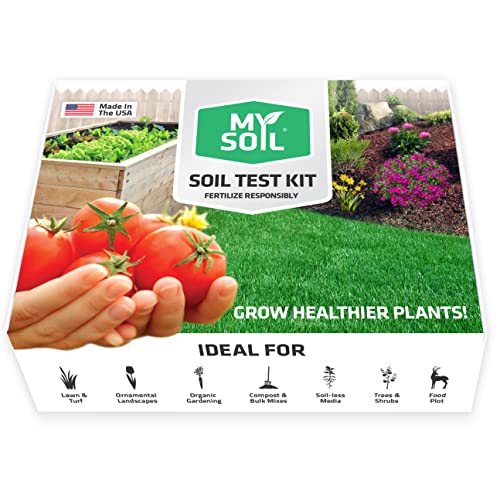
MySoil offers a mail-in professional lab analysis that measures 13 plant-available nutrients along with soil pH. Results arrive in 6-8 days and are tailored to lawn and garden needs. This kit is designed for homeowners seeking precise, lab-grade data to inform fertilization and lime or sulfur adjustments. Ideal for those with persistent lawn issues or new turf projects demanding accuracy beyond home meters.
Rapitest Soil Test Kit

Rapitest provides at-home testing for soil pH, nitrogen, phosphorus, and potassium using a capsule and color-compare system. With enough components for multiple tests, this kit accommodates testing across several lawn areas. It’s quick, inexpensive, and useful for homeowners who prefer rapid color-based readings without lab processing. Suitable for routine lawn maintenance and garden bed planning.
TERRU 6-in-1 Soil Moisture Meter

TERRU offers factory-permanent calibration with six core tests: moisture, pH, fertility, temperature, sunlight, and humidity. It emphasizes stable readings through locked reference values, avoiding drift due to battery change. The device provides a quick 7-second snapshot of soil conditions, making it practical for ongoing lawn care and quick checks before feeding grass. A strong option for gardeners seeking a single device for multiple data points.
AiGerdinn 2-in-1 Soil Test Kit

AiGerdinn combines a moisture meter and pH tester with a dual-dial display. This beginner-friendly tool helps homeowners quickly gauge when to water and adjust soil acidity without batteries. The dual-screen design is easy to read, and the probes are designed to minimize root damage, suitable for regular lawn maintenance and container plant care alike.
Dewilde pH Paper Test Kit

Dewilde’s soil pH test strips offer a cost-effective way to approximate soil acidity across a range of pH 3.5–9. The kit includes 100 strips, making it suitable for large lawns or multiple sample sites. A practical choice for budget-conscious homeowners needing quick, approximate readings to guide soil amendments for grass growth and health.
Buying Guide
What to consider when choosing a soil test product for grass
- Accuracy vs. practicality: Lab-based tests (like MySoil) provide precise nutrient values, while home kits offer fast guidance. Decide how exact you need the data for your lawn strategy.
- Scope of testing: Some kits test pH and a few nutrients; others measure broader nutrient profiles or multiple environmental factors. For lawns, pH and nitrogen availability are often most critical.
- Sample handling: Lab-based options require mail-in samples, which adds time and shipping considerations. At-home tests give immediate feedback but may vary by batch or kit quality.
- Frequency: Lawns benefit from annual or seasonal soil checks, especially before heavy fertilizer applications or lime adjustments. Consider subscribing to a lab service if you plan regular testing.
- Budget: Basic pH strips are affordable but less informative. A mid-range option like a 6-in-1 meter provides multiple metrics in one device, while lab kits deliver the most thorough analysis.
How to interpret results for grass health
- Soil pH: Most cool-season grasses perform best around 6.0–7.0. If outside this range, anticipate nutrient lockout or reduced availability.
- Nutrients: Key nutrients for turf include nitrogen (growth and color), phosphorus (root establishment), and potassium (hardiness). Excess or deficiency affects color, density, and disease resistance.
- Moisture and drainage: Soil moisture readings guide irrigation schedules. Overly wet or compacted soil reduces root respiration and nutrient uptake.
- Soil texture and structure: Persistent compaction or poor drainage may require aeration or organic amendments to improve root growth.
How to apply test results to lawn care
- Adjust pH with lime or sulfur according to test recommendations, then re-test after amendments.
- Choose fertilizers based on nitrogen needs identified by the test; avoid over-fertilizing which can burn roots and contribute to runoff.
- Incorporate slow-release formulas to reduce leaching and provide steady nutrients for grass over time.
- Schedule follow-up testing to monitor changes after seasonal treatments or lawn renovations.