Looking for reliable soil and water pH meters to keep your plants thriving? This guide highlights five top 3-in-1 and multi-function meters ideal for home gardens, hydroponics, aquariums, and lawn care. Each product is evaluated for who it’s best for, its key strengths, and practical limitations. Use these insights to choose a meter that matches your gardening style, whether you’re a beginner, a serious hobbyist, or a professional grower.
Summary table of chosen products:
| Product | Best For | Key Benefit | Limitations |
|---|---|---|---|
| PH Meter, TDS PPM Meter and 3 in 1 Soil Moisture Meter Combo | All-in-one home water and soil testing | Accurate pH, TDS, soil moisture, and temperature readings | Soil tester designed for soil testing specifically |
| 4-in-1 Soil Moisture Meter With pH And Light | Gardeners needing quick soil pH, moisture, temperature, and sunlight | Large backlit display and multi-parameter data | Requires batteries (not included) |
| SONKIR MS02 3-in-1 Soil Tester | Simple, battery-free soil testing | Three functions in one tester; no batteries needed | Soil-only testing; cannot test liquids |
| 7-in-one Soil Test Kit | Comprehensive, multi-parameter monitoring | Seven measurements including moisture, pH, fertility, light, temperature, humidity | More features may require familiarization |
| VIVOSUN 3-in-1 Digital Meter | Hydroponics and garden setups needing integrated readings | Automatic temperature compensation and multiple modes | Check battery levels for consistent use |
PH Meter, TDS PPM Meter and 3 in 1 Soil Moisture Meter Combo

The Cannabmall 3-in-1 meter combines a pH meter, a TDS/EC tester, and a soil moisture tester with a soil-focused design. The device provides simultaneous insights for water quality, soil conditions, and moisture content. This makes it well suited for hydroponics, home aquariums, and garden beds where precise timing for watering is critical. The pH range spans 0 to 14, and the TDS meter covers 0 to 9990 ppm, providing quick readings in seconds. A built-in temperature detector adds a temperature reference for more accurate pH compensation.
Who it’s best for: gardeners who want a compact, all-in-one solution for soil and water testing with quick response times. It’s also suitable for hobbyists managing multiple growing environments, such as indoor gardens or small hydroponic setups.
Why this selection: This product is chosen for its integrated approach—combining pH, TDS, and soil moisture in one pack. The preset calibration powders support accuracy for pH and EC testing. A potential limitation is that the soil tester is designed specifically for soil testing and may not be ideal for measuring liquids other than water or nutrient solutions.
Key considerations
- Calibration: Ensure you have the included buffers to maintain accuracy.
- Use case: Best for users testing soil and water quality in tandem.
- Display: Readouts are fast and easy to interpret, often with a compact LCD.
4-in-1 Soil Moisture Meter With pH And Light

This meter provides four essential readings in one handheld unit: soil moisture, soil pH, soil temperature, and sunlight intensity. The large LCD with backlight enables clear readings in daylight or dark conditions. It runs on four AAAA batteries, which are not included, and the device alerts users to low battery levels. Quick measurements help you determine watering schedules and light exposure for optimal plant growth.
Who it’s best for: homeowners and hobby gardeners needing a robust, all-around soil tester that’s easy to read in various lighting conditions and can guide irrigation and light management.
Why this selection: The 4-in-1 capability reduces the need for separate instruments, saving space and cost. A limitation is reliance on batteries and the need to replace them over time for continuous use.
SONKIR MS02 3-in-1 Soil Tester
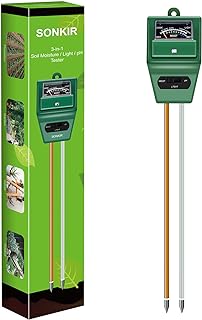
The SONKIR MS02 focuses on soil measurements with three capabilities: soil moisture, soil pH, and sunlight exposure. It is designed for ease of use in outdoor and garden settings. The device notes that it cannot be used to test pH in liquids, emphasizing soil-focused use. The tool operates without batteries, relying on a manual readout as the probes are inserted into soil.
Who it’s best for: gardeners seeking a simple, battery-free option for soil analysis, particularly for outdoor lawns, beds, and planters where quick checks are needed without ongoing maintenance.
Why this selection: It offers three useful soil measurements in one unit and avoids battery dependency. A limitation to consider is its restriction to soil testing and its manual readout which may be slower or less precise in some conditions.
7-in-one Soil Test Kit

The 7-in-one kit combines multiple readings in a single unit, including soil moisture, pH, sunlight intensity, soil fertility indicators, and environmental readings like air temperature and humidity. This broader toolkit supports more precise cultivation planning for home gardens, farms, and lawns. The LCD display provides real-time data to inform watering, fertilization, and light management decisions.
Who it’s best for: serious growers and gardeners who want a comprehensive overview of soil and environment parameters in one instrument, reducing the need for separate meters.
Why this selection: The extensive feature set supports deeper plant-health decisions. A potential limitation is the complexity—new users may need time to interpret all readings accurately.
VIVOSUN Digital PH Meter, 3-in-1

The VIVOSUN meter combines pH, TDS/EC, and temperature measurements in one device. It includes automatic temperature compensation for pH readings and a 3-in-1 soil tester mode that covers moisture, light, and pH. It features an LCD display with hold functionality to capture readings for later review, making it suitable for frequent water testing and soil monitoring in hydroponic and garden setups.
Who it’s best for: hydroponics enthusiasts and gardeners who need reliable, integrated measurements with temperature compensation for accurate water quality assessment and soil conditions.
Why this selection: The automatic temperature compensation and multi-mode capabilities make it versatile across water and soil tests. A potential limitation is battery life and the need to maintain calibration to ensure precision over time.
Buying Guide: Key Purchase Considerations
- Testing scope: Do you need soil-only testing, water quality, or a combination? Choose a meter that aligns with your primary use case (soil vs. water vs. mixed environments).
- Calibration and accuracy: Look for kits that include calibration solutions or buffers. Consider meters with automatic temperature compensation for consistent readings in varying temperatures.
- Display and readability: A backlit LCD helps read data in dim conditions, important for indoor setups or early morning/late evening testing.
- Power and maintenance: Battery-powered meters require replacements; battery-free options reduce ongoing maintenance but may limit features. Check for easy battery access if needed.
- Durability and environment: For outdoor gardening, choose probes with durable materials and weather resistance. If the device will be used in water or hydroponic systems, ensure waterproofing or splash resistance is adequate.
- Data interpretation: Some meters provide multiple metrics; ensure you understand what each reading means for plant care. Look for models with intuitive displays and clear guidance.
- Portability and ease of use: For hobbyists testing multiple plants or zones, compact, ergonomic designs reduce fatigue and improve consistency.
FAQ
- What is the difference between soil pH meters and water pH meters?
– Soil pH meters typically measure in soil where readings reflect root zone acidity, while water pH meters gauge liquid solutions. Many multi-function meters cover both when used appropriately with calibration. - Do I need to calibrate every time I test?
– Regular calibration improves accuracy. Follow manufacturer recommendations, which often include fresh buffers or powders for pH calibration. - Can I rely on a single meter for all my plants?
– A well-chosen 3-in-1 or 4-in-1 meter can cover most home garden needs. For highly precise professional work, consider separate specialized instruments. - What readings are most important for plant health?
– Soil moisture, soil pH, and light exposure are commonly critical. Temperature compensation improves pH accuracy in changing temperatures. - Are battery-free meters reliable in all conditions?
– Battery-free meters are convenient but may have limited features or slower response. Ensure the device fits your growth environment and maintenance willingness. - How should I care for probes between uses?
– Rinse probes with clean water after use, avoid harsh chemicals, and store according to the manufacturer’s instructions to extend probe life.