If you’re growing indoors and want intense, reliable light for flowering and fruiting, sodium (HPS) grow lights remain a strong option. This guide highlights five sodium-based options, explaining who they’re best for, and how to choose based on spectrum, lumen output, and durability. Ideal buyers include hobby growers seeking high yield, greenhouses needing consistent seasonal bursts, and professional setups requiring robust lighting systems. Below is a quick, buying-focused summary of the top five products, followed by detailed sections and a practical buying guide.
| Product | Brand | Base | Best For | Key Advantage |
|---|---|---|---|---|
| Vegelumax 600Watt HPS Lamp | Vegelumax | E39 | Professional hydroponics, compact grows | High 90,000-lumen output |
| GRUOTVSZAK 1000W DE Grow Light Bulb (2-Pack) | GRUOTVSZAK | Double Ended | Larger flowering rooms, high PAR | Over 2100 μmol/s PPF |
| Sylvania 400W Plantastar HID | LEDVANCE | E39 | Greenhouses, steady growth | 600 μmol/s PPF, long life |
| PROTOPIA HPS 1000W DE | PROTOPIA | Double Ended | Professional high-output setups | 155,000 lumen, 2100K |
| iPower 400W HPS Ballast with Bulb | iPower | HPS-compatible ballast | Budget indoor gardens | Digital ballast with versatile input |
Vegelumax 600Watt HPS Grow Light Bulb

The Vegelumax 600W HPS Grow Light is designed for professional hydroponic cultivation. It features a CCT of 2100K and a spectrum optimized for red and orange wavelengths to maximize photosynthetic active radiation (PAR). This bulb is best for compact hydroponic systems and growers who need strong lumen output in a limited space.
Best for: small to medium hydroponic setups, tight grow spaces, growers prioritizing high lumen output. Why selected: ultra-bright 90,000 lumens and a spectrum tailored to flowering and fruiting. Limitation: designed to work with compatible ballasts; ensure ballast type matches before use.
GRUOTVSZAK 2150 μmol HPS 1000W DE Grow Light
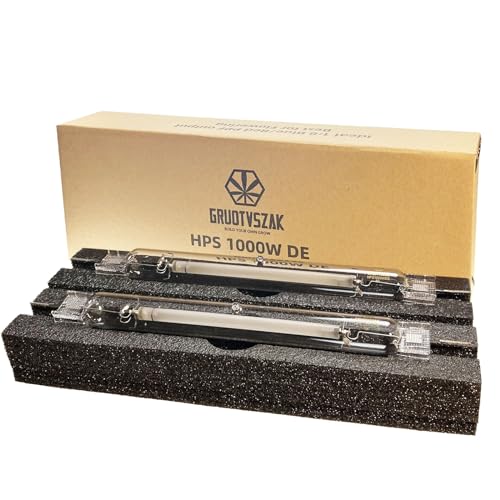
This double-ended (DE) 1000W HPS bulb emphasizes high PAR with over 2100 μmol/s PPF. The tuned spectrum is designed to deliver a strong red-dominant output that supports robust flowering and fruiting. It is compatible with standard DE fixtures, making it a straightforward upgrade for larger grow rooms.
Best for: larger grow spaces and fans of high-intensity flowering. Why selected: high PAR output supports fast, prolific bloom cycles. Caution: verify fixture compatibility with DE bulbs and ballast to avoid electrical mismatches.
Sylvania 400W Plantastar HID Grow Light

The Sylvania Plantastar 400W HID provides a broad spectrum suitable for all growth stages, from seedling to budding. With a focus on broad spectrum and a respectable 600 μmol/s PPF, it aims to support steady, healthy development across plant species. Its long life minimizes replacement frequency for greenhouse setups.
Best for: greenhouse environments and growers seeking a steady, all-stage spectrum. Why selected: good balance of spectrum breadth and lifespan. Limitation: 400W may be lower intensity for very large flowering rooms; plan space accordingly.
PROTOPIA HPS 1000W DE Grow Light Bulb

The PROTOPIA 1000W DE bulb offers a high lumen output (approximately 155,000 lumens) with a 2100K spectrum and a strong red-orange emphasis to accelerate flowering and fruiting. The double-ended design provides uniform light distribution and higher efficiency, suitable for professional indoor grow operations.
Best for: commercial-grade indoor farms and advanced hobbyists. Why selected: maximum brightness and efficient, uniform distribution. Limitation: requires compatible DE fixtures and ballast; may be overkill for small setups.
iPower 400W Digital Dimmable HPS Ballast with Bulb

The iPower 400W digital ballast combo includes a ballast capable of 120V/240V input with dimming options and a HID HPS bulb. It features fast lamp ignition, flicker-free operation, and built-in protection against common electrical issues. This option is practical for budget-conscious indoor growers seeking improved efficiency over old magnetic ballasts.
Best for: budget setups looking for better lumens and more control. Why selected: 30% more lumens than magnetic ballasts; automatic bulb compatibility. Caution: ensure correct ballast-bulb pairing and consider future expansion needs.
SANSI Full Spectrum 36W Grow Light Bulbs

The SANSI 36W grow light bulbs offer a full spectrum with strong blue-red emphasis and 65.6 μmol/s PPF. Although lower wattage, its patented COC technology improves heat management, efficiency, and lifespan, making it a good option for supplemental lighting in multi-species setups or as an entry point into HID-like performance with LEDs.
Best for: supplemental lighting and compact growing spaces seeking energy efficiency. Why selected: high-quality optics and long lifespan; suitable for seed starting and early growth stages. Limitation: lower total lumen output compared to high-wattage HPS bulbs.
Buying Guide: Key Factors to Consider
- Growth stage compatibility: Some bulbs emphasize flowering while others are more versatile across vegetative and flowering stages. Choose based on whether you need peak bloom performance or all-stage support.
- Spectrum and PAR: Look for a spectrum around 2100K or a red-dominant range for flowering. PAR output (μmol/s) helps compare true photosynthetic contribution, not just lumens.
- Wattage and footprint: Higher wattage delivers more light over larger areas but requires appropriate fixtures and cooling. Match bulb wattage to your grow space size and fixture capabilities.
- Bulb type: Double-ended (DE) bulbs often offer more uniform spread and higher efficiency but require specific DE fixtures. Single-ended bulbs are more common and easier to replace.
- Ballast compatibility: Electronic ballasts can be dimmable and more efficient, while magnetic ballasts are simpler but heavier. Ensure ballast compatibility with your bulb type.
- Durability and lumen maintenance: Some bulbs maintain lumen output longer (e.g., over 90% after thousands of hours). Consider expected replacement frequency in your budget.
- Installation and safety: Check fixture compatibility, wattage rating, and ventilation needs. HID lights generate substantial heat; plan for proper cooling near the canopy.
Frequently Asked Questions
- What is the best sodium grow light for beginners? A: A 400–600W single-ended HID bulb paired with a user-friendly ballast offers straightforward setup and reliable flowering support for small to mid-sized tents.
- Are double-ended HPS bulbs worth it? A: Yes for larger grow rooms needing uniform distribution and higher PAR, but ensure you have compatible DE fixtures and electrical capacity.
- Can I mix HID with LED lighting? A: It’s possible, but ensure proper scheduling and shading so plants receive consistent photoperiods and avoid spectrum conflicts.
- How long do HPS bulbs typically last? A: HPS bulbs can maintain lumen output for thousands of hours, but actual life depends on usage and ballast stability. Replace when intensity declines noticeably.
- What safety considerations exist with HID lighting? A: Maintain adequate ventilation, avoid touching hot bulbs, and ensure electrical components are properly grounded and certified for indoor use.
- Is PAR more important than lumens? A: Yes; PAR measures usable light for photosynthesis, whereas lumens reflect human-visible brightness, which can mislead horticultural performance.
For buyers focused on high yields in controlled environments, choosing the right sodium lamp means balancing spectrum, intensity, fixture compatibility, and space. The options above cover compact hydroponic systems, larger DE configurations, greenhouse-grade lighting, and budget-friendly ballast solutions. Use the buying guide to align product capabilities with your grow space, plant types, and production goals.