When choosing a small irrigation self-cleaning filter, the goal is reliable debris removal with minimal maintenance. This guide highlights five compact filters designed for drip systems, micro-sprinklers, or hydroponics setups. Each option suits different flow rates, mesh sizes, and installation needs. Use the buyer tips below to compare performance, ease of integration, and long-term usability. The top picks are best for compact gardens, raised beds, and home irrigation where space and simplicity matter most.
Summary of Top Picks
| Product | Best For | Key Feature | Mesh/Filtration |
|---|---|---|---|
| One Stop Outdoor 3/4″ Drip Filter | Small drip systems | Large filter area, low friction loss | 155 Mesh |
| UPLYKKE 1-1/2″ Disc Filter | Medium to large flow, stacked filter | Preset hydraulic inspection port | 120 Mesh |
| Rain Bird RBY075S In-Line Filter | Drip lines with downstream components | Pre-installed 200 mesh | 75 micron |
| TOPINCN 1/4″ Filter with Quick Connect | Courtyards and small garden beds | Quick connect for easy setup | 50 μm |
| Glooglitter Inline Y Filter (2-Pack) | Comprehensive inline filtration | 2 screens per filter, 130 μm | 120 Mesh |
One Stop Outdoor 3/4″ Drip Filter with 155 Mesh Screen

The One Stop Outdoor 3/4″ Drip Filter is an all-purpose screen filter designed for drip irrigation and micro sprinkler systems. It features a large filter area and low friction loss, enabling longer intervals between cleanings. Best for compact systems with moderate debris loads, it suits hobbyists and small-scale hydroponics setups.
Who it’s for: best for owners of small gardens or balcony setups who need a simple, low-maintenance filter. Why selected: its robust mesh and broad filtration area reduce frequent maintenance and protect downstream emitters.
Limitation: while durable, this filter may require occasional flushing in dirtier water, and mesh cleaning is needed to maintain peak flow.
UPLYKKE Irrigation Y Strainer, Disc Filter

The UPLYKKE Y Strainer uses a disc filtration approach, offering a compact solution for higher flow areas up to 20 m3/h with a 120 mesh. It includes a preset hydraulic inspection port and a stacked filter design for higher dirt-holding capacity. Best for medium-to-large irrigation lines where stopping clogs before emitters matters.
Who it’s for: ideal for systems requiring predictable maintenance with visible inspection access. Why selected: the stacked elements boost filtration efficiency without taking up extra space.
Caution: ensure compatibility with 1-1/2″ inlet connections in your current line to prevent mismatches or leaks.
Rain Bird RBY075S In-Line Y Filter

The Rain Bird RBY075S is a drip irrigation inline Y filter with a 3/4″ male thread and a pre-installed 200 mesh stainless-steel screen. Its design aims to prevent downstream clogging in drip components and to provide straightforward maintenance with a removable filter. Best for reliable downstream protection in established drip systems.
Who it’s for: gardeners seeking a proven, easy-to-service inline filter for drip networks. Why selected: the pre-installed high-mesh screen helps reduce emitter clogs from the start.
Limitation: stainless mesh can require periodic inspection for mineral buildup in very hard water regions.
TOPINCN 1/4in Quick-Connect Irrigation Filter

The TOPINCN 1/4″ irrigation filter uses a stainless steel screen with 50 μm filtration for courtyards and small gardens. It features a quick-connect design for fast installation and easy disconnection, reducing setup time. Best for tiny residential setups and DIY irrigation projects.
Who it’s for: homeowners who want a fast, tool-free filter integration. Why selected: the quick-connect design simplifies seasonal changes or relocations.
Caution: the 1/4″ size means lower flow capacity; avoid this if you have a higher-volume system or longer runs.
Glooglitter Y Filter 2-Pack with 120 Mesh

The Glooglitter inline Y filters come in a 2-pack, each with a 120 mesh screen and a flush cap. The Y-shape design helps trap debris before it reaches emitters, extending nozzle life. Best for mixed-filter needs in compact hydroponics or garden irrigation.
Who it’s for: users seeking redundancy and a straightforward, ready-to-run filtration kit. Why selected: two filters provide coverage for separate lines or staged filtration. Limitations: plastic housing may be less rugged in very harsh outdoor conditions.
Tip: ensure thread compatibility with existing 3/4″ connections in your system for best results.
Glooglitter Drip Inline Y Filter with Mesh Screens
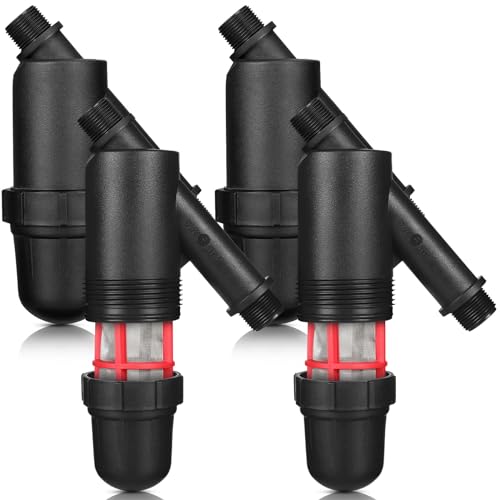
This Glooglitter Y filter kit includes two inline Y filters, each 3/4″ with 6.5–6.8 inches overall length. It uses 3/4″ male pipe thread connections and 130 μm filtration. Best for greenhouse or garden setups requiring a comprehensive filtration solution in a compact footprint.
Who it’s for: gardeners needing a ready-made filtration pair for streamlined installation. Why selected: larger overall length and dual screens improve filtration reliability. Caution: verify exact hose or valve threading to avoid leaks.
GIEXSMART 200 Mesh Garden Hose Filter

The GIEXSMART 200 Mesh Garden Hose Filter uses standard 3/4″ NH/GHT threads and a quick-disconnect feature for easy installation. It aims to trap sand and grit before reaching pressure washers, sprinklers, or misters. Best for outdoor water lines and equipment protection.
Who it’s for: system owners who value quick setup and reliable sediment filtration. Why selected: broad outdoor compatibility and simple maintenance. Limitation: 200-mesh is finer and may require more frequent cleaning in dirty water.
Raindrip R605DT Y Filter

The Raindrip R605DT Y Filter provides a 3/4″ MPT X 3/4″ MPT configuration with a removable filter. It is designed to prevent debris from clogging emitters and offers straightforward maintenance with a flush or cleanout cap. Best for established drip systems needing easy access for cleaning.
Who it’s for: users who want a simple, accessible, and easily serviced inline filter. Why selected: removable filter and cleanout cap simplify routine maintenance. Caution: ensure proper orientation with water flow direction for optimal filtering.
Buying Guide: Key Considerations for Small Irrigation Filters
- Filtration size: Choose mesh or micron ratings that match your debris load. Finer filters protect emitters but may clog faster, while coarser filters require less maintenance but may miss finer particles.
- Flow compatibility: Verify thread size and inlet/outlet dimensions match your irrigation layout (3/4″, 1/2″, etc.).
- Maintenance and accessibility: Look for removable filters, flush caps, or quick-connect features that simplify periodic cleaning.
- Installation footprint: Consider space in your system and whether inline or inline-Y configurations fit your layout.
- Durability and materials: Stainless steel screens resist corrosion; plastic housings are lightweight but may be less rugged in extreme conditions.
- System type fit: For hydroponics, prioritize filters with smaller micron sizes to protect nozzles and pumps; for drip irrigation, focus on debris protection for emitters and valves.
- Maintenance interval expectations: In dirty water or outdoor environments, more frequent cleaning may be necessary; in clean systems, intervals can be longer.
Frequently Asked Questions
- What does a self-cleaning irrigation filter do? It traps debris and prevents clogs while simplifying maintenance through accessible cleaning or flushing features.
- Which filter is best for a small balcony garden? A compact inline Y filter with 75–130 μm mesh provides good protection without taking up much space.
- How often should I clean these filters? Cleaning frequency depends on debris load and water quality; in dirty water, inspect weekly and flush as needed.
- Do I need different filters for hydroponics vs. drip irrigation? Yes. Hydroponics often benefits from finer filtration to protect pumps and emitters, while drip irrigation emphasizes clog prevention for emitters and valves.
- Can I reuse filters in multiple lines? Some filters support multiple outlets or can be relocated, but verify compatibility and leaks before reusing across lines.
- Do these filters require professional installation? Most setups are DIY with standard hose threads, but verify thread size and ensure proper sealing to prevent leaks.