Self-propelled string trimmers save time and reduce fatigue by moving across uneven terrain while you guide the head and line. This guide highlights five top models that balance power, maneuverability, and durability, helping you choose a unit that fits your yard size and vegetation. Each option below is well suited for American lawns with overgrowth, edging needs, and brush clearing.
The following table provides a quick snapshot of the featured products, including engine size, cutting width, and notable strengths. Use it as a quick reference when browsing individual reviews below.
| Product | Engine / Power | Cutting Width | Key Strengths |
|---|---|---|---|
| BILT HARD Self-Propelled Walk Behind String Trimmer | 170cc 4-Cycle OHV | 22 inches | Powerful engine, wide cutting path, self-propelled with steady speed |
| Powerhorse High-Wheeled Walk-Behind String Trimmer | 173cc vertical gas engine | 22 inches | Rear wheels for easy maneuverability, strong RPM |
| Earthquake Walk Behind String Mower | 160cc Viper 4-Cycle | 22 inches | Never-go-flat wheels, robust steel deck, integrated safety features |
| LawnMaster NPTGCP2517B No-Pull Gas String Trimmer | 25cc 2-Cycle, electric start | 17 inches | Electric start for easy starting, versatile attachment system |
| YARDMAX YL2250 Walk-Behind String Trimmer | 170cc | 22 inches | Offset head for straight edging, onboard trimmer string storage |
BILT HARD Self-Propelled Walk Behind String Trimmer

The BILT HARD model is powered by a robust 170cc 4-cycle OHV engine, designed to clear thick overgrowth, weeds, and light brush. It starts with a manual recoil ignition, ensuring rapid startup for demanding tasks. A one-piece steel deck provides stability and minimizes vibration, while a 22-inch cutting diameter lets you trim wider swaths in a single pass. The self-propelled feature moves at about 1.9 mph, reducing the effort needed to navigate varying terrains. This combination makes it suitable for mid-sized lawns and yard clearing where power and efficiency matter.
Powerhorse High-Wheeled Walk-Behind String Trimmer
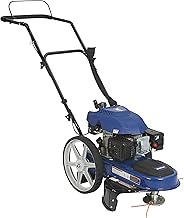
The Powerhorse option utilizes a 173cc vertical gas engine to deliver high RPM up to 3000, enabling robust cutting performance across tough growth. It features a 22-inch cutting swath and rear wheels for easier walk-behind control, reducing operator fatigue on larger properties. Designed for reliable day-in, day-out use, this trimmer is well-suited for homeowners with challenging terrain who want steady propulsion alongside strong cutting power.
Earthquake Walk Behind String Mower

Earthquake’s model runs on a 160cc Viper 4-cycle engine, designed for efficient yard clearing and brush control. Its large 14-inch never-go-flat wheels improve stability over uneven terrain, complementing a 22-inch cutting width to expedite mowing tasks. The one-piece steel deck adds durability while reducing vibration, and an integrated clutch and hand bail system safely manages the mower’s operation. The design prioritizes quick setup and dependable performance in challenging conditions.
LawnMaster NPTGCP2517B No-Pull Gas String Trimmer

The LawnMaster model features a 25cc 2-cycle engine with electric start, simplifying ignition for users who prefer quick starts. It includes a 17-inch cutting width and a high-capacity fuel tank (420 ml) to extend operation between refuels. The trimmer head integrates a dual-line bump feed, enhancing line advancement for dense vegetation. Its Multi-Tool Attachment System enables easy conversion to other yard tools via a split shaft, adding versatility for edging, trimming, and light pruning tasks.
YARDMAX YL2250 22 in. 170cc Gas Walk Behind String Trimmer

The YARDMAX YL2250 emphasizes straight-line edging with an offset head, making it easier to trim along fences, barns, and landscaping without frequent repositioning. A 22-inch cutting width supports fast completion of larger tasks, and onboard trimmer string storage (cord caddy) helps keep lines organized on busy job sites. This model suits homeowners who value precise edging and efficient coverage on medium to large properties.
Buying Guide: Key Purchase Considerations
Choosing a self-propelled string trimmer involves evaluating power, maneuverability, durability, and maintenance. Consider the following perspectives to match a unit with your yard’s needs:
- Yard size and terrain: Larger lots with uneven ground benefit from models with self-propelled drive and wider cutting widths. For flat, smaller spaces, lighter units with electric start may suffice.
- Engine type and reliability: Gas engines offer strong cutting power for thick brush, but require more maintenance and fuel. Four-stroke engines are typically cleaner and easier to operate than two-stroke designs in mixed-use scenarios.
- Cutting width and line management: Wider swaths reduce mowing passes but necessitate robust decking. Features like onboard line storage and quick line feeds improve on-the-job efficiency.
- Ease of starting: Electric start or recoil options dramatically affect startup time and user convenience, especially for frequent users.
- Durability features: Steel decks, vibration reduction, and lifetime or warranty details matter for longevity in tough conditions.
- Maintenance access: Availability of replacement parts, ease of service, and straightforward assembly influence long-term costs and downtime.
- Versatility and attachments: Split shafts and multi-tool compatibility can expand usage beyond mowing to edging, trimming, and light pruning.
Selecting a model with robust wheels, a stable deck, and a comfortable handle can reduce operator fatigue on long mowing sessions. For users facing heavy brush or overgrowth, prioritize higher displacement engines and wider cutting formats to maximize efficiency. Always follow manufacturer safety guidelines and wear appropriate protective gear during use.