Nutgrass control is essential for healthy, uniform lawns and ornamental turf. The following products are selected for their effectiveness against nutsedge and sedge, suitability for warm- or cool-season grasses, and practical application in lawns, landscapes, and turf areas. This guide highlights who each product is best for, along with notable limitations to consider before buying.
| Product | Best For | Notes |
|---|---|---|
| Atticus Empero Q-Pak Nutsedge Killer (2-Pack) | Established lawns and ornamental turf; large-area projects | Contains halosulfuron-methyl; root-tubers penetration |
| Atticus Empero Nutsedge Killer (1.33 oz) | Smaller convenient package for spot-treatment | High concentration halosulfuron-methyl; effective dosing |
| Southern Ag Broadloom Sedge Control (Pint) | Ornamental turf and landscapes; broadweed mix | Over-the-top use on some ornamentals; low use rate |
| Atticus Empero Q-Pak Nutsedge Killer (13.5 Grams) | Single-pack option; compact for quick use | Similar active ingredient profile; per-pack data |
| Atticus Sertay Herbicide (1.25 oz) | Southern lawns needing sedge and broadweed control | Contains sulfosulfuron; proven for sedge control |
Atticus Empero Q-Pak Nutsedge Killer (2-Pack)
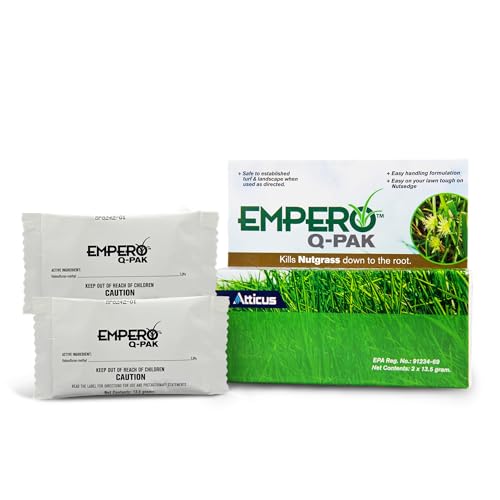
Key features: Contains 5% halosulfuron-methyl; designed for total nutsedge control by reaching root tubers. Suitable for established warm- or cool-season turf, including bluegrass, fescue, Bermudagrass, and zoysia. Best for larger lawn areas and professional-style applications. Caution: apply only as directed to avoid grassy or ornamentals injury in sensitive landscapes.
Atticus Empero Nutsedge Killer (1.33 oz)

Key features: 75% halosulfuron-methyl; targets tough nutsedge with root-tuber takedown. Works on most established warm- or cool-season lawns, including bluegrass, fescue, Bermudagrass, and zoysia. Best for spot treatments or smaller areas. Caution: standard weed timing is important for best uptake; avoid application under stress conditions in extreme heat or drought.
Southern Ag Broadloom Sedge Control (Pint)

Key features: Controls nutsedge and certain broadleaf weeds; can be used over-the-top on some ornamentals; low use rate of 0.75 oz per 1,000 square feet. Best for landscapes and mixed borders where sedge is a concern. Caution: verify ornamentals compatibility on the label before applying over attractive plantings.
Atticus Empero Q-Pak Nutsedge Killer (4-Pack)

Key features: Per-pack data indicates 5% halosulfuron-methyl; designed for total nutsedge takedown with root-system penetration. Suitable for established lawns and ornamental turf. Best for multi-pack users and larger projects. Caution: data shown is per-pack; ensure overall application rates align with the total quantity used in your area.
Atticus Sertay Herbicide (1.25 oz)

Key features: Sulfosulfuron-based; formulated for southern lawns with sedge and weed takedown. Provides broad control in warm-season turf. Best for homeowners needing a single product capable of addressing both sedge and other grassy weeds. Caution: timing and condition are important; follow label guidance to avoid stressing warm-season grasses during peak heat.
Buying Guide
What active ingredients best control nutsedge?
Halosulfuron-methyl and sulfosulfuron are among the most trusted actives for nutsedge control. These chemicals travel through the plant to reach tubers and rhizomes, providing better long-term suppression than surface-only treatments. Choose products with one of these actives for reliable sedge takedown.
Which product is best for large lawns vs. spot treatments?
For large lawns or landscape projects, multi-pack options like the 2-Pack or 4-Pack Empero formulations can reduce cost and simplify bulk application. For spot treatments or small areas, compact bottles such as the 1.33 oz Empero or 13.5 gram packs offer precise dosing.
Are there risks to ornamentals or warm-season grasses?
Some formulations allow over-the-top use on certain ornamentals, but always check the label for crop tolerance. Warm-season grasses can be sensitive to certain herbicides during heat stress, so apply under appropriate moisture and growing conditions to minimize injury risk.
What should I consider about timing and frequency?
Nutgrass responds best to active growth. Apply when nutsedge is actively growing—usually in warmer months—and avoid application during drought or extreme heat. Follow label directions for timing, rates, and reapplication intervals if nutsedge persists.
How to choose between broad-spectrum sedge controls?
If you need broader weed control in a landscape, consider products that address sedge along with some broadleaf weeds. If sedge is the primary issue, select a sedge-focused formula with proven tuber takedown for effective long-term control.
Maintenance and safety considerations
Always wear appropriate protective gear when handling herbicides. Keep pets and children away from treated areas until products have fully dried. Store products as recommended by the label to maintain effectiveness and safety.
Frequently Asked Questions
- What is the best product for nutsedge in a cool-season lawn? Empero-based products with halosulfuron-methyl are widely effective on cool-season grasses, providing root-level takedown.
- Can I use sedge herbicides on ornamentals? Some products allow over-the-top use on certain ornamentals; always verify label compatibility before applying around ornamentals.
- Is a bigger package always better for nutsedge control? Larger packs can reduce cost per application for big lawns, but ensure you have ample space and plan for storage and proper use within label directions.
- How soon can I expect visible results? Many products show results in a few weeks; follow label timing and conditions for optimal uptake.
- Should I reseed after treatment? If reseeding is planned, ensure the treated area has recovered and follow label recommendations on timing and soil conditions before reseeding.
- Are there any environmental cautions? Apply under appropriate weather and moisture conditions; avoid runoff and protect water sources per label directions.