Rose of Sharon hardy hibiscus shrubs offer tall, colorful blooms from midsummer to fall and are well-suited for American landscapes. This guide highlights five reliable varieties ideal for different garden needs—from pillar silhouettes to wide, flowering hedges. Each selection includes who it’s best for, why it stands out, and a practical caution. Ideal buyers include those seeking easy-care perennials, gardeners designing privacy screens, and homeowners wanting summer-long color in full sun to partial shade. Quick comparison table below summarizes the five picks.
| Product | Best For | Key Size/Feature |
|---|---|---|
| Proven Winners 2 Gal. Red Pillar Rose of Sharon | Architectural vertical accents | Up to 120-192 in. tall |
| Proven Winners 2 Gal. Blue Chiffon Rose of Sharon | Medium-to-tall screens | 48-72 in. W x 96-144 in. H |
| Proven Winners 2 Gal. White Pillar Rose of Sharon | Bright garden focal points | 24-36 in. W x 120-192 in. H |
| Proven Winners 2 Gal. Dark Lavender Chiffon | Soft color accents | 48-72 in. W x 96-144 in. H |
| 3 Rose of Sharon Plants for Growing – Hibiscus syriacus | Hedges or mixed borders | Three live plants in one package |
Proven Winners 2 Gal. Red Pillar Rose of Sharon (Hibiscus) Shrub

Best for vertical drama in sunny to partially shaded gardens. This red pillar form delivers a tall, columnar silhouette suited for entrances, corners, or back-of-bed accents. It thrives in USDA zones 5a-9b and grows to mature sizes of 120-192 inches tall by 48-60 inches wide. The shrub is deciduous, losing foliage in winter and regrowing in spring, which influences winter interest planning. Choose this for a striking, evergreen-feeling vertical statement with seasonal color in summer and early fall.
Who it’s best for: homeowners seeking a tall, narrow focal plant that can define walkways or privacy edges. Why selected: outstanding vertical presence and reliable hardiness within a broad zone range. Caution: expect winter leaf drop, which may reveal the trunk’s structure in colder months.
Proven Winners 2 Gal. Blue Chiffon Rose of Sharon (Hibiscus) Shrub

Best for wide, airy screens or as a dramatic backdrop in sunny borders. This blue chiffon cultivar thrives in USDA zones 5-9 and reaches a mature size of 48-72 inches wide by 96-144 inches tall. It is deciduous, with foliage loss in winter and new growth in early spring, which influences landscape planning. The plant provides a cool-toned contrast to warmer florals, delivering long-lasting summer bloom color.
Who it’s best for: gardeners wanting a strong vertical presence with substantial height and a blue-toned bloom. Why selected: reliable size range and eye-catching color. Caution: taller habit may require staking or careful placement away from pathways to prevent tip damage.
Proven Winners 2 Gal. White Pillar Rose of Sharon (Hibiscus) Shrub

Best for bright, clean garden accents and bold architectural statements in full sun to partial shade. It grows to a mature width of 24-36 inches and a remarkable height of 120-192 inches, delivering a towering profile with pale, understated blooms. Deciduous behavior means winter interest depends on trunk form and bark. This cultivar is ideal for narrow borders, entryways, or as a vertical hedge element.
Who it’s best for: those who want a tall, slender presence with white blossoms that brighten shaded areas. Why selected: a distinctive pillar form with reliable height. Caution: narrow width means adequate spacing is essential to avoid crowding in small gardens.
Proven Winners 2 Gal. Dark Lavender Chiffon Rose of Sharon (Hibiscus) Shrub
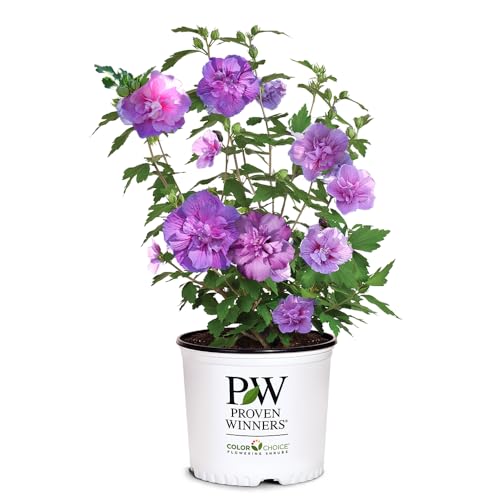
Best for soft, lavender tones that blend with a cool color palette in mid-to-late summer beds. This cultivar thrives in USDA Zone 5-9 and shares the characteristic large blooms with a wide, rounded habit. It grows to a mature size of 48-72 inches wide by 96-144 inches tall, suitable for larger borders or focal plantings. Deciduous nature means seasonal cleanup is part of maintenance.
Who it’s best for: gardeners who prefer a gentle lavender hue and a bushy, broad profile. Why selected: versatile color that complements pinks, whites, and blues. Caution: taller growth requires space to prevent crowding of nearby plants.
3 Rose of Sharon Plants for Growing – Hibiscus syriacus

Best for immediate planting in larger landscapes or as a ready-to-plant trio for a border. This option includes three live plants of Hibiscus syriacus, with blooms described as light pink and a flowering display throughout summer. The mature form is a tree-like shrub that adds height and seasonal color. It’s ideal for hedges, screens, or focal plantings in sunny to partly shaded locations.
Who it’s best for: buyers wanting a ready-to-plant bundle with multiple shrubs for quicker garden coverage. Why selected: value-packed option for expanding color in a single purchase. Caution: suitability may depend on local regulations about bare-root shipping in California, if applicable.
Buying Guide: Rose Of Sharon Hardy Hibiscus Buyer Tips
- Climate and hardiness: Most varieties suit USDA zones 5-9. Verify your zone and expected winter lows to choose a cultivar with reliable winter hardiness for your area.
- Plant size and spacing: Pillar forms are narrow but tall, while chiffon and lavender types spread wider. Plan spacing to avoid crowding and ensure air flow to reduce disease.
- Light requirements: Full sun to partial shade is common. More sun typically yields more blooms; shade may reduce flowering intensity.
- Water and soil: While generally tolerant, these shrubs prefer well-drained soil and steady moisture during establishment. Mulching helps retain moisture and regulate roots.
- Maintenance needs: Deciduous habit means annual pruning after flowering can maintain shape and encourage new growth for the next season.
- Aesthetic goals: Use tall pillar varieties to frame entryways or paths, and place blue, lavender, or white cultivars to create color contrasts in the landscape.
Frequently Asked Questions
- Are Rose of Sharon shrubs evergreen in any region?
No. They are deciduous and lose foliage in winter in most regions, with fresh growth in spring. - What is the best sun exposure for these hibiscus shrubs?
Most varieties perform best in full sun to partial shade, with the most bloom in full sun. - How tall do Rose of Sharon shrubs typically grow?
Heights vary by cultivar, from about 24 inches to over 192 inches depending on the variety. - Do these shrubs require pruning?
Yes. Pruning after blooming helps maintain shape and encourages healthy next-year growth. - Can I plant multiple varieties together?
Yes, mixing colors (white, blue, lavender) can create a vibrant summer display, as long as spacing allows air flow. - Are they deer-resistant?
Deer resistance varies by area and plant pressure; consider protective measures if deer browsing is a concern.