Gardening with organic methods supports soil health and long-lasting blooms. The following selections are tailored for roses and other flowering plants, emphasizing organic ingredients, balanced nutrients, and environmentally friendly formulas. Each product features a different approach—soil health boosters, balanced NPK blends, or plant-specific rose formulas—to help you choose the right option for your roses and garden beds.
| Product | Brand | NPK Ratio | Notes |
|---|---|---|---|
| Espoma Organic Rose-Tone 4-3-2 | Espoma | 4-3-2 | All types of roses; ready to use; Bio-tone formula |
| Jobe’s Organics Granular Rose Fertilizer | Jobe’s Organics | 3-4-3 | OMRI listed; organic plant food |
| Down To Earth All Natural Fertilizers Organic Rose & Flower Mix | Down To Earth All Natural Fertilizers | 4-8-4 | High phosphorus; OMRI listed |
| Burpee Organic Bloom Granular Plant Food | Burpee | 4-4-4 | OMRI-listed; long-lasting nutrients |
| Dr. Earth Total Advantage Rose & Flower Fertilizer | Dr. Earth | Unknown on label | Non-GMO Project Verified; pet and people safe |
These selections provide a range of organic options from ready-to-use blends to ready-to-apply granular formulas. Consider the plant types, container vs. bed gardening, and how often you prefer to feed roses when choosing a product.
Espoma Organic Rose-Tone 4-3-2
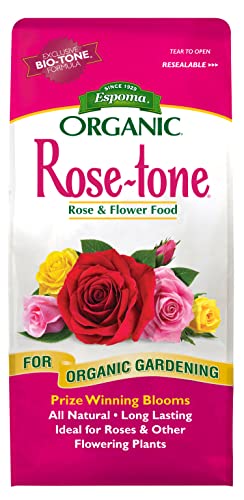
Espoma Rose-Tone is a monthly, ready-to-use organic fertilizer designed specifically for roses and other flowering plants. It features a 4-3-2 NPK ratio and includes calcium to support growth and bloom production. The formulation emphasizes an environmentally safe profile with no sludges or toxic ingredients, making it a popular choice for gardeners seeking a simple, low-muss application schedule. Apply around the drip line and water thoroughly for best results, typically through the growing season (May through September).
Jobe’s Organics Granular Rose Fertilizer

Jobe’s Organics provides a granular rose fertilizer with a 3-4-3 NPK ratio, focusing on a blend that supports blooming while minimizing runoff. This product is OMRI-listed for organic gardening and is designed to deliver nutrients without synthetic chemicals. It’s suitable for roses, hydrangeas, hibiscus, azaleas, and other flowering shrubs. The formula emphasizes steady release to sustain vibrant foliage and repeated bloom cycles.
Down To Earth All Natural Fertilizers Organic Rose & Flower Mix (4-8-4) 5 lb

This Down To Earth blend is a balanced 4-8-4 mix designed to optimize flowering and root development while maintaining healthy leaf growth. It is OMRI-listed and free from synthetic chemicals, making it a strong pick for certified organic gardens. The higher middle element (phosphorus) supports abundant blooms and robust root systems, particularly beneficial for roses and ornamentals in beds or containers.
Burpee Organic Bloom Granular Plant Food

Burpee’s Organic Bloom Granular Plant Food is formulated to feed quickly and provide long-lasting nourishment for roses and flowering plants. The OMRI-listed blend delivers a steady nutrient supply, supporting color-rich blooms and healthy foliage. It’s suitable for both container gardens and established beds, offering flexibility for varied garden layouts.
Dr. Earth Total Advantage Rose & Flower Fertilizer
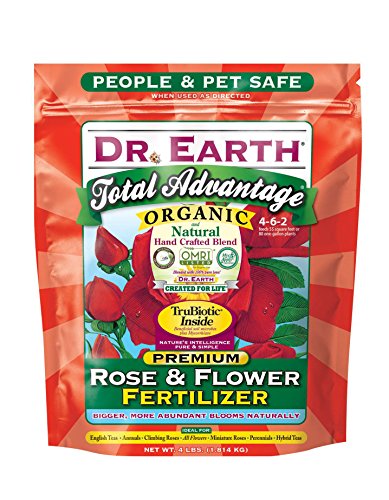
Dr. Earth Total Advantage is the only Non-GMO Project Verified option among the selections. It emphasizes safety for people and pets and avoids synthetic chemicals, GMO-infested manure, or toxic ingredients. The blend includes multi-minerals, proteins, carbohydrates, humic acids, and trace elements to support soil biology and the healthiest flowering garden. This option is well-suited for gardeners prioritizing non-GMO and pet-friendly formulations.
Buying Guide: Key Considerations for Organic Rose Fertilizers
Choosing the right organic fertilizer for roses hinges on a few essential factors. Here are the main considerations to help you compare products and select the best fit for your garden:
- Organic certification and safety: Look for OMRI-listed labels or USDA Organic certification for confidence in organic status and suitability for edible or ornamental gardens.
- Nutrient balance: Assess the NPK ratio. A balanced mix (e.g., 4-8-4) supports bloom production and healthy root systems, while lower or higher ratios affect growth patterns and bloom timing.
- Form and application: Ready-to-use blends (like Espoma Rose-Tone) are convenient for monthly feeding. Granular mixes require soil incorporation or top-dressing and may offer longer-acting nutrients.
- Soil health and biology: Some formulas include bio-enhancers or compost extracts to boost microbial activity, which can improve nutrient uptake and plant resilience.
- Plant compatibility: Choose products labeled for roses and flowering shrubs if your primary goal is repeat blooms and lush foliage. Some blends work well for containers, beds, and hedges alike.
- Environmental considerations: Favor products with naturally sourced ingredients and minimal risk of runoff or leaching. This is important for sustainable garden practices and nearby water sources.
- Safety and maintenance: If you have pets or children, opt for non-toxic, pet-safe options and follow label directions for safe use around living spaces.
- Availability and packaging: Larger bags may be more cost-effective for bigger gardens, while smaller bags offer trial opportunities for new gardeners or limited space.
For best results, tailor your feeding plan to your roses’ growth stage and your local climate. Early-season feeding can promote vigorous green growth, while a bloom-focused feeding near mid-season can boost flower production. Always water deeply after applying fertilizers to help nutrients reach the root zone.