Direct answer: Retaining wall reinforcement grids made from geogrids and fiberglass provide essential stability for slopes, driveways, and walls. They’re best for homeowners and contractors tackling soil movement, erosion, and structural reinforcement. The top picks below are selected for durability, tensile strength, and ease of installation, with clear pros and trade-offs for different project scopes.
The following table summarizes the five products chosen for this guide. It highlights the best-fit scenarios, materials, and key strengths to help you compare at a glance.
| Product | Material | Best For | Key Strength | Notes |
|---|---|---|---|---|
| 3ft x 65ft Retaining Wall Geogrid Roll | Polypropylene Geogrid | Garden paths, driveways, slopes | Bi-directional reinforcement | Flexible, easy to cut |
| Universal Retaining Wall Geogrid Roll 4′ x 98′ | Fiberglass Geogrid | Roads and walls up to 6 ft | Tensile 50 KN | High temperature and corrosion resistance |
| 3ft x 164ft Bi-Directional Geogrid | Polypropylene Bi-directional | Slopes and flat sites | Long roll, large coverage | Heat if stretching; avoid brute force |
| 4ft x 50ft Fiberglass Geogrid | Fiberglass Geogrid | Retaining walls up to 6 ft | 30 KN Tensile, 0.8″ Mesh | Efficient installation |
| Bi-Directional Universal Retaining Wall Geogrid 33′ x 3′ | Fiberglass Geogrid | Concrete foundations, erosion control | 30 KN Tensile | Sturdy, easy to cut |
3ft x 65ft Retaining Wall Geogrid Roll

Material and design: This polypropylene geogrid is built to last, offering deformation resistance and chemical resistance. It provides stability in both directions, making it suitable for reinforced walls, gravel grids, driveways, and garden paths. The 3′ by 65′ roll features a 1.5 inch mesh with an aperture stability of 0.32m-N/deg, supporting multiple project scales.
Who it’s best for: Homeowners working on long, narrow reinforcement tasks like slopes or garden pathways, and small-to-mid scale projects requiring flexible, easy-to-cut material.
Why selected: The bi-directional reinforcement and roll-up design save installation time and labor costs, while its robustness protects against deformation under load.
Caution: The mesh size is fixed; if your project requires significantly larger openings, this roll may not be ideal.
Universal Retaining Wall Geogrid Roll 4′ x 98′

Material and design: A fiberglass geogrid rated for high tensile strength, designed to strengthen and stabilize ground or walls. It’s described as black in color, with a 4′ x 98′ footprint and a 50 KN tensile value, suitable as a bottom layer for roads and retaining walls to improve durability and bearing capacity.
Who it’s best for: Projects that demand high stiffness and load distribution, especially where corrosion resistance and high-temperature tolerance are important.
Why selected: The fiberglass composition supports significant load transfer and long-term stability, helping prevent settlement and cracks in challenging soils.
Caution: Fiberglass geogrids require proper handling and installation to avoid damaging the grid during placement.
3ft x 164ft Bi-Directional Geogrid Driveway Grid

Material and design: A long bi-directional polypropylene geogrid roll, 3′ x 164′ (0.91 m x 50 m). It’s designed for slopes or flat areas, with a small grid opening to enhance install efficiency in terraces, parking lots, and landscaping projects.
Who it’s best for: Bigger projects that require extended coverage with fewer seams, such as large driveways or long hillside installations.
Why selected: The extended length reduces joint failures and installation time, while the bidirectional design distributes loads effectively.
Caution: If you need to stretch the material, heat it first and avoid brute force to prevent damage to the grid.
4ft x 50ft Fiberglass Geogrid
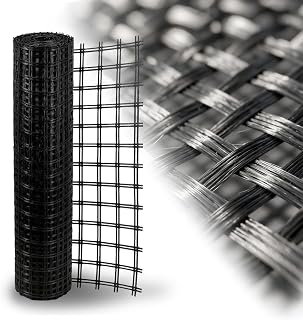
Material and design: A fiberglass geogrid with 30 kN tensile strength and a 0.8″ mesh, engineered for retaining walls and soil stabilization up to 6 feet. The roll provides efficient coverage for landscaping and erosion control projects.
Who it’s best for: Professionals and DIYers who need a strong, easy-to-handle geogrid for mid-height walls and reinforced soil sections.
Why selected: The relatively dense mesh interlocks soil effectively, improving overall wall integrity and reducing risk of deformation.
Caution: The fiberglass material requires careful handling to avoid cuts and ensure clean cuts during sizing.
Bi-Directional Universal Retaining Wall Geogrid 33′ x 3′

Material and design: A biaxial fibreglass geogrid with 30 KN tensile strength, designed specifically to reinforce retaining walls and erosion control applications. The mesh structure is intended to suppress soil settlement and distribute stress evenly.
Who it’s best for: Projects requiring robust reinforcement with predictable load distribution, including roadbeds and new wall installations.
Why selected: The product’s emphasis on retaining wall support and even stress distribution helps extend service life in challenging soils.
Caution: When stretching is necessary, apply heat and stop as the black lines narrow to avoid over-stressing the material.
Buying Guide: Key Considerations For Choosing Retaining Wall Grids
- Material type: Fiberglass geogrids offer high tensile strength and thermal resistance, ideal for heavy loads and harsher environments. Polypropylene geogrids are more flexible and easier to cut, suitable for lighter loads and DIY projects.
- Tensile strength and load distribution: Higher KN values indicate stronger grids. Consider your wall height, soil type, and expected loads to pick the right strength.
- Mesh size and opening: Closer mesh helps lock soil particles better but can limit fill type. Larger openings can reduce interlock and stability in some soils.
- Roll size and coverage: Longer rolls reduce seams in large projects; larger width can speed up installation but may be less flexible for curved surfaces.
- Installation considerations: Some grids require heating before stretching; others are ready to lay. Check handling guidelines to prevent damage during installation.
- Durability in soil and weather: Fiberglass grids resist high temperatures and corrosion, while polypropylene grids provide chemical resistance and flexibility for varied soils.
FAQ
- What is a geogrid? A geogrid is a grid-like material embedded in soil to reinforce structures like retaining walls and slopes by distributing loads more evenly.
- When should I choose fiberglass over polypropylene? Choose fiberglass for higher tensile strength, heat resistance, and longer-term durability; choose polypropylene for flexibility and easier cutting in lighter projects.
- How do I know the right tensile strength? Match the wall height, soil type, and expected loads to the grid’s tensile strength (measured in KN). Higher walls and heavier soils require stronger grids.
- Can I cut geogrids to fit irregular shapes? Yes. Some products are designed to be cut to size; follow manufacturer guidelines to preserve performance.
- Are there installation precautions? Use heat and care when stretching fiberglass grids, avoid brute force on polypropylene grids, and ensure proper anchoring to prevent movement.
- Do geogrids require professional installation? For larger or high-load projects, professional installation is recommended, but many DIY homeowners can handle smaller applications with clear guidelines.