A dependable pressure pump can turn a lackluster garden hose spray into a powerful, steady flow for irrigation, cleaning, and miscellaneous outdoor tasks. This guide highlights top pressure pumps designed for garden hoses, covering small, portable sprayers and larger, constant-use units. We compare flow rates, lift height, power requirements, and safety features to help you choose a model that matches your needs, whether you’re watering a delicate garden or supplying water to multiple outlets at once.
Summary of chosen products
| Product | Brand | Key Benefit | Flow / Pressure | Notes |
|---|---|---|---|---|
| ECO-WORTHY 33-Series Industrial Water Pressure Pump | ECO-WORTHY | Smart pressure control for on-demand boosting | 4.0 GPM, 50 PSI | Low-noise, auto shutoff, self-priming |
| ECO-WORTHY 110V Fresh Transfer Diaphragm Pump | ECO-WORTHY | High-pressure household-grade transfer | 5.5 GPM, 70 PSI | Quiet, built-in auto control |
| [Upgraded Version] Kitvance 6GPM Pump | Kitvance | High flow with low-noise design | 6 GPM, 70 PSI | Auto stop/start, NSK bearings |
| TecHome 115V 330GPH Pump | TecHome | Compact transfer pump with hose kit | 330 GPH, 40 PSI | Includes suction hose and filter |
| Weeflos 1.5HP Booster Pump | weeflos | High head, strong flow for larger setups | 1600 GPH, 100 ft head | Auto mechanical pressure switch |
ECO-WORTHY 33-Series Industrial Water Pressure Pump
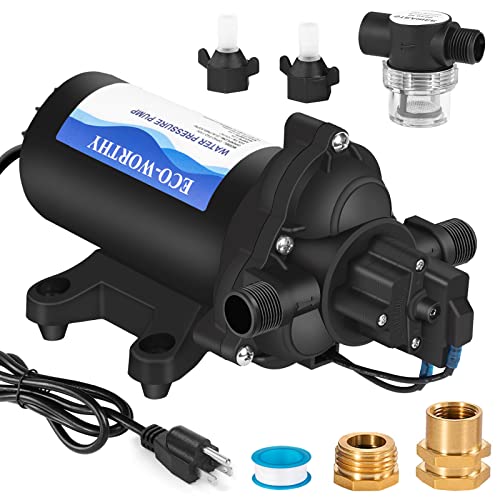
The ECO-WORTHY 33-Series is a 110V AC diaphragm pump designed for on-demand irrigation and water distribution. It delivers about 4.0 GPM at 50 PSI and uses a smart pressure switch to start and stop based on faucet use, minimizing run time and noise. The pump is self-priming up to 9.8 feet and can lift water up to 148 feet, which makes it suitable for elevated irrigation setups. An automatic thermal overload protector guards the motor, automatically disconnecting if temperatures exceed 158°F to prevent damage. Adjustable pressure range is 45–70 PSI for flexible use.
ECO-WORTHY 110V Fresh Transfer Diaphragm Pump

This 110V diaphragm pump focuses on transfer and boosting for garden hoses and irrigation. It offers 5.5 GPM at approximately 70 PSI with a built-in pressure switch that turns water flow on when a faucet is opened and off when it’s closed. The unit is self-priming up to 9.8 feet and provides a safe, quieter operation with a thermal overload protection circuit. Its higher pressure setting makes it suitable for watering larger garden beds or filling taller containers quickly, with a design emphasis on reliability and after-sales service support.
[Upgraded Version] Kitvance 6GPM Pump
![[Upgraded Version] 110V AC Fresh Water Pump](https://m.media-amazon.com/images/I/51AK+esQwaL._SL500_.jpg)
Kitvance’s upgraded 6GPM pump is engineered for high-volume water delivery with a 70 PSI cut-off. It features a self-priming capability up to 10 feet and a vertical lift capacity around 155 feet. The design emphasizes low-noise operation via an NSK double-ball bearing diaphragm and a one-piece four-chamber diaphragm system for smoother, steadier flow. The built-in pressure switch enables automatic stop & start, reducing manual operation and improving energy efficiency when switching between irrigation zones.
TecHome 115V 330GPH Pump With Hose Kit

The TecHome 115V pump is a compact, non-submersible transfer pump rated at 330 gallons per hour with a 3/4 inch discharge and suction. It includes a suction hose and a filter kit, making it practical for garden hose use, small irrigation loops, or draining tasks. The unit is simple to operate: fill, connect hose, plug in, and pump. It is designed for straightforward, portable use rather than prolonged heavy-duty cycles, with safety notes to avoid submersion of the motor in water.
Weeflos 1.5HP Booster Pump
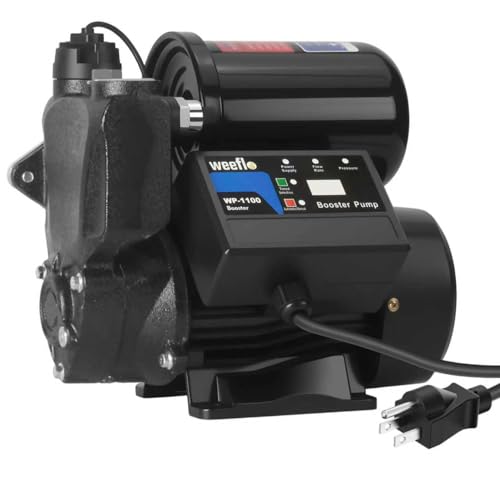
The Weeflos booster pump provides up to 1600 GPH with a 100-foot maximum head, suitable for distributing water across longer runs and higher elevations. It uses a mechanical pressure switch for automatic cycling, offering reliable, straightforward supervision without complex electronics. This unit is well-suited for larger irrigation networks, long hose runs, or setups requiring stronger vertical lift.
Buying Guide
Key factors to consider when choosing a pressure pump for a garden hose include flow rate, pressure, prime height, power source, and intended use. Below are considerations from multiple perspectives to help you balance performance, noise, and durability.
- Flow rate vs. pressure: Higher GPM (flow) typically pairs with lower PSI for portable garden tasks. For expansive irrigation or spray tasks requiring high pressure, select pumps with 60–70 PSI or higher. If you mainly need quick water transfer, a higher GPH may be more valuable than peak pressure.
- Self-priming and elevation: Self-priming capability matters when the pump is mounted above the water source or when the source is at a different height. Consider vertical lift requirements based on your yard layout and tank placement.
- Automation and control: Pumps with built-in pressure switches automatically adjust output and shut off, conserving energy and reducing wear. This is beneficial for continuous irrigation or multi-outlet setups.
- Noise and heat management: Diaphragm pumps with robust bearings and thermal protection help maintain quieter operation and protect motor life during extended use. Look for models with automatic thermal cutoffs or overload protection.
- Power source and portability: AC-powered units are common for fixed installations, while compact units with power cords or plug-and-play configurations emphasize portability for seasonal tasks.
- Materials and durability: Diaphragm pumps and brass connectors tend to last longer in outdoor environments. Check for corrosion-resistant components and sealed housings if the pump may encounter rain or splashes.
- Maintenance and service: Choose models with accessible parts and good after-sales support. Read user reviews about reliability and ease of repair for long-term use.
- Compatibility with hoses and fittings: Confirm the discharge and intake ports (inches) match your garden hose fittings. Some units include connectors or strainers to simplify setup.
- Intended use scenarios: For delicate irrigation, look for adjustable pressure ranges and gentle spray options. For cleaning or high-volume watering, prioritize higher PSI and larger GPM.
In selecting a pump for a garden hose, weigh ruggedness against portability. For a permanent yard irrigation orb and sun-lit planter beds, a higher-capacity, auto-controlled unit may be ideal. For seasonal use or temporary setups, a lightweight diaphragm pump with a straightforward plug-in design might suffice. Always follow safety instructions, including water compatibility and electrical safety considerations, especially near weather exposure or in damp environments.