Finding the right pressure pond filter depends on pond size, fish load, and maintenance preferences. This guide highlights five top pressure filters that balance flow, filtration stages, and ease of use. Each option suits different pond types—from koi and ornamental ponds to landscape water features. Read on to compare which model is best for your setup, and why each was selected.
Overview of chosen products:
| Product | Recommended For | Throughput | Key Benefit |
|---|---|---|---|
| VIVOGROW Bio Pressure Pond Filter (13W UV-C) — 1580 GPH | Medium koi ponds and decorative ponds up to 800 gal/or landscapes up to 1600 gal | 1580 GPH | Strong flow with built-in UV-C and replaceable sponges |
| VIVOHOME Pressurized Biological Pond Filter — 1840 GPH | Koi ponds up to 1000 gal or ornamental ponds up to 2100 gal | 1840 GPH | Two-stage sponge filtration plus bio balls with backflush |
| VIVOHOME Pressurized Biological Pond Filter with 13W Light — 1580 GPH | Koi ponds up to 800 gal or ornamental ponds up to 1600 gal | 1580 GPH | Integrated 13W clarifying lamp and replaceable sponges |
| TetraPond Bio-Active Pressure Filter — up to 4000 gal | Large decorative or koi ponds up to 4000 gal | Not specified | Mechanical + biological filtration with backflush |
| VIVOGROW Bio Pressure Pond Filter (13W UV-C) — 2630 GPH | Koi ponds up to 1300 gal or landscapes up to 2600 gal | 2630 GPH | High throughput with UV-C and four replaceable sponges |
VIVOGROW Bio Pressure Pond Filter, 1580 GPH (13W UV-C)

The VIVOGROW 1580 GPH unit combines mechanical and biological filtration with a built-in 13W UV-C lamp. It uses replaceable sponges to maintain water clarity and features a turbidity indicator on the lid to signal when cleaning is needed. Best for medium koi ponds or decorative water features up to 800 gallons, or landscape ponds up to 1600 gallons. Caution: UV-C effectiveness depends on lamp condition; replace as needed to maintain clarity.
VIVOHOME Pressurized Biological Pond Filter, 1840 GPH

This VIVOHOME model delivers strong bio-mechanical filtration for koi and ornamental ponds with up to 1840 GPH flow. It uses two blue 20 PPI and two yellow 25 PPI sponges plus bio balls, plus a 13W clarifying lamp. Best for larger ornamental ponds or koi setups up to about 1000 gallons. The backflush feature helps maintain flow, but the unit’s complexity means it may require a bit more routine maintenance than simpler filters.
VIVOHOME 13W Light Filter, 1580 GPH
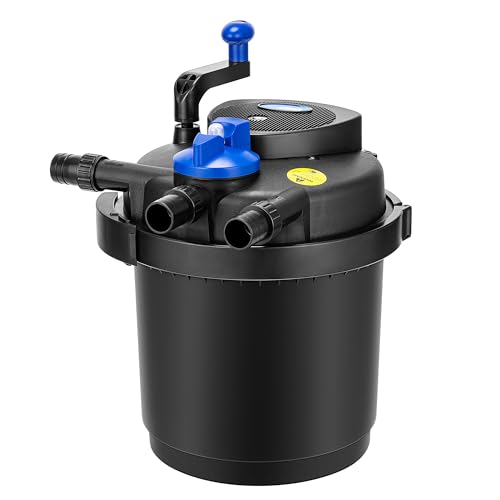
This VIVOHOME model provides 1580 GPH filtration with a built-in 13W clarifying lamp. Four replaceable sponges (two blue 20 PPI and two yellow 25 PPI) support strong filtration for koi or ornamental ponds up to 800 gallons or landscape ponds up to 1600 gallons. It offers a straightforward maintenance flow: switch between Filter and Clean modes, backflush to clear debris, and rely on a red float indicator for cleaning needs. Choose this if you prefer a compact, all-in-one unit with a visible cleanliness cue.
IRONMAX Pond Filter with 13W Light, 2630 GPH

The IRONMAX unit is a high-capacity filter designed for larger decorative or koi ponds. It delivers up to 2630 GPH and includes a 13W clarifying lamp along with a backflush function for rapid cleaning. The device uses ABS construction with strong insulation for outdoor reliability. Best for big ponds up to 2600 gallons (ornamental) or 1300 gallons (fish). Caution: Backflush operation should be performed according to the dial markings to avoid misrouting water.
TetraPond Bio-Active Pressure Filter
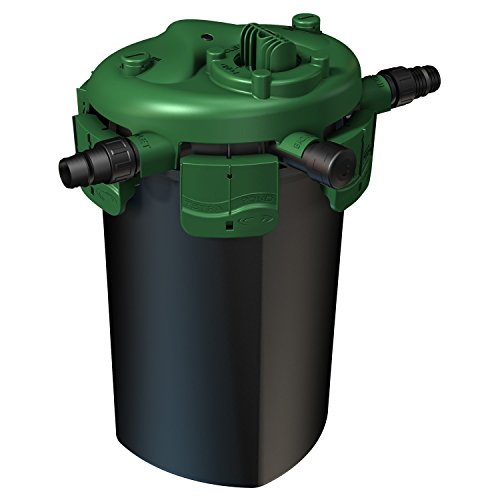
The TetraPond option emphasizes both mechanical and biological filtration with a backflush valve for quick maintenance. It is designed for ponds up to 4000 gallons and aims to support clean water through large surface area bio-activators. Best for users who want a straightforward, two-stage filtration approach with predictable maintenance cycles. Limitation: Maximum pond size can vary by setup, so ensure compatibility with your current koi or decorative pond footprint.
Buying Guide
- Pond size and fish load: Match the filter’s flow rate (GPH) to pond volume and bioload. Higher GPH supports larger ponds or heavy fish populations, but may use more energy and require more maintenance.
- Filtration stages: Look for a mix of mechanical and biological filtration. Sponges with different pore sizes plus bio balls improve nitrification and debris capture.
- UV-C integration: Built-in UV-C helps control algae and clarity. Ensure you understand lamp wattage and replacement needs for sustained performance.
- Maintenance features: Backflush capabilities, removable lids, and indicator floats simplify routine cleaning and reduce downtime.
- Material and durability: ABS housings with weather resistance are common; verify insulation and UV resistance for outdoor use.
- Electrical and safety: Check cord length, certifications, and waterproof connections to safeguard outdoor installations.
What to consider when choosing
For mid-sized koi ponds up to 1000 gallons, filters with around 1500–2000 GPH and replaceable sponges deliver balanced clarity and manageable maintenance. For ornamental ponds over 2000 gallons, consider higher-throughput units with robust filtration and backflush. If UV-C is important for algae control, prefer models with a dedicated UV lamp and an accessible replacement path.
Placement and installation tips
Position the filter below water level for gravity-assisted flow where possible. Ensure the inlet and outlet align with existing piping, and provide a stable, dry area for maintenance. Use the backflush function regularly to prevent debris buildup that can reduce flow and water quality.
Maintenance frequency expectations
Backflush and clean cycles typically depend on pond debris load. Systems with four replaceable sponges tend to require periodic sponge cleaning every 1–2 weeks in high-use ponds, while larger bio-filtration setups may demand less frequent intervention but more thorough inspection.
Frequently asked questions
- Do I need UV-C in a pond filter? UV-C helps reduce algae and improve clarity, especially in sunny locations. It is most effective when paired with stable biological filtration and routine cleaning.
- What size pond should use a 1580 GPH filter? Typically suitable for ponds up to 800 gallons with moderate fish or ornamental ponds up to 1600 gallons depending on load and plant life.
- How often should backflushing occur? Backflush when debris reduces flow or when the turbidity indicator signals cleaning is needed. This can range from weekly to monthly based on pond conditions.
- Is backflush difficult? Some units require simply turning a handle; others have multiple steps. Follow the manufacturer’s instructions to avoid damaging seals or sponges.
- Can I upgrade an existing pond to a pressure filter? Yes, pressure filters can replace gravity filters where plumbing permits. Ensure compatible fittings and adequate head pressure for optimal performance.
- How long do filter sponges last? Sponges typically last several seasons with proper cleaning, but may need replacement if they lose pores or degrade. Replace as needed to maintain filtration efficiency.
Selecting the right pressure filter involves assessing pond size, fish load, and maintenance preferences. The options above provide a range of throughput, filtration configurations, and UV-C features to match common American backyard ponds and landscape features. By aligning product capabilities with your pond’s needs, you can maintain clear, healthy water with manageable upkeep.