For American gardeners and homeowners, a reliable pressure compensated drip line ensures uniform watering across uneven terrain, slopes, and various plantings. This article highlights five top-rated options designed to maintain consistent flow, reduce water waste, and simplify setup. Each product features built-in compensation or proven flow stability to help you optimize garden and landscape irrigation without manual adjustments.
Summary of selected products:
| Product | Brand | Type | Key Benefit |
|---|---|---|---|
| R292DP 1/2-Inch Drip-A-Long Dripline | Raindrip | 1 GPH pressure compensating emitters | Even water distribution along the line |
| PC2010B 1/2 GPH Drippers | Raindrip | Pressure compensating emitters | Constant 1/2 GPH under varying pressure |
| PC4050B 1 GPH Drippers | Raindrip | Pressure compensating emitters | Uniform flow across zones |
| HDL Dripline | Hunter | 0.9 GPH pressure compensated tubing | Consistent watering for larger zones |
| Spalolen 0.5 GPH Emitters | Spalolen | 0.5 GPH pressure compensating drippers | Self-cleaning, anti-clogging design |
Raindrip R292DP 1/2-Inch Drip-A-Long Dripline

Product overview: This 50-foot dripline uses 1/2-inch fittings and preassembled dripline segments to evenly hydrate root zones. It is suited for closely spaced plantings, hedges, and container gardens, with a flexible design that supports loops around trees or pots. Its layered tubing construction emphasizes durability, using virgin outer and inner layers with a recycled middle layer.
Key features: Preassembled dripline hydrates root zones evenly; connects to hose bibs or PVC via adapters; flexible layout supports diverse garden configurations; durable layered tubing for long-term use.
Raindrip PC2010B 1/2 GPH Pressure Compensating Drippers
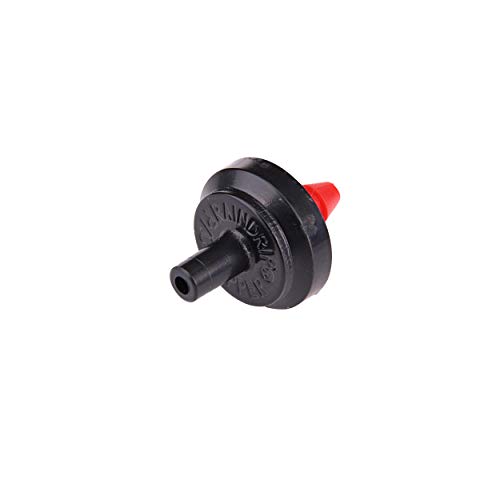
Product overview: A 10-pack of pressure compensating emitters designed to maintain a constant 1/2 GPH flow as pressure varies. Ideal for shrubs, trees, and containers, these emitters attach to 1/4-inch feeder lines or punch directly into 1/2-inch tubing, enabling precise, localized watering where it matters most.
Key features: Maintains consistent flow across pressure changes; simple installation on various tubing sizes; suitable for landscapes and container plantings.
Raindrip PC4050B 1 GPH Drippers

Product overview: This 50-pack of 1 GPH pressure compensating drippers delivers a stable flow under changing pressure, suitable for a variety of watering needs. Install by adding to 1/4-inch feeder lines or punching into 1/2-inch supply tubing. Great for shrubs, trees, pots, and hanging baskets.
Key features: 1 GPH constant flow; compatible with common drip tubing sizes; versatile for multiple landscape and container setups.
Hunter HDL Dripline

Product overview: The HDL dripline features 0.9 GPH emitters spaced along a 250-foot run. It is designed for gardens, planters, and landscape beds that require uniform hydration, with a user-friendly setup that coils and connects to standard drip fittings. The tubing is built to resist kinking for smoother installations.
Key features: 0.9 GPH precision watering; long run suitable for larger beds; straightforward, flexible installation for DIY projects.
Spalolen 0.5 GPH Pressure Compensating Emitters

Product overview: This package includes pressure compensating drippers delivering a steady 0.5 GPH even at low or fluctuating pressure, ideal for slopes or long runs. They connect to 1/4-inch tubing and can be punched into larger lines. A notable advantage is a self-cleaning design to reduce clogging.
Key features: Maintains 0.5 GPH flow across pressure ranges; self-cleaning to minimize clogs; compatible with common drip tubing and extensions.
Buying Guide: Key Considerations for Choosing a Pressure Compensated Drip Line
- Water pressure range: Determine your system’s typical range (PSI) to select emitters that maintain a stable flow within that band.
- Flow rate needs: Choose emitter rates (e.g., 0.5, 1.0 GPH) based on plant water requirements, soil type, and sun exposure to prevent over- or under-watering.
- Line type and compatibility: Verify tubing size (1/4″, 1/2″, etc.) and whether the system needs end-of-line or inline emitters; ensure connectors match existing components.
- Area coverage: For slopes and uneven terrain, pressure compensation helps ensure uniform wetting across the length of the line.
- Clog resistance: Self-cleaning or anti-clogging features reduce maintenance in mineral-rich or dirty water supplies.
- Durability and materials: Layered or virgin-content tubing tends to offer better longevity in outdoor environments and exposure to sun and soil.
- Installation complexity: Some kits include preassembled lines or easy punch-in emitters, making DIY setup faster and less error-prone.
- Maintenance needs: Consider ease of cleaning filter screens, flushing lines, and replacing individual emitters without replacing entire runs.
- Expansion potential: If you plan to expand the system, select components that scale—longer runs, additional zones, and modular emitter packs.
- Warranty and support: Look for brands offering reliable customer support and warranties on emitters and tubing.