Pot plant moisture meters help gardeners and caregivers quickly assess soil moisture without guesswork. This article highlights five reliable options that work well for indoor pots, outdoor containers, and garden beds. Each product is evaluated on accuracy, ease of use, durability, and value, with practical guidance on how to interpret readings for different plant types. The featured meters are battery-free or battery-light and designed to minimize overwatering and underwatering.
| Product | Brand | Key Benefit |
|---|---|---|
| XLUX Soil Moisture Meter | XLUX | Immediate, deep-reading moisture levels |
| XLUX Long Probe Deep Use | XLUX | Works well in large pots and deeper soils |
| GROWIT Plant Moisture Meter | Craft911 | Simple, fast readings to prevent overwatering |
| Censinda Soil Moisture Meter | Censinda | Compact, no battery required, easy to use |
| Antonki 2 Pack Soil Moisture Meter | Antonki | Two meters for multi-pot monitoring |
XLUX Soil Moisture Meter For Deep Pot Readings
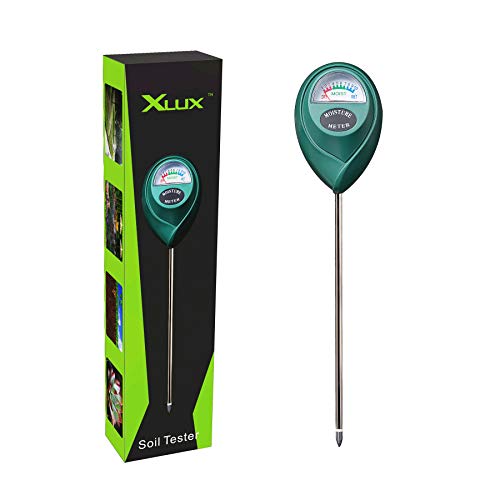
The XLUX Soil Moisture Meter provides quick and actionable moisture readings for soil at root depth. Its probe is designed to detect whether the soil in a pot or garden bed is dry, moist, or wet, offering a more accurate picture than surface checks alone. The device features a large dial with three zones across ten scales, making interpretation straightforward for beginners and experienced gardeners alike. When inserting the probe, users receive an immediate display of the moisture level, enabling timely watering decisions. Note: extended soil contact can cause corrosion of the metal tip, so the meter should not remain in the soil for more than five minutes per use.
Key considerations: For potted plants with shallow root systems, this meter’s readings are highly actionable. In months with variable rainfall or inconsistent drainage, frequent checks can prevent root rot from overwatering. For optimal use, pair the meter with a simple watering schedule that respects each plant’s species-specific needs. Materials are sturdy, and the dial’s readability remains strong in diverse lighting conditions, which helps when tending multiple plants in a single space.
XLUX Long Probe Deep Use Soil Moisture Meter

This XLUX model extends the probe to 5.5 inches (14 cm), allowing moisture measurement near the bottom of larger and deeper pots. The longer probe helps users reach into the core of the soil where roots often access water, reducing guesswork for deep-rooted plants. The dial remains easy to read with three moisture zones and ten gradations, delivering quick insights after insertion. As with the standard XLUX, readings are immediate, supporting timely watering decisions. Avoid leaving the instrument in soil for extended periods to prevent corrosion of the metal tip.
Consider using this long-probe meter for tall planters, outdoor containers, or garden beds with deep root zones. It’s especially useful for woody plants, ornamentals, and flowering species that require precise watering patterns. If you frequently water by trial and error and keep multiple pots, this model helps standardize checks across several specimens with minimal effort.
GROWIT Plant Moisture Meter

The GROWIT Plant Moisture Meter emphasizes simplicity and reliability, designed to help prevent both overwatering and underwatering. Users insert the probe into the soil to obtain rapid readings, with immediate feedback that informs whether a plant needs water. The device is battery-free, reducing maintenance and ongoing costs. It’s particularly appealing for beginners or busy households where quick checks are valuable. The meter aims to deliver accurate soil moisture readings that reflect root-zone conditions, which are critical for consistent plant health.
In practice, this meter supports steady care routines for houseplants, succulents, and container gardens. It’s suitable for people who prefer a tactile, visual method of monitoring soil moisture without digital interfaces. To maximize results, pair the meter with a basic watering schedule tailored to plant species, pot size, and potting mix. Regular cleaning of the probe can help maintain accuracy over time.
Censinda Soil Moisture Meter
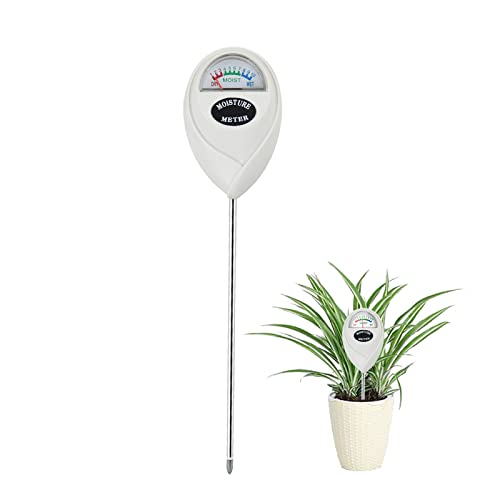
The Censinda meter emphasizes a battery-free design and a root-zone reading approach. It offers fast, reliable readings of soil moisture without requiring any power source. The device helps gardeners identify whether soil is dry, moist, or wet, which can prevent both under-watering and overwatering. Its compact form makes it ideal for small pots and tight spaces, while the straightforward display supports quick decisions. For outdoor use, ensure the meter is kept clean and free from excessive direct moisture exposure to preserve sensor integrity.
Because it’s a no-battery option, this meter is appealing for households seeking low-maintenance tools. To obtain the best readings, insert the probe near the root zone and allow a moment for the dial to settle. Use temperature and light considerations in tandem with soil moisture to shape a balanced watering routine for diverse plant types.
Antonki 2 Pack Soil Moisture Meter

The Antonki 2 Pack offers two meters in one purchase, which is convenient for households tending multiple pots. The meters provide real-time readings of moisture levels, indicating whether soil is wet, moist, or dry. The user guide emphasizes straightforward step-by-step usage: remove the probe protector, insert near the root zone, and read the moisture level. This model supports quick decision-making for groups of plants and helps reduce the risk of inconsistent watering across containers. It is designed to work without batteries and focuses on durability for ongoing garden maintenance.
With two meters, this option supports comparative monitoring across different plants or soil types. For best results, use with pots of similar size and soil composition to standardize readings. Regularly wipe the probe tip to maintain sensitivity and accuracy, and calibrate expectations with plant-specific watering needs to establish reliable care routines.
Buying Guide: Key Purchase Considerations And Comparisons
- Power source: Battery-free meters reduce maintenance but may require more careful handling and cleaning to maintain sensitivity. Battery-powered models can offer longer-term stability but need replacements over time.
- Probe depth: Deep-probe models are valuable for large pots and deep soil, while standard probes suit small to medium pots. Choose based on planter depth and root-zone access.
- Readout clarity: Look for easy-to-read dials with clear zones (e.g., dry, moist, wet) and consistent gradations. A large, legible dial helps with quick checks across multiple plants.
- Durability and materials: Stainless steel tips and robust housings withstand outdoor use and repeated insertion. Consider models with corrosion resistance and protective caps for longevity.
- Number of meters: If tending several pots, multi-pack options offer value and uniformity in readings. A two-pack or three-pack can simplify monitoring across a group of plants.
- Maintenance: Some meters require occasional cleaning or wiping of the probe for accuracy. Avoid keeping meters buried in soil for long periods to prevent tip degradation.
- Plant type considerations: Different plants have varying moisture needs. Use meters as a guide alongside species-specific watering requirements, and adjust for soil type and pot size.
- Compatibility with soil conditions: Some meters may perform differently in sandy, clay, or organic-rich soils. For best results, calibrate expectations by testing in representative pots.
Overall, selecting the right pot plant moisture meter depends on pot size, root depth, frequency of watering, and whether you need a battery-free solution. For households with many containers, a long-probe or two-pack option offers practical advantages. For beginners, models with clear dials and straightforward readings reduce the learning curve and support healthier plant care routines.