Controlling weeds in vegetable gardens requires targeted post-emergent options that are effective on unwanted grasses and broadleaf species while keeping your crops safe. This guide reviews five reliable products commonly used in American gardens, outlining where they excel, typical usage, and key considerations for choosing the right herbicide for your vegetable plot. Each product is evaluated on its formulation, applicability to garden settings, and weed control performance to help you make an informed decision.
| Product | Brand | Best For |
|---|---|---|
| Hi Yield 16 Oz Grass Killer | Hi-Yield | Selective grass control around vegetables |
| Agrisel Sulfentrazone 4F | Agrisel | Broad-spectrum post-emergent and pre-emergent weed control |
| SedgeHammer Herbicide | SEDGEHAMMER | Nutsedge and similar sedges in non-crop areas |
| Monterey Grass Getter | Monterey | Selective post-emergent grass control around ornamentals and vegetables |
| Liquid Harvest Mesotrione 8oz | Liquid Harvest | Post- and pre-emergent broadleaf and grassy weed control |
Hi Yield 16 Oz Grass Killer
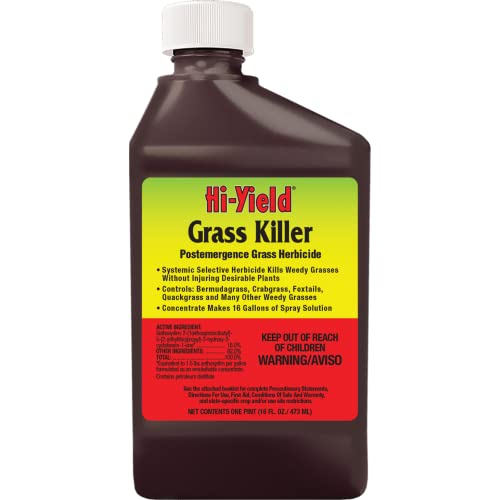
The Hi Yield Grass Killer is a selective post-emergent herbicide designed to target and kill grass growth while allowing careful use near vegetables, trees, shrubs, and ornamentals. Its formulation focuses on stopping the growth of weed grasses within two days after application, helping gardeners quickly reduce grassy competition in vegetable beds. The product is described as safe for use around many garden features when applied according to label directions, potentially offering an accessible option for controlling grassy weeds that threaten vegetable yields. Consider the crop tolerance of nearby vegetables and follow pre- and post-application guidelines to minimize risk to desirable plants.
Agrisel Sulfentrazone 4F Weed Killer

Agrisel Sulfentrazone 4F serves as both a pre-emergent and post-emergent broad-spectrum weed killer with versatile applicability. The product targets weed seeds as they germinate and provides post-emergent control for established weeds, making it suitable for garden spaces adjacent to vegetable plots. It is presented as cost-effective with low usage rates, supporting applications across various landscapes including small gardens and larger areas. While offering broad-spectrum control, users should assess crop safety margins and adhere to recommended dilution and timing to protect vegetable crops and any sensitive ornamentals nearby.
SedgeHammer Herbicide

SedgeHammer is a post-emergent herbicide focused on nutsedge control and similar sedges in established lawns and landscape areas, with applications extending to non-crop sites. It works by moving through the plant to affect underground growth points, providing control of nutsedge and suppressing green kyllinga. This product is especially relevant where sedges invade garden borders or decorative beds adjacent to vegetables. Note that it targets grasses like sedges rather than broadleaf weeds, so it should be part of a broader integrated weed-management plan in a vegetable garden.
Monterey Grass Getter

Monterey Grass Getter is a selective post-emergent herbicide designed to kill grassy weeds in multiple settings, including bedding plants, ornamentals, ground covers, shrubs, and vegetables. It is capable of controlling a broad range of annual and perennial grasses, such as crabgrass and bermudagrass, while aiming to minimize damage to desirable plants when applied over the listed ornamentals. The label specifies that it should not be used in lawn areas, emphasizing its spot-treatment or bed-use emphasis. For vegetable gardens, application should be carefully limited to avoid contact with edible crops and to respect crop safety guidelines.
Liquid Harvest Mesotrione

Liquid Harvest Mesotrione 8oz provides a post- and pre-emergent weed-killing option focused on popular broadleaf species and some grasses. Mesotrione acts quickly after application, with observable weed death often taking 2-3 weeks depending on conditions and subsequent rainfall. It targets a range of species such as crabgrass, dandelion, chickweed, and clover, and is described as suitable for several lawn types. When using mesotrione in vegetables, consider crop sensitivity, tank-mix compatibility, and timing—particularly during periods of active growth or when nearby edible plants may be susceptible to drift or uptake.
Buying Guide: Key Purchase Considerations
When selecting a post-emergent herbicide for a vegetable garden, consider weed type, crop safety, site-specific use, and application timing. Here are essential factors to guide your choice:
- Weed spectrum: Identify the predominant weeds in your garden (nutsedge, broadleaf weeds, or grassy weeds) and choose a product that targets those species specifically. For mixed weed pressures, a product with broad-spectrum post-emergent activity can be advantageous.
- Crop safety and rotation: Review label guidance for use near vegetables, including any restrictions on crop tolerance. Some products are safer around ornamentals but require caution near edible crops. Always follow label directions regarding application timing relative to harvest (pre-harvest intervals).
- Application type: Decide between liquid sprays for spot treatment or pre-emergent/granular formulations for soil-embedded control. Post-emergent liquids can be effective for actively growing weeds, while pre-emergents help prevent germination in future seasons.
- Environmental considerations: Consider rainfall, irrigation, and temperature at the time of application. Many herbicides require moisture or specific temperature ranges to activate effectively and minimize drift.
- Cost and coverage: Compare usage rates per acre or per square foot, and factor in long-term control duration. Some products provide extended residual effects, reducing the frequency of applications.
- Integrated approach: Combine chemical control with mechanical weeding, mulching, and proper spacing to reduce weed pressure and improve crop yields. Avoid relying on a single method for sustained results.
- Safety and handling: Use gloves and protective gear as recommended, especially for concentrate formulations. Store products securely and keep out of reach of children and pets.
In choosing a post-emergent herbicide for vegetable gardens, align product selection with your weed challenges, proximity to edible crops, and your preferred application method. Always follow the product label for safe and effective use, and consider combining these products with cultural practices to maintain a healthy, weed-controlled vegetable garden.