Choosing the right seedling trays can boost germination rates and simplify watering, drainage, and transplantation. This guide reviews five reliable plastic growing trays that balance cost, durability, and plant-friendly design. Each option supports seed starting, microgreens, and nursery propagation, helping American home gardeners grow vegetables and herbs with confidence.
| Product | Brand | Size (approx.) | Drain Holes | Notes |
|---|---|---|---|---|
| Mr. Pen – Plastic Growing Trays | Mr. Pen | 17×10 inches | Yes | 5-pack, durable and reusable |
| Gardzen 30 Pack 6-Cell Tray | Gardzen | 5.4×3.7 inches per cell | Yes | Sturdy; ideal for seed germination |
| ZAVOOS 6 Pack Nursery Trays | ZAVOOS | 17.3×11.6 inches | No | No-drain-hole design, versatile |
| RooTrimmer 10 Pack 32 Cell Tray | RooTrimmer | Depicts 20×10 inches overall | Yes | Deep cells for robust roots |
| RooTrimmer 1020 Trays 5 Pack | RooTrimmer | 21.3×10.9 inches | No | 1020 tray format, reusable |
Mr. Pen Plastic Growing Trays — 5 Pack

These seedling trays come in a set of five, offering a cost-effective way to expand your indoor or outdoor seed starting area. Made from sturdy plastic, they are designed for repeated use, reducing waste over time. Each tray measures about 17×10 inches and stands 2.4 inches tall, providing ample soil depth for healthy root development. The design helps contain soil, water, and fertilizer, simplifying maintenance and cleanup. Suitable for vegetables, flowers, microgreens, and general propagation, they pair well with standard 1020 flats and tiered shelving systems.
Living Whole Foods 5-Pack Without Drain Holes

This five-pack from Living Whole Foods features large, drain-hole-free trays designed to act as drip trays or hydroponic starting systems. Measuring roughly 21 by 11 inches, these trays provide a broad surface for potting, seedling transfer, or microgreen growth. The no-drain holes design helps retain moisture for plants that require consistent moisture. Their robust plastic construction supports repeated use and easy cleaning, making them a versatile choice for greenhouse benches or sunny windowsills.
Gardzen 6-Cell Seed Starting Tray
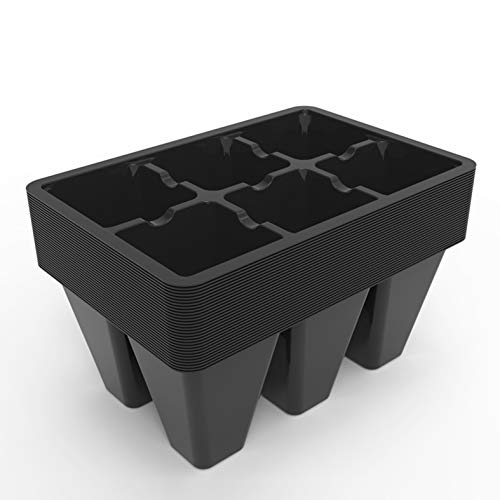
Gardzen’s 30-pack listing includes multiple 6-cell seed starting trays designed for efficient germination. Each cell holds about 1.5 inches square by 2.2 inches deep, offering enough space for young roots to establish before transplant. Drain holes at the bottom prevent overwatering, and top channels guide water evenly to every cell. The trays are lightweight, durable, and suitable for a kitchen window, greenhouse, or outdoor seed sowing area. They’re a popular option for gardeners who stagger plantings or run multiple starts simultaneously.
RooTrimmer 32 Cell Seed Starter Trays

This RooTrimmer option features 32 deep cells to support robust root systems, with each cell measuring roughly 2.32 by 2.32 inches. The trays are 4.33 inches deep, allowing more soil volume for larger seeds or longer cultivation periods. Made from BPA-free plastic, they are designed for durability and long-term use. Drain holes at the bottom help prevent waterlogging, while top channels ensure even moisture distribution. Compatible with standard 1020 flats and suitable for indoor propagation or greenhouse starts.
RooTrimmer 1020 Nursery Pot Trays — 5 Pack

This RooTrimmer bundle contains five 1020-size trays without drainage holes, making them ideal as microgreens growing trays, seedling carriers, or overflow drip trays. The dimensions place them at about 21.3 by 10.9 inches, with a shallow 2.1-inch height. The no-hole design supports moisture retention for certain crops and can streamline transplanting by acting as a staging surface. They’re BPA-free for safe use with edible crops and are designed to withstand repeated use on busy benches and shelves.
Buying Guide: Key Purchase Considerations
- Drainage: Trays with drainage holes support seed germination by preventing waterlogging, while no-drain-hole trays excel as drip trays or for microgreens that require moisture retention. Consider your crop type and watering routine when choosing.
- Size and cell count: Larger trays cover more area, but smaller cells reduce water use and help with crowding. For microgreens or small herbs, high cell counts in a compact footprint can maximize germination density.
- Depth and root space: Deeper trays promote stronger roots for longer-lived transplants. Seed trays with around 1.5–2.5 inches of soil depth per cell balance space and root growth.
- Durability and reuse: Look for BPA-free or food-safe plastics and trays rated for repeated use. Thicker walls reduce warping and bending, especially under heating mats or in outdoor settings.
- Compatibility: Check if the trays fit your existing 1020 flats, shelving, or heat mats. Uniform sizing simplifies stacking and organization.
- Cleaning and maintenance: Smooth interiors without seams prevent soil buildup. Dishwasher-safe or easy-to-scrub surfaces save time between plant cycles.
- Price and quantity: Multi-pack options deliver better value for larger planting projects, but ensure you can store or reuse the extras effectively.
- Material appearance: Clear or light-colored plastics help monitor moisture levels more easily, while darker trays may be preferred for heat absorption in cooler climates.
Overall, the best plastic seedling trays balance durability, size, and moisture control to support reliable germination and healthy seedling growth. For growers who transplant frequently, deeper, hole-drain trays with ample soil depth and easy cleaning tend to perform best. If you primarily start microgreens or delicate greens, no-drain-hole trays designed for moisture retention can be a superior choice. Consider your growing environment—indoors, a greenhouse, or an outdoor setup—and select trays that integrate smoothly with your existing toolkit and growing schedule.