The best plastic garden cart wheels give you reliable, maintenance-light mobility for yard work, landscaping, and DIY projects. This guide highlights five top options, each chosen for durability, ease of use, and how well they fit common garden carts. Best for lightweight to mid-weight loads, these wheels minimize flats and simplify maneuvering on grass, dirt, gravel, and pavement. The buyer profiles below help you pick the right fit for your cart, whether you’re a casual homeowner, weekend DIYer, or professional landscaper.
Summary of chosen products
| Product | Best Use | Key Benefit |
|---|---|---|
| Parts Camp 6 inch Plastic Wheel | Replacement wheel for hand trucks, lawnmowers, utility carts | Direct fit for Oregon 72-106, universal utility use |
| CAMMOO 10-in No-Flat Tires Cart | Heavy-duty garden dump cart and utility wagon | No-flat tires, high load capacity |
| Best Choice Products Dual-Wheel Cart | Home utility yard projects, garden work | 2-wheel design with stand, versatile handling |
| Simplay3 Easy Haul Wheelbarrow | Heavy-duty plastic wheelbarrow with tool storage | Deep well, large wheels for stability |
| GICOOL 14 x 1.75″ Spoked Wheel (2-Pack) | Replacement wheels for lawn mowers and carts | Flat-free, universal fit |
Parts Camp 6 Inch Plastic Wheel

Fits Oregon 72-106 hand trucks and a range of lawn equipment. This 6×150 plastic wheel is suitable for hand trucks, lawnmowers, utility carts, BBQ grills, Radio Flyer wagons, and trash cans. Best for replacing worn wheels on small-to-mid size carts where a light, rigid wheel is sufficient. Caution: confirm axle bore and hub dimensions match your cart’s specs before purchase.
Who it’s best for: DIY homeowners replacing worn wheels on light-duty carts and small equipment. Why selected: direct compatibility with common models and a straightforward, maintenance-free plastic wheel design.
CAMMOO 10-Inch No-Flat Tires Cart
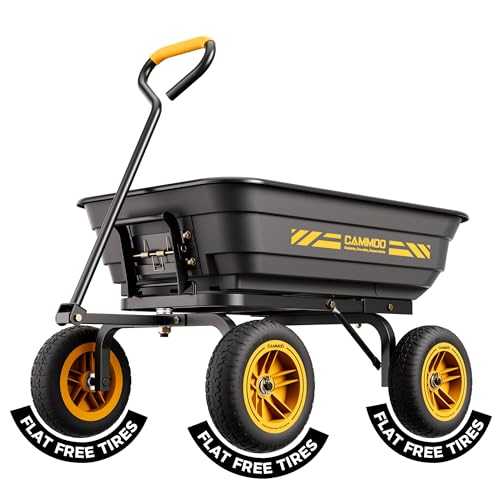
Equipped with 10-inch no-flat tires and a 600 lb capacity, this cart is designed for surfaces like grass, gravel, mud, and sand. The frame uses a sturdy triangle structure for stability, and the front-dumping feature enables effortless unloading. Best for: mid-weight yard projects where puncture risk is a concern. Limitation: heavier cart weight may require more effort on steep grades.
Who it’s best for: Gardeners and small grounds crews needing reliable puncture-resistant wheels and easy dumping. Why selected: combines durability, traction across varied terrains, and a practical dump mechanism.
Best Choice Products Dual-Wheel Cart

This two-wheel, inflatable-tire garden cart offers up to 5 cubic feet of capacity and a padded handlebar that doubles as a stand. Best for: households needing a flexible tool for landscaping, brick, mulch, and soil transport across uneven ground. Caution: inflatable tires can require maintenance and occasional pressure checks.
Who it’s best for: Homeowners who value a stable, versatile wheelbarrow with a built-in stand for idle use. Why selected: dual-wheel design provides steadier balance on soft surfaces compared to single-wheel carts.
GICOOL 14 x 1.75″ Spoked Wheel (2-Pack)

Two-pack plastic wheels with a 1/2 inch axle bore and a 13.75 inch diameter—designed for universal replacement on lawn mowers and DIY trolley wagons. Best for: replacing worn wheels on mid-size carts where a simple, flat-free solution is preferred. Caution: ensure hub and axle measurements align with your equipment to avoid fit issues.
Who it’s best for: Do-it-yourself replacements for common carts and mowers requiring a flat-free option. Why selected: universal fit, no-flat design reduces downtime due to punctures and air loss.
Buying Guide
What to consider when choosing plastic garden cart wheels
- Load capacity: Match wheel strength to your typical load. Heavier tasks benefit from larger, tougher wheels with reinforced frames.
- Tire type: No-flat tires reduce maintenance but may be heavier. Inflateable tires offer lighter weight and smoother rides on rough terrain.
- Wheel diameter: Larger wheels handle uneven ground better, while smaller wheels are nimble in tight spaces.
- Axle and hub compatibility: Check bore size and mounting spacing to ensure a proper fit with your cart’s axle and frame.
- Terrain compatibility: For lawns, gravel, and mud, choose tires with deeper tread or puncture resistance; for smooth paved paths, a simpler wheel may suffice.
- Durability features: Look for reinforced hubs, locknuts, and sturdy frames to prevent wobble and improve longevity in outdoor conditions.
Practical tips for installation and use
- Measure carefully: verify wheel diameter, width, and hub bore before ordering replacements.
- Check alignment: ensure wheels sit square to the cart to prevent steering drift.
- Regular maintenance: wipe wheels clean after use to extend life; check bolts and nuts occasionally.
FAQ
- Q: Will these wheels fit all garden carts?
- A: Not all carts share the same axle bore or mounting spacing. Always verify diameter, hub size, and bolt pattern against your cart specs.
- Q: Are no-flat tires better than pneumatic tires?
- A: No-flat tires prevent punctures but may be heavier and offer a stiffer ride. Pneumatic tires provide better shock absorption but require air upkeep.
- Q: Can I install replacement wheels myself?
- A: Yes, with basic tools and careful alignment. Follow manufacturer guidance for torque and fit.
- Q: How do I know if a wheel assembly is suitable for heavy loads?
- A: Look for reinforced hubs, thicker frames, and higher load ratings stated by the manufacturer.
- Q: Do these wheels affect cart stability?
- A: Yes—larger diameter and two-wheel designs generally improve stability on uneven surfaces, while single-wheel setups may be lighter but less stable.