Concreting outdoor décor has never been easier with sturdy planter molds designed for DIY garden projects. This guide highlights top concrete planter molds that produce clean lines, durable pots, and professional-looking finishes. Whether you’re crafting succulents, bonsai, or large decorative planters, these selections emphasize ease of use, release performance, and long-term reusability. Read on to compare practical features, materials, and design benefits to help you choose the right mold for your next concrete project.
| Product | Brand | Key Feature |
|---|---|---|
| Milisten Planter Mold Large | Milisten | Rigid ABS, easy release, versatile with cement, plaster, clay |
| Osilifen Big Round Silicone Planter Mold | Osilifen | Sturdy outer frame, reusable silicone, easy demould |
| Faddare Silicone Planter Mold | Faddare | Easy demolding, smooth surface, multi-use with concrete |
| EAIVENY Extra Large Concrete Planter Mold | EAIVENY | Drainage holes, snap-lock demolding, reinforced ABS |
| EAIVENY Large Concrete Planter Mold | EAIVENY | Thick, durable ABS mold, built-in buckles for reuse |
The following sections profile five top options, detailing what makes each effective for concrete planters, along with practical considerations such as material resilience, demolding ease, and customization potential. Each product presents a distinct balance of rigidity, flexibility, and size to suit different project scales and plant needs.
Milisten Planter Mold Large Cement Garden Pot
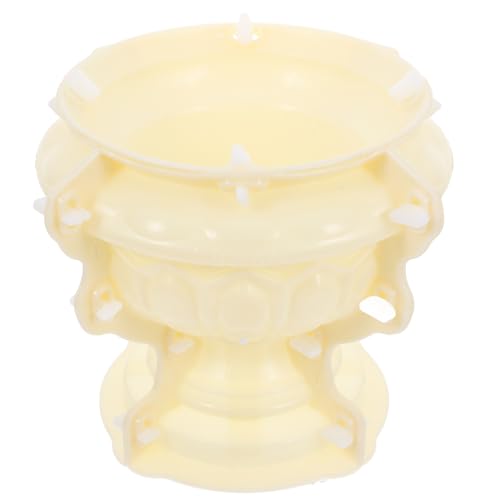
Milisten’s planter mold is built from rigid ABS plastic, designed to withstand repeated cement pours without losing its shape. The interior’s smooth finish promotes easy demolding and reduces surface imperfections on finished pots. Its versatility spans standard cement, concrete, plaster, and air-dry clay, enabling a range of textures and finishes. The mold’s durable construction supports long-term reuse for garden décor projects, outdoor planters, and decorative containers for succulents or bonsai. The combination of durability and ease of release makes this a solid choice for hobbyists and small studios alike.
Osilifen Big Round Silicone Planter Mold

This silicone mold from Osilifen features a sturdy outer frame and a reusable silicone interior, ensuring smooth demolding for round concrete planters. The plastic frame supports the mold during concrete pouring, helping prevent deformation under weight. Finished product sizes (approximately 7.3 x 4.9 inches and 5.9 x 4.7 inches) offer flexibility for medium to large planters. The reusable nature and straightforward demolding process make it a practical pick for hobbyists seeking consistent results with minimal effort and cleanup.
Faddare Silicone Planter Mold

Faddare’s silicone planter mold emphasizes user-friendly operation with easy demolding and a smooth surface ideal for both concrete and air-dry clay. The large rectangular form is versatile for creating longer planter pots suitable for trailing plants or arranging multiple planters in a row. Its durable silicone interior accommodates various materials, simplifying cleanup and reuse. This mold suits crafters seeking a simple, reliable option for producing uniform, contemporary planters with a contemporary look.
EAIVENY Extra Large Concrete Pot Molds

EAIVENY’s extra large mold features a reinforced ABS frame and an integrated drainage solution to prevent waterlogging, which is essential for long-term plant health. The interlocking snap-lock design enables tool-free assembly and quick demolding, reducing project time and minimizing the risk of cracking under removal. With higher pressure resistance and a focus on durability, this mold is well-suited for ambitious DIY projects or small-scale commercial use where large planters are required.
EAIVENY Large Concrete Planter Mold

This large ABS planter mold from EAIVENY emphasizes heavy-duty construction designed for long-term reuse. Its thick-walled design helps create substantial planters with a robust presence in outdoor spaces. The mold supports various finishes and textures and benefits from a design intended to resist cracking during pouring and demolding. The combination of size, durability, and a simple release mechanism makes it a practical option for larger garden features and commercial applications where scale matters.
Buying Guide
- Material and durability: Look for ABS or silicone cores with a rigid outer frame to resist warping/crazing during concrete pours. Silicone interiors aid demolding but require careful cleaning to maintain longevity.
- Demolding ease: Consider molds with smooth interiors or built-in textures that promote easy release. Snap-lock or simple locking mechanisms reduce the risk of damage when removing cured concrete.
- Drainage considerations: Planters with drainage features help prevent root rot. If a mold lacks drainage, plan to drill or modify after curing, or use a sealant to manage water flow.
- Size and scale: Match mold dimensions to your plant choice and available space. Large molds create striking focal pieces, while smaller molds suit shelves, balconies, and table displays.
- Versatility: Choose molds that work with multiple materials (cement, concrete, plaster, air-dry clay) to maximize project options and experiments with textures and finishes.
- Reuse and maintenance: Favor molds designed for repeated use with easy cleaning. Silicone interiors are generally easier to clean, while ABS frames provide durable support.
- Storage and handling: Ensure you have adequate space to store molds flat or nested. Consider weight distribution and how you’ll transport them for outdoor projects.
- Finish customization: Decide whether you want raw concrete aesthetics or painted and colored finishes. Molds that accept coatings without sticking help you achieve consistent, professional looks.
- Budget and workflow: Weigh the upfront cost against reuse potential and the time saved on demolding. For beginners, a combination of silicone and ABS options often delivers the best balance of ease and durability.
When selecting a mold for concrete planters, balance durability with demolding ease, drainage needs, and the size of your envisioned project. The options above cover a range of sizes and materials to support both hobbyist experiments and more ambitious garden installations. Always follow concrete mixing guidelines and cure times to optimize surface texture and strength for lasting outdoor displays.