Choosing the right plant growth regulator (PGR) can help lawn managers and homeowners reduce mowing frequency, improve turf density, and boost drought tolerance. This guide highlights five highly regarded lawn PGR products, detailing how each works, where it shines, and what to consider before purchase. The products below are designed to fit a variety of turf types and maintenance goals, from reducing labor on large lawns to protecting stressed grass during heat waves.
Summary of Selected Products
| Product | Brand | Key Benefit | Best For |
|---|---|---|---|
| Primo Maxx Plant Growth Regulator | Syngenta | Reduces vertical growth, improves drought tolerance | Difficult-to-mow areas, heavy turf where edging is a challenge |
| Quali-Pro T-Nex Plant Growth Regulator (Primo Maxx) 128oz | Quali-Pro | Enhances growth management, color, and root development | Turf and golf courses seeking broader stress tolerance |
| Atticus Pramaxis MEC Plant Growth Regulator (8 oz) | Atticus | 11.3% trinexapac-ethyl; improved root mass and stress tolerance | Cool- and warm-season grasses; frequent mowing areas |
| Monterey Florel Brand Growth Regulator Residential 32oz | Monterey | Growth suppression for smoother turf and landscape use | Residential lawns and ornamental applications |
| Atticus Travek 2 SC Plant Growth Regulator for Lawn (128 OZ) | Atticus | Paclobutrazol-based regulation; extended mowing interval | Large lawns seeking long-lasting regulation |
Note: This article presents objective information on these products based on their listed features and typical turf-use cases. Always follow label directions and local regulations when applying any PGR.
Primo Maxx Plant Growth Regulator

Primo Maxx is a recognized standard in turf management. The product helps manage difficult-to-mow turf by slowing vertical growth, which reduces mowing frequency and clippings. It is also used to optimize water use and drought tolerance, supporting healthier root systems when combined with proper irrigation. The 11% trinexapac-ethyl activity has made this regulator popular among professional managers and serious homeowners who maintain large lawns or sports turf. Application timing is important to align growth suppression with mowing schedules and environmental conditions.
Quali-Pro T-Nex Plant Growth Regulator (Primo Maxx) 128oz
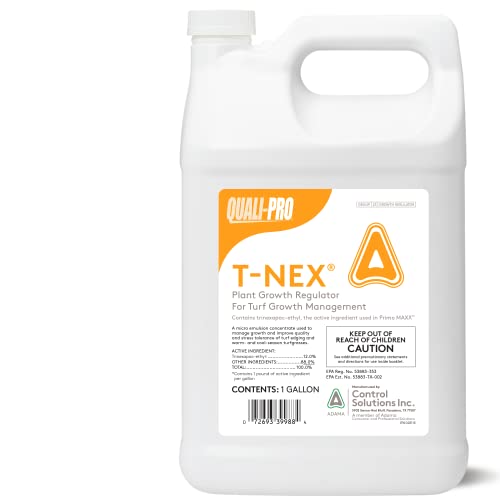
Quali-Pro’s T-Nex provides a broad approach to growth regulation, aimed at improving turf quality, color, and root mass across warm- and cool-season grasses. By managing growth, it supports stronger blades and better stress tolerance, helping turf withstand heat, drought, and frequent mowing. This 128-ounce bottle is designed for larger applications, such as athletic fields and golf courses, where uniform growth control is essential for consistent playability and appearance. Follow label guidance for optimal dilution and timing to maximize benefits while minimizing labor and irrigation needs.
Atticus Pramaxis MEC Plant Growth Regulator (8 oz)

Pramaxis MEC contains 11.3% trinexapac-ethyl, the active ingredient trusted by professional turf managers for decades. It supports below-ground root and rhizome growth, contributing to improved root mass and overall turf quality. The product is labeled for both cool- and warm-season grasses and is particularly helpful in areas that experience frequent mowing or are difficult to regulate. By slowing vertical growth, it reduces mowing requirements and clippings while maintaining turf density and resilience under stressors like drought and heat.
Monterey Florel Brand Growth Regulator Residential

Monterey Florel Residential offers a practical option for homeowners looking to manage growth on lawns and ornamentals. While primarily marketed for residential use, Florel’s active ingredient helps suppress new shoot growth, enabling smoother lawns with fewer mowing cycles. It is commonly used in landscapes where aesthetic uniformity and reduced maintenance are priorities. Always test on a small area before broad application to confirm compatibility with your turf species and climate conditions.
Monterey Florel Plant Growth Regulator (1 Quart) Bundled

This bundle emphasizes growth regulation for broader plant health outcomes, including the option to manage fruiting in certain ornamental trees and shrubs. While not limited to turf, its versatility makes Florel a practical component of a landscape management plan that aims to reduce unwanted fruit set and promote denser branching. Applicators should follow label directions for lawn and tree use, ensuring compatibility with the target species and local regulatory guidelines.
Atticus Travek 2 SC Plant Growth Regulator for Lawn (128 OZ)

Travek 2 SC uses paclobutrazol to slow vertical growth and suppress Poa annua, a common lawn weed in many regions. The extended effect can last several weeks, reducing mowing frequency and improving turf density. This product is well-suited for large properties or sports turf where maintaining consistent height is challenging. The slow-release nature of paclobutrazol offers a longer window of management compared with some faster-acting regulators, which can help coordinate maintenance schedules more efficiently.
Buying Guide: Key Considerations for Choosing a Lawn Plant Growth Regulator
When selecting a PGR for lawns, consider turf species, climate, mowing practices, and irrigation strategy. Here are several factors to weigh to choose the right product:
- Turf species and growth response: Warm-season grasses (bermuda, zoysia) often respond differently than cool-season grasses (fescue, bluegrass). Verify label compatibility with your grass type and climate zone.
- Active ingredient and mode of action: Common actives include trinexapac-ethyl and paclobutrazol. Trinexapac-ethyl-based products typically provide rapid suppression with a shorter window, while paclobutrazol offers a longer-lasting effect that can extend mowing intervals.
- Labor reduction vs. growth control: Decide whether your priority is fewer mows, denser turf, or both. Some products excel at labor savings in frequent-mow areas, while others emphasize overall turf health and drought tolerance.
- Water and irrigation synergy: Proper watering is essential for PGR performance. Overwatering can dilute effects; under-watering can compromise turf stress resilience.
- Application timing and frequency: Follow label directions for timing relative to mowing schedules, heat waves, and soil moisture. Some regimens require multiple applications per season, while others offer extended control with fewer treatments.
- Site type and scale: For large lawns or athletic fields, larger-volume products or concentrated formulations can reduce handling time. For residential lawns, ease of use and label suitability for home settings may be more important.
- Environmental considerations: Consider potential effects on non-target plants, nearby ornamentals, and runoff. Adhere to local regulations and best practices for fertilizer and pesticide use.
In practice, the best choice depends on your specific goals and site conditions. For example, Primo Maxx and its Primo-like variants are strong options for reducing mowing in difficult-to-maintain areas, while Atticus Travek 2 SC provides an extended window of regulation ideal for large properties. If you prioritize root development and stress tolerance, products like Pramaxis MEC offer robust below-ground benefits. For residential landscapes, Monterey Florel options provide a straightforward path to smoother, more manageable turf with fewer mowing cycles.