Choosing the right plant food spikes for succulents means balancing slow release, low water needs, and root safety. This guide highlights five reliable options, ideal for beginners and seasoned collectors alike. Each option targets succulents, cacti, and similar drought-tolerant plants, with clear reasons why it fits different growing styles. Use this overview to compare ongoing nutrition, application simplicity, and potential drawbacks at a glance. The buyer’s table below summarizes key details for quick reference.
| Product | Best For | Package Size | Notes |
|---|---|---|---|
| Jobe’s Organics Succulent Fertilizer Spikes | Organic gardeners seeking low-waste, surface-root nutrition | 12 spikes | OMRI listed, prevents runoff |
| The Grow Co Succulents & Cactus Plant Food | Balanced, long-lasting nutrition with easy application | 5 oz (granular) | 9 months feeding, suitable for various potting mixes |
| Miracle-Gro Indoor Plant Food Spikes (48) | Low-maintenance indoor succulents and houseplants | 48 spikes | 2 months feeding, general-purpose |
| RAINFLOW Slow Release Fertilizer Spikes | Beginners and busy plant lovers needing mess-free feeding | 90 spikes | Up to 6 months, balanced nutrients |
| The Old Farmer’s Almanac Mini Spikes | Continuous nutrition with clear 6-8 week schedule | 12 mini spikes | 5-5-5 formulation, vibrant color support |
Jobe’s Organics Succulent Fertilizer Spikes

Best for organic gardeners who want a low-waste solution. Jobe’s Organics Succulent Fertilizer Spikes use a 2-8-8 NPK that feeds below the surface where active roots grow, reducing surface runoff. They contain no synthetic chemicals and are OMRI listed for organic gardening by the USDA. Suitable for succulents, cacti, and aloe vera plants. A potential limitation is that some users prefer liquid feeds for more precise control during new growth phases.
The Grow Co Succulents & Cactus Plant Food

Best for a gentle, long-lasting feeding plan. This formulation offers a balanced mix with low NPK rates designed to feed live cacti and succulents gently. It lasts up to nine months, and its granular format makes it easy to place around potting mixes in various substrates such as pumice, perlite, or gravel-based soils. Choose this if you want a predictable, slow-release option and don’t want to reapply frequently. A consideration is that it’s a granular product, which may be less accessible for users preferring ready-to-use liquids.
Miracle-Gro Indoor Plant Food Spikes (48)

Best for convenience and broad indoor use. Miracle-Gro Indoor Plant Food Spikes provide continuous feeding for up to two months and are labeled for all indoor plants, including succulents and herbs. This option fits busy households and those wanting a straightforward, ready-to-use product. The main limitation is a general formulation that may be less tailored to succulent-specific needs compared with organic options.
RAINFLOW Slow Release Fertilizer Spikes
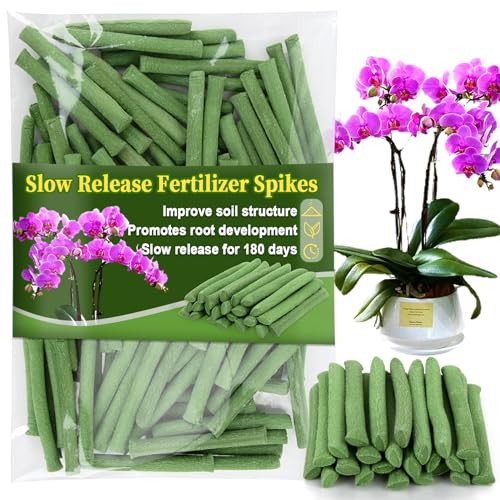
Best for beginners who want a mess-free feeding routine with long intervals. The RAINFLOW spikes feed indoor plants steadily for up to six months, delivering balanced nutrients to support roots, growth, and leaves while maintaining a clean potting experience. A caution is that the formula emphasizes steady feeding; users who need rapid color changes may notice slower initial results compared with higher-NPK products.
The Old Farmer’s Almanac Mini Spikes

Best for continuous feeding and vibrant colors. These mini spikes provide a 5-5-5 nutrient balance and are designed to be applied every 6-8 weeks for steady fertilization. They’re well-suited for a routine that prioritizes color and healthy growth in container plants, window boxes, and hanging planters. A limitation is the smaller spike size, which may require more frequent insertion for dense potting mixes.
Buying Guide: How To Choose Plant Food Spikes For Succulents
- What’s my feeding goal? For organic consumers, prefer spikes like Jobe’s Organics. For low-maintenance needs, Miracle-Gro or similar broad-spectrum options work well.
- Are spikes or granules easier to apply in my setup? Spikes are typically cleaner and slower to release; granules may require mixing with potting soil but can offer longer intervals in some formulas.
- What’s my potting mix? Succulents thrive in well-draining mixes. Some formulas perform better with pumice, perlite, or sand-based soils. Check compatibility with your substrate.
- How long should the feeding last? If you favor less maintenance, choose products advertised for 6–9 months or up to two months of continuous feeding for faster growth signals.
- Are there any safety concerns? Look for no-burn formulations and those designed for delicate roots. If you have sensitive or rare succulents, an organic or low-NPK option may be preferable.
Frequently Asked Questions
- How often should I apply succulent plant food spikes? Most spikes are designed for periodic feeding every 6–8 weeks or every few months, depending on the product and pot size.
- Can I use these spikes with all succulents? Yes, but tailor the choice to plant type and container. Organic options suit sensitive species; broader formulas suit common succulents and cacti.
- Is a liquid fertilizer better than spikes for succulents? Liquids offer quick adjustments and precise dosing, but spikes provide steady, low-stress feeding with less monitoring.
- Do spikes cause root burn? Spikes are formulated to release nutrients slowly. Follow product directions to minimize risk, especially in very small pots or dense root zones.
- Can I combine spikes with other fertilizers? It’s typically best to avoid double-dosing. If using multiple products, coordinate timing and nutrient content to prevent overfertilization.
- Are there organic options for succulents? Yes. Some spikes are OMRI-listed and designed for organic gardening, offering a chemical-free feeding approach.