Looking for the best plant food for orchids? This guide highlights five reliable options to support vibrant blooms, strong roots, and healthy foliage. Each product is suitable for common orchid varieties such as Phalaenopsis, Cattleya, Dendrobium, and more. The top picks are organized by feeding method—mist, spikes, ready-to-use spray, and slow-release pellets—so you can choose how you care for your orchids. The buyer’s table below summarizes key points to help you compare quickly.
| Product | ||
|---|---|---|
| Miracle-Gro Indoor Plant Food Mist for Orchids (8 fl oz, 2-Pack) | Mist | Quick, frequent foliar feeding for flowering orchids |
| Miracle-Gro Orchid Plant Food Spikes (10 spikes) | Spikes | Long-lasting, steady nutrition up to 2 months |
| Miracle-Gro Ready to Use Orchid Plant Food Mist (8 oz) | Mist | All-in-one spray for instant feeding and ease |
| Organic Ready to Spray Orchid Food Mist (8 oz) | Organic mist | Gentle, ready-to-use organic option for weekly feeds |
| Orchid Fertilizer – Liquid For Reblooming (8 oz) | Liquid fertilizer | Support for blooming, roots, and overall growth |
Miracle-Gro Indoor Plant Food Mist for Orchids
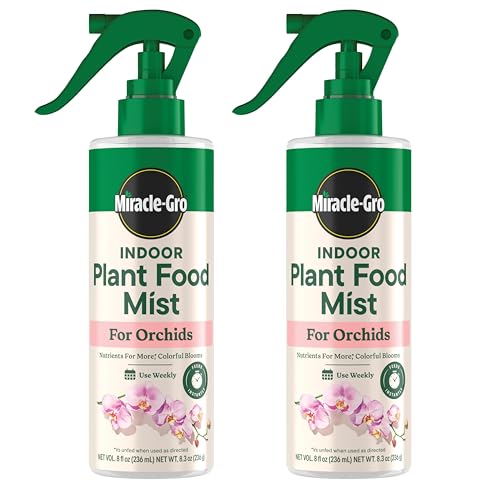
Best for: Home orchid lovers who want quick, frequent feeding without removing plants from their display. This mist feeds orchids instantly and mimics natural feeding conditions, promoting more blooms and colorful flowers when used as directed. It is well-suited for Phalaenopsis (moth orchids) and related indoor varieties.
Why selected: The spray format supports even foliar uptake and allows coverage of leaves and roots during routine care. It’s convenient for busy households that prefer simple, on-the-spot nourishment. A potential limitation is the need for regular applications to sustain bloom cycles.
Caution: Avoid applying when plants are under stress or in direct bright sun to prevent leaf burn.
Miracle-Gro Orchid Plant Food Spikes

Best for: Orchid growers who want long-lasting nutrition with minimal maintenance. The spikes continuously feed all indoor orchid varieties, including Phalaenopsis and Dendrobium, for up to two months.
Why selected: The balanced 10-10-10 formula supports green leaves and beautiful blooms while reducing the need for frequent feeding. It’s ideal for those who prefer a set-and-forget approach. Limitation: Spikes must be inserted carefully into the pot to avoid root damage and ensure even distribution.
Miracle-Gro Ready to Use Orchid Plant Food Mist

Best for: Orchid enthusiasts who want a ready-to-use spray that covers a wide range of indoor orchid types. This mist feeds instantly and is formulated for quick uptake by the plant.
Why selected: It combines ease of use with broad species compatibility, making it a versatile option for mixed orchid collections. Caution: Overuse can lead to excessive leaf growth at the expense of flowering if not balanced with watering and light.
Organic Ready to Spray Orchid Food Mist

Best for: Orchid gardeners seeking an organic option with a gentle feeding profile. The formula uses premium organic ingredients and is ready to spray, making weekly feeding simple.
Why selected: The light NPK ratio helps prevent root burn and supports spike growth, blooms, and overall vigor. Limitation: Organic products may have slower initial effects compared to synthetic blends.
Orchid Fertilizer – Liquid For Reblooming

Best for: Indoor orchid care focused on reblooming and long-lasting flowers. This liquid plant food supports vibrant blooms and healthy roots while encouraging steady growth.
Why selected: The formulation targets blooming support and root health, which is beneficial for varieties that cycle between blooms. Caution: Liquid products should be applied according to recommended rates to avoid salt buildup in potting mixes.
Buying Guide
Key considerations when choosing orchid plant food:
- Feeding method: Choose mist for quick foliar uptake, spikes for long-term steady nutrition, or liquid sprays for versatile coverage.
- Orchid type: Most products cover a broad range (Phalaenopsis, Cattleya, Dendrobium). If you have a mixed collection, a ready-to-use spray or mist is convenient.
- Organic versus synthetic: Organic feeds are gentler and slower to show results, while synthetic blends often provide faster nourishment and stronger blooms.
- NPK balance: Orchids commonly benefit from balanced or slightly higher phosphorus and potassium for flowering. Watch for salt buildup with frequent feeding.
- Application frequency: Spikes typically last up to 2 months; mists require more frequent use, while ready-to-use sprays offer convenient daily or weekly feeding.
- Potting mix compatibility: Slow-release pellets work well with bark-based mixes; avoid overloading with nutrients in very light mixes.
FAQ
- How often should I feed orchids? – Frequency depends on product type: mists or sprays may be used weekly; spikes typically last 1–2 months; slow-release pellets provide longer intervals.
- Can I use orchid fertilizers on other houseplants? – Some products are formulated specifically for orchids and may not meet other plants’ needs; check label guidance for cross-use.
- Should I flush the pot after feeding? – For most orchid types, occasional flushes with clean water help prevent salt buildup; follow product directions.
- Is organic orchid fertilizer as effective as synthetic? – Organic options are gentler and better for sensitive roots, but synthetic blends can deliver faster visible results in blooms.
- What signs indicate over-fertilization? – Leaf tip burn, yellowing leaves, stunted growth, or diminished flowering can indicate over-fertilization; reduce or pause feeding and rehydrate the plant.
- Are there products that support reblooming specifically? – Some formulas emphasize reblooming and bloom enhancement; choose those if your goal is longer-lasting or more frequent blooms.