For fruit tree owners seeking non-spray pest control, pheromone traps offer targeted monitoring and population reduction. This guide highlights five proven options ideal for apples, pears, peaches, plums, and citrus. Best for homeowners with small orchards or backyard fruit trees, these traps help identify moth activity early and protect fruit without broad insecticides. The top picks emphasize species-specific attractants to minimize impact on pollinators and beneficial insects.
| Product | Best For | Key Benefit |
|---|---|---|
| VivaTrap VT-106 Codling + Oriental Fruit Moth Trap & Lure | Codling Moths & Oriental Fruit Moths on Apple, Pear, Peach | Long-lasting lure with both male and female attraction |
| Mysora 12 Pack Apple Tree Borer & Oriental Fruit Moth Traps | Apple tree borers and oriental fruit moths | Comprehensive 12-trap value kit for wider coverage |
| VivaTrap VT-105 Peach Tree Borer + Clearwing Moth Trap | Peach tree borers and clearwing moths | Specific pheromone lure for Sesiidae family |
| Mysora 12 Pack Peach Tree Borer & Clearwing Moths Traps | Peach trees with clearwing moths | Large kit for multiple trees and bigger orchards |
| Codling Moth & Oriental Fruit Moth Trap | Codling moths and oriental fruit moths | Non-toxic, pesticide-free multi-pheromone lure |
VivaTrap VT-106 Codling + Oriental Fruit Moth Trap & Lure (2 Pack, 8 Week)
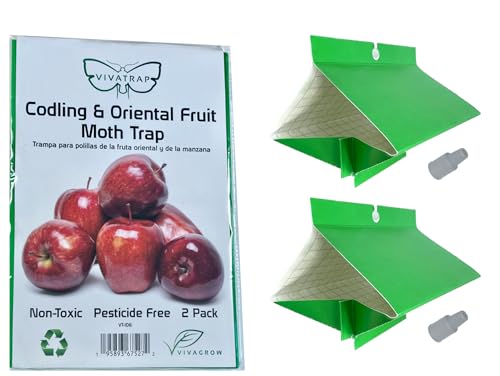
Best for: Homeowners with multiple fruit varieties who want broad moth targeting. This 2-pack uses a 3-component pheromone attractant that appeals to both male and female codling moths and male oriental fruit moths, reducing pest pressure on apples, crabs, pears, and more. The eight-week pheromone lures offer longer protection than many competing products, making it the better choice for seasonal monitoring and early intervention. Caution: ensure proper trap placement away from strong wind or direct sun to maintain lure efficacy.
Mysora 12 Pack Apple Tree Borer & Oriental Fruit Moth Traps with Pheromone Lures

Best for: Those monitoring both apple tree borers and oriental fruit moths across several trees. This value kit includes 12 triangular traps and 12 lures, providing broad coverage for larger home gardens or small orchards. The pheromone lures are species-specific and pollinator-friendly, focusing trap attraction to undesired moths while avoiding beneficial insects. Limitation: placement density matters; spread traps to maximize orchard-wide monitoring rather than clustering.
VivaTrap VT-105 Peach Tree Borer + Clearwing Moth Trap & Lure

Best for: Peach growers dealing with both peach tree borers and other clearwing moths. The lure targets the Sesiidae family, providing a specialized attractant that reduces mating opportunities for these pests. The 8-week lure life offers extended protection, though effectiveness is highest when placed in areas with visible moth activity. Choose this if your primary concern is clearwing moths rather than codling moths.
Mysora 12 Pack Peach Tree Borer & Clearwing Moth Traps with Pheromone Lures

Best for: Peach trees facing both borers and clearwing moths in larger settings. This 12-trap kit provides wide coverage and species-specific pheromones to reduce non-target impacts on pollinators. A potential limitation is that, like all pheromone traps, it is most effective when integrated with other pest management practices and regular monitoring to determine when interventions are needed.
Codling Moth & Oriental Fruit Moth Trap (2 Pack, 8 Week)

Best for: Those needing a pesticide-free approach with a focus on primary pests that damage apples, pears, and walnuts. This trap is marketed as the only lure/trap available for Oriental Fruit Moths and uses a non-toxic, multi-pheromone attractant. Favor this option if you prefer a simple, direct setup and want to reduce chemical interventions, but be mindful of broader moth activity that may require supplementary measures during peak seasons.
Buying Guide
What should you consider when choosing pheromone traps for fruit trees?
- Species specificity: Select traps with lures targeted to the moth species affecting your trees (codling moth, oriental fruit moth, peelers like borers, or clearwing moths). This improves effectiveness and protects pollinators.
- Coverage area: Larger orchards or multiple trees benefit from value kits with multiple traps. Plan placement to provide even coverage rather than clustering.
- Lure longevity: Eight-week lures reduce maintenance. Check replacement intervals and total lifespan to match your growing season.
- Non-toxic and organic compatibility: If organic or pesticide-free approaches are important, prioritize pheromone lures and non-toxic traps complemented by cultural controls.
- Placement strategy: Position traps away from direct sun, wind, or competing attractants, and rotate locations seasonally to monitor moth movement accurately.
- Integration with other controls: Pheromone traps work best when combined with sanitation (removing fallen fruit) and selective interventions, not as a stand-alone solution.
Practical decision tips
- If your orchard has multiple tree species, consider a mixed approach with traps targeting the dominant pests while keeping a close eye on monitoring data to shift strategy as needed.
- For homeowners with limited space, a smaller kit focusing on the most damaging moths can be more cost-effective and easier to manage.
- Always verify that lures are species-specific to minimize non-target attraction and to protect beneficial insects.
FAQ
- Are pheromone traps safe for bees and other pollinators? Yes. Species-specific pheromones attract only the target moths and typically do not lure pollinators.
- How many traps do I need? For small yards, 4–6 traps may suffice; larger orchards may require 12 or more traps for even coverage.
- Can I use pheromone traps year-round? Pheromone traps are seasonal tools. Align usage with the life cycles of target moths in your region and fruiting schedule.
- What is the benefit of combining multiple trap types? Different traps target different life stages or species; combining them increases detection and management options across the season.
- Do traps replace other pest controls? No. They complement sanitation, monitoring, and selective interventions rather than replacing them entirely.