Mole crickets can damage lawns and gardens by tunneling and feeding on grass roots. This guide highlights effective pesticides and repellents that target mole crickets and related pests, helping homeowners choose products that fit their yard size and maintenance routines. Below you’ll find a quick product summary, followed by detailed sections for five select items and a buying guide to compare options.
| Product | Brand | Target Pests & Uses | Notes |
|---|---|---|---|
| Southern Ag Mole Cricket Bait | Ag | Mole crickets, cutworms, armyworms, field crickets, grasshoppers, sowbugs; lawns, ornamentals, vegetables | |
| BioAdvanced Complete Brand Insect Killer for Lawns | BioAdvanced Store | Mole crickets and other listed lawn pests; season-long protection | |
| Broad Spectrum Grasshopper & Cricket Bait | — | Grasshoppers, crickets, mole & Mormon crickets, ants, beetles; many outdoor areas | |
| Solar Powered Mole Repellent for Lawns (4 Pack) | — | Repels moles, rodents, snakes in lawns and gardens | Solar stake, vibration-based |
| Nisus Niban Granular Bait | Nisus Store | Ants, cockroaches, crickets, slugs, snails; indoor/outdoor |
The products above were chosen for relevance to mole cricket control, whether you prefer bait formulations, broad-spectrum lawn treatments, or physical repellents. Each option has a distinct mode of action, application method, and pest coverage, enabling a balanced approach to lawn care.
Southern Ag Mole Cricket Bait 5 Percent Carbaryl

The Southern Ag Mole Cricket Bait uses carbaryl to target mole crickets while also providing control for related pests like cutworms, armyworms, field crickets, grasshoppers, and sowbugs. It’s designed for use in lawns, ornamentals, vegetables, and other crops, making it suitable for diverse yard setups. This bait helps reduce tunneling activity and feeding damage by attracting pests with a treated attractant and delivering a lethal dose upon ingestion. For best results, follow label directions regarding application timing and rates to minimize impact on non-target organisms.
BioAdvanced Complete Brand Insect Killer for Lawns, Granules, 10 LB

This granular insect killer provides season-long protection by creating a barrier against a broad range of lawn pests, including mole crickets. It claims on-contact and residual activity, helping to control ants, fleas, ticks, chinch bugs, and more. As a broad-spectrum option, it’s suitable for maintaining large turf areas during the growing season. When applying, consider the lawn’s condition and follow recommended intervals to sustain pest suppression and minimize environmental impact.
Broad Spectrum Grasshopper & Cricket Bait

This bait formulation targets a wide pest spectrum, including grasshoppers, crickets, mole crickets, locusts, and ants. It combines attractant properties with a lethal dose upon digestion, making it effective for hotspots and perimeters where crickets and related pests congregate. Application can be done by sprinkling or spreading in yard zones that require targeted control, following the product’s guidelines for rate and timing to optimize results and minimize non-target exposure.
Solar Powered Mole Repellent for Lawns 4 Pack

This solar-powered repellent uses vibration-based signals to deter moles, rodents, and snakes within a defined radius. The AR08M stake covers up to 4,000 square feet, making it suitable for medium to large lawns. It offers a chemical-free approach, appealing to homeowners seeking non-lethal pest control. The device is designed for easy installation with a spiral stake, reducing the need for digging. Users should rotate or reposition stakes to avoid any potential adaptation by pests and to maintain effectiveness across the yard.
Nisus Niban Granular Bait
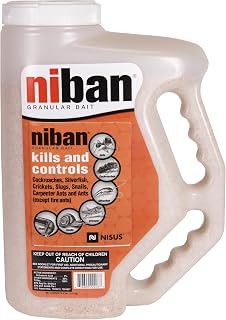
Nisus Niban Granular Bait uses boric acid to disrupt the digestive system of targeted pests like ants, cockroaches, crickets, slugs, and snails. Its weather-resistant formulation supports outdoor use and helps deliver long-lasting control in varied conditions. The product is designed for both indoor and outdoor applications and emphasizes low-resistance performance due to its non-neural mode of action. When using borate-based baits, it’s important to place them in secure, inaccessible areas for pets and children and to follow label directions precisely for optimal results.
Buying Guide: Key Purchase Considerations And Comparisons
Choosing the right mole cricket control product depends on pest pressure, lawn size, and personal preference for bait vs. repellent. Here are factors to weigh when deciding which product to buy and how to use it effectively.
- Target pests and scope: If mole crickets are the primary issue, select products labeled for mole crickets or a broad-spectrum option that includes them. For yard-wide protection, consider season-long fertilizers with insect control or long-acting granules.
- Delivery method: Baits attract and kill pests that feed on treated material, whereas repellents and repellents-based devices deter pests physically. Baits should be placed according to label directions to minimize non-target impacts.
- Application area and lawn size: Large lawns may benefit from granular treatments or multi-pack solar repellents, while small spaces might be well-served by targeted baits.
- Safety and environmental impact: Boric acid and carbaryl have different safety profiles. Follow label instructions, handle with care, and consider pets and children when selecting a product for outdoor use.
- Weather resistance and longevity: Weather-resistant formulas maintain effectiveness longer outdoors. For outside use, select products designed to withstand rain, sun, and temperature fluctuations.
- Integrated approach: Combining a bait with a physical repellent or barrier can improve results. Rotate products to prevent pest adaptation and reduce resistance risk.
- Ease of use: Some solutions require minimal setup (solar repellers), while others demand more precise application (granular baits and sprays). Choose based on your preferred maintenance routine.
In sum, effective mole cricket control often benefits from a layered strategy: deter with repellents, reduce population with targeted baits, and reinforce turf health with appropriate lawn care practices. Always read and follow label guidance, apply during recommended periods, and consider combining products for broader protection across your landscape.