Answer: For a perfect landscape lawn, choose seed blends that match your sun exposure, climate, and maintenance routine. This guide highlights five top options for American yards, from shade-tolerant mixes to drought-tolerant blends. Each product is evaluated for who it’s best for, and where it shines, with practical cautions to avoid common missteps. The summary table below helps you compare key points at a glance.
| Product | Best For | Sun Exposure | Notes |
|---|---|---|---|
| Jonathan Green Black Beauty Dense Shade Seed | Shaded lawns, trees, and structures | Shade-tolerant | Dark green, fast establishment |
| Scotts Thick’R Lawn Sun and Shade | Mixed sun and shade areas | Sun & Shade | Three-in-one seed, fertilizer, soil improver |
| Pennington Northern Mix 40 lb | New lawns and overseeding in northern regions | Varies by region | All-purpose, dense growth |
| O.M. Scotts Bermudagrass Seed | Hot, dry southern yards | Full sun | Drought-tolerant once established |
| Pennington Kentucky 31 Tall Fescue 20 lb | Durable home lawns | Sun and moderate shade | Thick blades, winter hardy |
Buyer intent pointers: If you have significant shade, prioritize a shade-tolerant mix. For hot climates, select drought-tolerant or bermudagrass blends that establish quickly. For typical American home lawns, tall fescue or all-purpose mixes offer durability and seasonal resilience. The following sections provide practical product-by-product guidance to help you decide which mix to plant and when.
Jonathan Green Black Beauty Dense Shade Seed Mathes Shade Tolerance

The Jonathan Green Black Beauty Dense Shade Grass Seed is a shade-tolerant mix designed for lawns shaded by trees, buildings, or large shrubs. It aims to establish a dark-green, dense turf quickly, with a germination window of roughly 14–21 days. This product is best for homeowners who struggle to grow in low sunlight and want a visibly lush lawn with deeper color. It benefits shaded areas that still require a neat, uniform appearance. A potential limitation is that shade-tolerant seeds may not perform as aggressively in full sun as sun-preference varieties, so expectations should align with light levels.
Who this is best for: Homeowners with significant shade from trees or structures who want a dark, dense lawn that fills in quickly.
Why selected: It specifically targets shade areas and delivers a strong green color, which is often a priority for shaded lawns.
Scotts Turf Builder Thick’R Lawn Sun and Shade

Scotts Turf Builder Thick’R Lawn Sun and Shade combines seed, fertilizer, and soil improver. It’s designed to thicken thin lawns while addressing bare spots in areas with variable sun exposure. The “3-in-1” approach may suit homeowners who want a straightforward, all-in-one solution. Best for: lawns with intermittent sun and shade, or for those who need both germination and nutrients in one application. Caution: results depend on lawn condition and proper care; apply as directed and avoid over-seeding in very crowded areas where competition may slow germination.
Who this is best for: Those wanting a convenient, all-in-one product to fill thin areas in lawns with mixed sun exposure.
Why selected: It offers a combined approach to seeding, feeding, and soil conditioning, which can simplify lawn renovation projects.
Pennington Northern Mix 40 lb

The Pennington Contractors Grass Seed Mix Northern Mix is a versatile all-purpose blend intended for establishing new lawns, overseeding existing turf, or repairing damaged areas. It emphasizes dense growth suitable for regional climate conditions, making it a practical choice for northern yard projects where cool-season grasses perform best. A potential limitation is that performance can vary with regional conditions; verify suitability for your exact climate and soil before planting.
Who this is best for: Homeowners planning to establish or repair lawns in northern regions with cool-season climates.
Why selected: It’s a regionally framed blend designed for dependable establishment and dense growth, supporting a durable lawn across seasons.
O.M. Scotts Bermudagrass Seed Mix
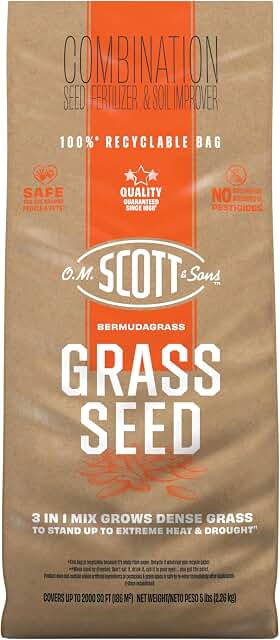
The Bermudagrass blend from O.M. Scott & Sons is tailored for hot, dry Southern regions. It combines seed with fertilizer and soil improver, aiming to deliver dense growth that withstands heat and drought once established. It’s best for sunny, high-heat yards where irrigation can support establishment. Limitation: Bermuda grasses typically require full sun; expect reduced performance in shaded areas even after establishment.
Who this is best for: Homeowners in hot southern climates seeking a drought-tolerant, dense lawn that thrives in strong sun.
Why selected: It targets extreme heat tolerance and rapid establishment with a all-in-one approach for desert and southern landscapes.
Pennington Kentucky 31 Tall Fescue 20 lb

Pennington Kentucky 31 Tall Fescue is a classic turfgrass choice known for durability and economical lawn coverage. This tall fescue blend features thick blades designed to hold up against hot summers and heavy rains, offering winter resilience and year-round structure for many U.S. regions. Best for: traditional lawns that need robust performance with moderate shade tolerance. Caution: fescues may not spread as aggressively as some warm-season grasses, so regular overseeding can help maintain density over time.
Who this is best for: Homeowners seeking a durable, economical grass that holds up well in mixed weather and moderate shade.
Why selected: It’s a time-tested option that delivers reliable density and resilience in diverse climates, without specialized maintenance requirements.
Buying Guide: Choosing The Right Seed For Your Landscape
How do you select the best seed for your landscape? Start with sun exposure, climate, and maintenance goals. Shade-tolerant mixes work best under trees or near buildings, while drought-tolerant blends thrive in hot, low-water regions. Cool-season grasses establish best in northern zones; warm-season varieties are suited for southern climates and full sun. Consider seed germination rates, establishment speed, and whether you want an all-in-one product (seed + fertilizer + soil improver) or separately sourced components.
What questions should you ask before buying?
- What is my lawn’s primary sun exposure?
- Am I planting new grass or overseeding an existing lawn?
- What climate region do I live in, and how hot are the summers?
- Do I prefer a fast-establishing seed mix or a longer-term density strategy?
When should I plant?
Cool-season grasses are typically planted in early spring or fall in northern regions. Warm-season grasses are best planted in late spring through summer in southern climates. Follow the product instructions for germination timing and irrigation schedules to maximize establishment success.
Seeding vs. Overseeding: What’s the difference?
Seeding involves creating a new lawn on bare ground or damaged soil. Overseeding fills thinning areas in an existing lawn to improve density and repair wear. Choose the Pennington Northern Mix or Kentucky 31 Tall Fescue for overseeding established lawns in cooler regions, and select shade-tolerant blends like Jonathan Green for shaded spaces that need density.
Maintenance considerations
- Watering: Keep soil consistently moist during germination; gradually reduce frequency as roots establish.
- Mowing: Start mowing when seedlings reach mowing height; avoid removing more than one-third of leaf tissue at a time.
- Fertilization: For blends with fertilizers, follow label directions; otherwise schedule a balanced lawn fertilizer after germination.
- Soil: Ensure proper soil preparation with aeration and leveling to promote even germination.
Choosing by usage scenarios
- Shaded front yard with trees: Jonathan Green Black Beauty Dense Shade Seed is a strong match because it targets shade tolerance and a dark green color.
- Sun and shade mixed areas: Scotts Thick’R Lawn Sun and Shade, as an all-in-one option, can save time and effort.
- Northern regions needing dense coverage: Pennington Northern Mix 40 lb emphasizes regional climate suitability and dense growth.
- Hot southern yards: Bermuda grass mix from O.M. Scotts Bermudagrass Seed is designed for heat and drought tolerance.
- Durable, traditional lawn: Pennington Kentucky 31 Tall Fescue offers a reliable, thick blade profile for year-round durability.
FAQ
- What seed is best for shade-tolerant lawns? – Jonathan Green Black Beauty Dense Shade Seed is designed for shade tolerance and a dark green color.
- Can I plant seed in areas with mixed sun? – Yes, Scotts Thick’R Lawn Sun and Shade is designed for mixed sun exposure and provides both seed and nutrients in one product.
- Is Bermuda grass good in cool climates? – Bermuda grass performs best in full sun and hot climates; it may struggle in northern zones or under shade.
- Should I overseed or reseed a bare lawn? – Overseeding is ideal for repairing thinning lawns, particularly in cooler regions with tall fescues or cool-season blends.
- How long does germination take? – Germination typically occurs within 14–21 days for many blends, depending on temperature, moisture, and seed quality.
- Do I need to fertilize after planting? – Many blends include starter fertilizers, but follow product instructions for timing and rate if additional fertilization is needed.