Red-flowering perennials bring bold color and wildlife-friendly appeal to American gardens. This article highlights five top choices, describing their growth habits, care, and garden impact. Each entry includes practical considerations for sun, soil, and maintenance, helping you select perennials that thrive in diverse regions—from temperate zones to warm coastal climates.
| Product | Brand | Key Benefit |
|---|---|---|
| KVITER 2000 Red Cardinal Flower Seeds | KVITER | Vivid crimson spikes; attracts pollinators; moisture-loving |
| NYGardenia Bee Balm Seeds | NYGardenia | Bright red, pollinator-friendly blooms; perennial return |
| 30+ Dianthus Scarlet Red Carnation Seeds | CHERYL’S UNIQUE FLOWER SEEDS | Easy-to-grow, fragrant, hardy in multiple zones |
| 250 Penstemon Red Firecracker Seeds | The Gardening World | Beardtongue variety; attracts bees and butterflies; late spring bloom |
| 100PCS Cardinal Flower Seeds | USBRANDSEED | Hardy, nectar-rich for hummingbirds and butterflies |
KVITER 2000 Red Cardinal Flower Seeds

KVITER’s Red Cardinal Flower Seeds deliver tall, scarlet spikes that can reach up to 48 inches. These Lobelia cardinalis seeds perform best in moist to wet soils, making them ideal near ponds, streams, or rain gardens. They are suited for outdoor beds and containers, offering a striking late-summer to early-fall display that also supports a pollinator-friendly landscape. The plant’s upright habit creates vertical interest, while its moisture-loving nature ensures robust growth in suitable sites.
KVITER 100 Red Trumpet Vine Seeds

A rapid climber, Trumpet Creeper vines can reach up to 30 feet under optimal conditions. The red blooms are a magnet for hummingbirds from summer through fall. These seeds have strong germination potential, with up to 90% success reported. Suitable for USDA zones 4–10, they work well on fences, trellises, and other vertical structures, providing lasting vertical color and wildlife appeal in larger landscapes.
NYGardenia Bee Balm Seeds

The Bee Balm seeds from NYGardenia produce bright red, spiky blossoms that stand out in any garden. This perennial is known for its pollinator-friendly qualities, attracting bees, butterflies, and hummingbirds across the growing season. With minimal maintenance, bee balm returns year after year, offering reliable color and ongoing nectar sources in herb and perennial borders.
30+ Dianthus Scarlet Red Carnation Seeds

Dianthus, known for its fragrance and compact habit, offers scarlet red blooms in a sturdy, easy-to-grow package. The variety suits zones 3-9 and tolerates a range of soils, making it a versatile addition to borders, rock gardens, or containers. Its enduring color and scent add seasonal interest and attract pollinators while remaining relatively low maintenance.
250 Penstemon Red Firecracker Seeds

The Penstemon Firecracker variety offers a red-hued, tubular flower display typical of beardedtongue plants. Planting guidance emphasizes strict adherence to instructions for best results. It’s a perennial option with a height of roughly 16-18 inches, thriving in full sun with moderate spacing. Blooming in late spring to early summer, it attracts bees and butterflies, contributing to a lively pollinator garden.
100 Cardinal Flower Seeds Red Lobelia Cardinalis
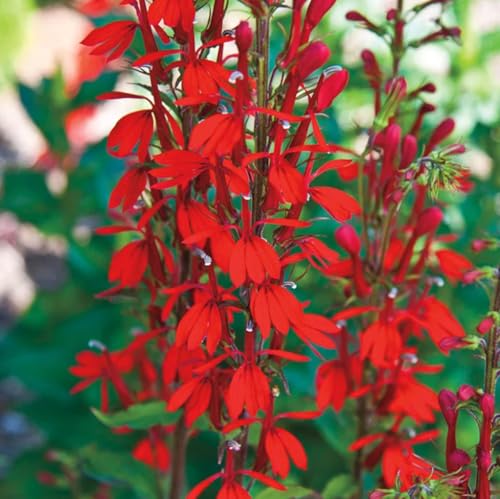
The Cardinal Flower seeds by USBRANDSEED promise zones 2–9 hardiness with vivid red blooms that attract hummingbirds and butterflies. This low-maintenance perennial tolerates sun to partial shade and tends to reseed under favorable conditions, contributing long-term color and wildlife support in pondside or meadow-like landscapes.
Buying Guide
Key considerations when selecting red-flowering perennials include climate adaptability, soil moisture needs, sun exposure, growth habit, and maintenance level. If you live in wetter regions or near water features, prioritize moisture-loving species like lobelias. For hot, sunny sites, look for sun-tolerant varieties with drought resilience such as certain penstemon and dianthus types. Height variety helps create layered borders; mix tall spikes with mid-height and compact ground covers for year-round interest. Pollinator appeal should guide plant choice if you want a thriving ecosystem. Consider perennial longevity and potential reseeding behavior to match your garden’s long-term planning.
Comparison at a glance:
– Cardinal flowers (Lobelia cardinalis) provide dramatic red spikes and strong pollinator support, ideal near water.
– Bee balm (Monarda species) offers bold red blooms and reliable year-to-year performance with high pollinator value.
– Dianthus adds fragrance and versatile placement, well-suited to borders and containers.
– Penstemon provides tubular flowers that attract bees and hummingbirds, with defined stem structure.
– Red lobelia seeds for cardinal flowers deliver mass color, with reseeding potential depending on conditions.
Site planning tips: test soil moisture and drainage before planting red perennials; amend poorly drained soil with organic matter and consider raised beds for moisture-loving species. Mulching helps retain soil moisture and suppress weeds. When using seeds, follow recommended stratification, soaking, and germination guidance to improve germination rates. For container gardening, choose varieties with compact growth and compatible soil mixes to ensure robust performance in limited spaces.