Looking for paving stones to create a welcoming, durable garden path? This guide evaluates five common options, focusing on materials, stability, safety, and suitability for different yards. It helps buyers pick stones that are easy to install, weather-resistant, and comfortable to walk on. The top picks are ideal for homes with kids, pets, or a need for low-maintenance landscaping. Each entry includes who it’s best for and why it stands out, plus practical caveats to consider before buying.
Summary of chosen products:
- Sekcen 3 Pack Rubber Stepping Stones Outdoor Garden Rubber Pavers Pathway Walkway Paving Stones — best for lightweight, portable placement and anti-slip safety.
- VEVOR Garden Stepping Stones (Grey) 16Pcs — best for a stable, weather-resistant plastic option with a natural stone look.
- VEVOR Garden Stepping Stones (Beige) 16Pcs — best for a warm neutral aesthetic with similar stability and durability.
- Sekcen 3 Pack Rubber Stepping Stones (15.75”) — best for a larger footprint and stylish slate-gray appearance.
- HTVSHEE 8 Pcs Ground Stake Down Stones — best for extra stability with stakes in mixed environments.
Sekcen 3 Pack Rubber Stepping Stones

Product highlights: Lightweight simulated flagstone rubber pavers offering real-stone aesthetics with the ease of rubber. They’re designed to stay put in outdoor settings and handle varied weather, with a non-slip surface for safer barefoot use. Best for walkways where you want portable, low-maintenance decor that resists slipping in wet conditions.
Best for: Small to medium garden paths where you want a flexible layout and simple installation. The rubber construction reduces heavy lifting and is suitable for temporary or semi-permanent setups. Choose this if you want quick placement and easy removal for seasonal changes.
Why selected: The combination of lightweight design, weather resilience, and anti-slip surface makes these stones a practical choice for dense, shade-friendly walkways or areas where people frequently walk in rain.
Caution: Rubber stepping stones may shift if the ground is soft or uneven; consider adding edging or adhesive solutions for long-term stability.
VEVOR Grey 16Pcs Plastic Pathway Pavers

Product highlights: Weather-resistant PC+ABS resin stepping stones with four ground stakes per stone and a reinforced ribbed base for stability. The grey, natural stone look suits modern landscapes, and the surface remains cool and non-slip for bare feet. Designed for year-round outdoor use, they resist fading and warping.
Best for: Families seeking a stable, long-lasting path with a contemporary stone aesthetic. Suitable for lawns, patios, and garden borders where frequent foot traffic occurs.
Why selected: The built-in stakes and ribbed base provide dependable anchoring, reducing movement in rain and wind, which is essential for busy paths and pet-friendly yards.
Caution: Although durable, plastic stones can feel less natural underfoot than real stone, which may matter for extremely rustic garden themes.
VEVOR Beige 16Pcs Plastic Pathway Pavers

Product highlights: Beige-toned stepping stones with a stone-textured finish to blend with natural landscapes. Like the grey version, these provide a stable base with ground stakes and a sturdy base to resist movement while withstanding temperature changes.
Best for: Gardeners seeking a warmer palette that complements tan, brown, or green garden themes. Great for creating a cohesive walkway that mirrors natural stone but with lighter weight and upkeep.
Why selected: The beige stone look offers versatility across different garden styles, and the reinforced stakes help maintain alignment and spacing in grassy or muddy areas.
Caution: Beige tones may show dirt more readily than darker stones; regular cleaning helps maintain appearance.
Sekcen 3 Pack Rubber Stepping Stones (15.75” x 15.75”)

Product highlights: Large 15.75-inch slate-gray rubber stepping stones with a natural-looking slate finish. Made from recycled rubber, they stay in place and resist weather, while offering an anti-slip surface for wet conditions.
Best for: Pathways that require bigger stepping stones to create a bold, linear look in lawns or garden borders. Suitable for zones with uneven ground where larger stones reduce gaps and missteps.
Why selected: The oversized footprint delivers a dramatic aesthetic and practical stepping consistency, making them a strong choice for longer straight paths.
Caution: Larger stones may be heavier to reposition; ensure you have help or proper tools for any rearrangement.
HTVSHEE 8 Pcs Ground Stake Down Stones
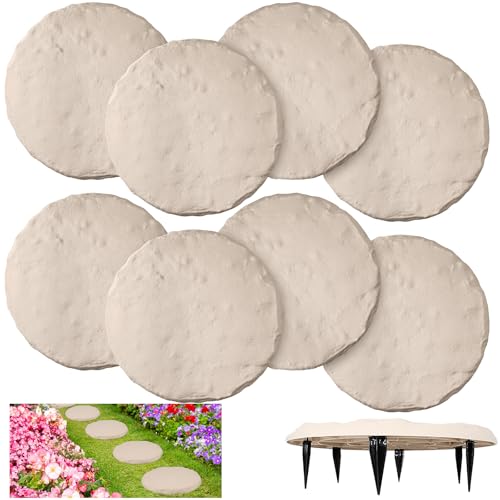
Product highlights: Eight 15.5-inch stones with six ground stakes per piece. Aimed at stability, these stones can be driven into the ground to reduce shifting, making them suitable for uneven or porous soil and for use in lawns, gardens, or patios.
Best for: Areas where ground conditions are less forgiving or where higher traffic requires very stable stepping stones. The stake-down design helps keep stones in place during heavy rain or wind.
Why selected: The stake system directly addresses movement issues, a common concern for outdoor paths in windy or rainy climates.
Caution: In very hard or compacted soils, ground stakes may require pre-drilling or extra effort to install properly.
Buying Guide: How To Choose Garden Path Paving Stones
- Material durability and weather resistance: Compare rubber versus plastic versus resin. Rubber tends to be lightweight and forgiving, while plastic and resin offer rigid stability and long-term shape retention. Consider your local climate and foot traffic level when choosing.
- Stability and installation: Look for ground stakes or reinforced bases, especially for lawns or muddy areas. Stakes improve stability in rain, wind, and frequent stepping, reducing movement and trips.
- Aesthetics and texture: Decide whether you want a natural stone look, a warm beige palette, or a modern gray tone. Textured surfaces are typically more slip-resistant, while smooth surfaces feel cooler underfoot.
- Footing size and spacing: Larger stepping stones cover more ground and reduce gaps, which can improve safety. Spacing should align with typical stride length to minimize stepping awkwardness.
- Maintenance and cleaning: Lighter colors show dirt more readily; consider your willingness to clean periodically. Materials like rubber can be easier to rinse, while textured concrete or resin surfaces may require more frequent brushing.
- Ground preparation: Assess your soil and ground conditions. Some surfaces perform better with weed barrier fabric or edging to prevent movement and weed growth beneath.
- Safety considerations: Anti-slip surfaces are essential for wet climates. Ensure the chosen product offers a slip-resistant finish to reduce the risk of falls.
Frequently Asked Questions
- What material is best for pet-friendly garden paths? Answer: Weather-resistant plastics or rubbers with non-slip textures offer safer, softer footing and easier cleaning for pet use.
- How do I prevent stepping stones from shifting? Answer: Use ground stakes, edging, or adhesive products recommended by the manufacturer to anchor stones firmly into ground.
- Are rubber stepping stones comfortable to walk on? Answer: Yes, rubber provides a softer surface than hard stone and can be less slippery in wet conditions when featuring a textured anti-slip finish.
- Can I install stepping stones on grass or dirt? Answer: Yes, many options include stakes designed for soft ground; for hard ground, consider compatible installation methods or alternative mounting options.
- Do larger stepping stones require more maintenance? Answer: Larger stones can collect more dirt but are generally easy to rinse; ensure proper spacing and secure anchoring to minimize movement.
- Which color should I choose for a shaded garden? Answer: Grays and beiges tend to show less dirt and blend well with many shade-tolerant palettes.