Answer: For caterpillar control, Bacillus thuringiensis (Bt) products are the most reliable organic option. They target caterpillars and worm-like insects while generally avoiding harm to birds, bees, earthworms, and most beneficial insects when used as directed. This article highlights five Bt-based products and compares them to help you choose the right fit for vegetables, fruit, ornamentals, and edible gardens. The best choice depends on garden size, application method, and harvest timing.
| Product | Best For | Notes |
|---|---|---|
| Bonide Captain Jack’s Bacillus Thuringiensis BT Organic Worm & Caterpillar Control | Home gardens with mixed plantings | Ready-to-use spray; quick start, broad caterpillar range |
| Monterey BT – 16 oz (Concentrate) | Medium to large gardens; DIY sprayer users | Concentrate; bundled measuring spoon |
| Bonide Captain Jack’s Thuricide BT, 128 oz Ready-to-Use | Large edible gardens; frequent treatments | Large volume; ready-to-use spray |
| Safer Brand Caterpillar Killer II | General organic vegetable and fruit plots | OMRI-listed; broad caterpillar coverage |
| Monterey B.t. Bundled with Measuring Spoon – 32 oz | Standard home gardens; easy measurement | Sprayer-ready with measuring spoon |
Bonide Captain Jack’s Bt Ready-To-Use Spray
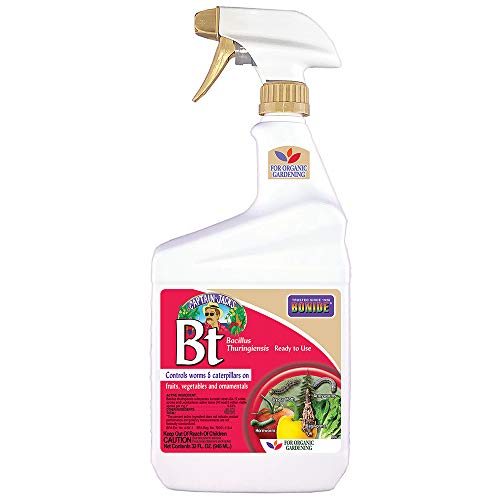
Product overview: Captain Jack’s Bt Ready-to-Use targets cabbage looper, hornworms, tent caterpillars, and related pests. It is designed for fruits, vegetables, shade trees, and ornamentals. Ingested Bt stops caterpillar feeding and leads to death within 2–3 days. Best for small to medium gardens requiring quick, no-dilution application.
Who it’s best for: Home gardeners who want a simple, ready-to-use solution without mixing. It suits quick spot treatments and seasonal pest surges. Choose this if you prefer a spray that can be applied directly from the bottle to edible crops up to harvest.
Caution/limitation: As with all Bt products, timing is key—apply before heavy feeding damage occurs. Avoid spraying during flowering if bees are active, and follow label intervals for harvest timing.
Monterey Bt for Organic Caterpillar Control (16 oz)

Product overview: Monterey Bt is a concentrate designed to combat caterpillars and worm-type pests, including cabbage looper and gypsy moth. It protects a wide range of plants, including broccoli, cabbage, tomatoes, melons, and ornamentals, while remaining safe for earthworms and bees when used as directed. Best for gardeners who prefer a labeled concentrate with a dedicated measuring spoon.
Who it’s best for: DIYers who want to mix their own spray with precise control over application size. Choose this if you prefer using a sprayer and want to tailor concentrations for different plant types.
Limitations: Concentrates require proper dilution and thorough coverage. Reapply as directed when pest pressure returns, but avoid over-application that could affect non-target organisms when misused.
Bonide Captain Jack’s Thuricide BT Ready-To-Use with Sprayer

Product overview: This Bonide BT provides organic control for cabbage looper, hornworms, and tent caterpillars with a sprayer-ready format. The label emphasizes organic gardening and harvest flexibility—the spray is acceptable for edible plants up to the day of harvest. Best for gardeners who want a practical, ready-to-use sprayer option for routine pest management.
Who it’s best for: Gardeners seeking a convenient, spray-on solution with built-in application equipment. Choose this if you need a larger format for ongoing pest pressure and prefer an included sprayer for quick coverage.
Caution/limitation: Make sure to apply only as directed to avoid disrupting beneficial insects in the garden. Reapply after rain as directed on the label to maintain effectiveness.
Safer Brand Caterpillar Killer II (16 fl oz)

Product overview: The Safer Brand Caterpillar Killer II is OMRI-listed for organic use and targets caterpillars, gypsy moth larvae, worms, and cabbage loopers. It emphasizes an environmentally conscious approach, suitable for edible gardens where residue concerns are a priority. Best for gardeners who want a trusted organic option with certification support.
Who it’s best for: Organic growers and homeowners who value OMRI listing and broad caterpillar coverage across vegetables and ornamentals. Choose this if residue concerns or certification status are important to you.
Caution/limitation: As with all organic pesticides, effectiveness depends on thorough coverage and timing. Avoid spraying during bloom when pollinators are active to protect beneficial insects.
Monterey B.t. Bundled with Measuring Spoon – 32 oz

Product overview: This bundle includes Monterey Bt with a measuring spoon and a ready-to-spray option. It targets caterpillars and worm-type insects and protects a wide range of plants, including vegetables and ornamentals. It is designed to be safe for earthworms and bees when used as directed.
Who it’s best for: Gardeners who want consistent Bt coverage across varied crops and appreciate a simple measurement system. Choose this if you plan to spray multiple plant types evenly and value the included spoon for uniform dosing.
Caution/limitation: Follow the dilution instructions precisely. Reapply as pest pressure returns, aligning with crop stage and harvest timing to prevent residues on edible parts.
Buying Guide: How To Pick The Right Organic Pesticide For Caterpillars
- Target pests: All products listed focus on caterpillars and worm-like pests. Confirm the specific caterpillar species in your garden and match to product labels that list those pests.
- Formulation and use: Ready-to-use sprays are convenient for small to medium gardens, while concentrates suit larger areas or frequent spraying. Bundled accessories (measuring spoons, sprayer) add value for long-term use.
- Plant compatibility: Bt-based products are typically safe for most vegetables, fruits, and ornamentals when applied according to label directions. Check crop-specific notes on the label for maximum harvest intervals.
- Bees and other beneficials: Bt products generally pose limited risk to bees and aquatic life when used correctly. Avoid application during peak flowering or in the presence of pollinators if the label advises.
- Organic certification: If certification matters, prefer OMRI-listed products like Safer Brand Caterpillar Killer II for assurance and compliance with organic standards.
- Reapplication timing: Caterpillar pressure can resume after rainfall or new generations. Note the product’s reapplication window and weather considerations to maintain control.
- Harvest timing: Some Bt products allow application up to the day of harvest for edible crops. Confirm this on the label to plan treatments without delaying harvest.
FAQ
- What is Bt and why is it considered organic?
Bt, or Bacillus thuringiensis, is a natural soil bacterium that produces proteins toxic to specific caterpillars when ingested. It is widely used in organic gardening because it targets pests without harming humans, birds, most beneficial insects, or larger wildlife when applied as directed.
- Can Bt harm pollinators?
Bt products are generally safe for bees when used as directed. Avoid spraying blooming flowers or during active pollinator periods if the label warns about pollinator exposure.
- How often should I apply Bt products?
Applications are typically scheduled based on pest pressure and crop growth. Reapply after rain or as specified on the product label to maintain effectiveness. Do not exceed recommended intervals.
- Are all Bt products the same across brands?
Bt formulations vary by strain, concentration, and product format (ready-to-use vs. concentrate). Choose based on garden size, application method, and pest range described on the label.
- Is Bt safe for edible crops near harvest?
Many Bt products are approved for use on edible crops up to the day of harvest, but always verify the label’s harvest interval for the specific product you choose.
- What should I do if pests persist after spraying?
Confirm correct coverage of the leaf undersides, repeat treatments if permitted, and consider integrating cultural controls (squishing larvae, removing infested leaves) for integrated pest management.