Powdery mildew can threaten vibrant leaves and bountiful harvests. This guide highlights five organic, plant-friendly options to help prevent and control powdery mildew while keeping edible crops, ornamentals, and lawns safe. All selections are suitable for home gardens and compliant with organic gardening standards where noted.
The table below summarizes five highly relevant products that specifically target powdery mildew and related plant diseases. Use this as a quick reference to compare approaches, active ingredients, and suitability for indoor and outdoor use.
| Product | Brand | Active Focus | Format | Notes |
|---|---|---|---|---|
| Grower’s Ally Fungicide Spray (Ready-to-Use) | Grower’s Ally | Citrus-based fungicide; powdery mildew prevention | Ready-to-use spray | OMRI Listed; FIFRA 25(b) exempt |
| Earth’s Ally Disease Control Concentrate | Earth’s Ally | Powdery mildew, blight, black spot, leaf diseases | Concentrate spray | Citric acid-based; natural fungicide |
| Neudorff Copper Fungicide Spray | Neudorff | Powdery mildew, rusts, leaf spots | Ready-to-use spray | Copper-based; organic gardening option |
| Grower’s Ally Fungicide Concentrate | Grower’s Ally | Powdery mildew, plant pathogens | Concentrate spray | OMRI listed; ready to mix |
| Trifecta Crop Control | Trifecta | Powdery mildew and broader pest control | Ready-to-use spray | All-natural plant-based formula |
Grower’s Ally Fungicide Spray for Plants

Grower’s Ally Fungicide Spray is a ready-to-use, natural fungicide and bactericide designed to kill and prevent common plant pathogens, including powdery mildew. When unavailable, Earth’s Ally Disease Control can provide similar protection. The formula is food-grade citric acid, FIFRA 25(b) exempt, and OMRI Listed for organic gardening, with no residual solvents, synthetic pesticides, or heavy metals. It forms a protective barrier on leaf surfaces when used preventatively, helping to inhibit pathogen development and reduce bacterial growth without compromising plant tissue.
Earth’s Ally Disease Control Concentrate for Plants

Earth’s Ally Disease Control is a citric-acid-based fungicide concentrate that tackles powdery mildew, downy mildew, blight, black spot, leaf spot, and other common plant diseases. It emphasizes a safe profile for people, pets, and the planet by avoiding harsh chemicals and residues. This concentrate can be diluted for flexible application across fruits, vegetables, flowers, ornamentals, trees, and shrubs, offering comprehensive disease protection with an emphasis on organic gardening practices.
Neudorff Plant Fungicide Spray (Copper)

Neudorff Copper Fungicide Spray provides protection against powdery mildew and other listed diseases on roses, fruits, vegetables, and ornamentals. It is suitable for organic gardening and can be used up to the day of harvest. The product uses copper-based chemistry at a low enough concentration to protect buds and flowers while offering broad disease control for indoor and outdoor plants, including houseplants, fruit trees, and vegetable crops.
Grower’s Ally Fungicide Concentrate for Plants

Grower’s Ally Fungicide Concentrate provides a flexible, economical option for combating powdery mildew and other plant pathogens. Like the ready-to-use spray, it relies on a citric-acid-based formula that creates a protective barrier on leaf surfaces, helping prevent disease while remaining compliant with organic gardening standards. The concentrate format enables growers to mix at recommended strengths for various plant types and sizes, supporting larger gardens or multiple applications.
Trifecta Crop Control Ready to Use
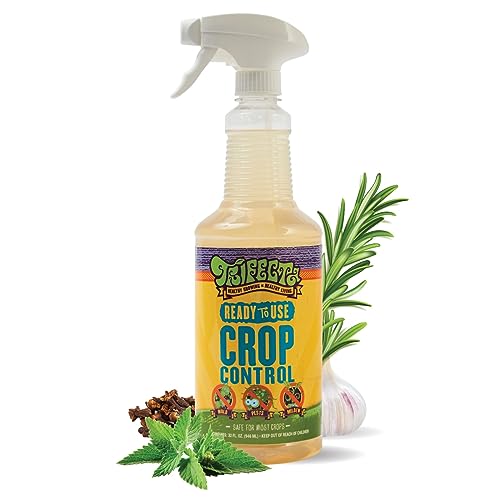
Trifecta Crop Control is a ready-to-use, natural pesticide and fungicide that targets powdery mildew and a range of pests. The formula emphasizes an all-natural, plant-based approach that is biodegradable and safe for use on edible crops, with a fast-drying profile that minimizes residue concerns. It doubles as an insect control solution, providing broad-spectrum protection while remaining suitable for organic gardening contexts.
Buying Guide: Key Purchase Considerations And Comparisons
When choosing an organic fungicide for powdery mildew, gardeners should weigh active ingredients, application methods, crop compatibility, and safety profiles. Here are essential considerations from multiple perspectives:
- Active ingredient and mode of action: Citric acid-based products offer surface-level protection and are generally gentle on plants, while copper-based fungicides include longer-lasting protection but may require careful use to avoid plant stress or copper buildup. Read label instructions for every crop type and growth stage.
- Organic certification and safety: OMRI-listed products align with organic gardening standards. FIFRA exemptions (such as 25(b)) can affect regulatory considerations; ensure the product fits your gardening goals and local guidelines.
- Application flexibility: Ready-to-use sprays are convenient for quick preventative treatments, while concentrates provide cost efficiency for larger gardens. Consider dilution ratios, spray coverage, and compatibility with indoor or outdoor use.
- Plant and yield compatibility: Some formulations are safe for edible crops and ornamentals alike, while others may have restrictions. Verify crop lists and pre-harvest intervals to avoid residue concerns on harvest crops.
- Safety for people, pets, and the environment: Citric acid-based products tend to have milder safety profiles; copper-based fungicides require careful handling to protect non-target organisms and avoid copper buildup in soil.
- Storage and shelf life: Concentrates require mixing; ensure you have proper storage containers and labeling to prevent accidental misuse. Consider whether your setup supports long-term storage of concentrates.
- Monitoring and resistance management: Rotate between products with different active ingredients to minimize pathogen resistance. Follow label timing recommendations and repeat treatments as needed based on disease pressure.
In summary, for powdery mildew control with an organic focus, homeowners may prefer citric-acid-based options for gentle, preventative protection, while garden owners dealing with persistent infections might explore copper-based products or a broader-spectrum approach like Trifecta Crop Control. Always follow label directions, test on a small plant area first, and consider integrated disease management practices—such as proper air circulation, irrigation practices, and sanitation—to maximize results.