Looking for a one-wheel garden plow that blends simplicity with effective soil cultivation? This guide compares top options designed for small plots, raised beds, or vegetable gardens. The right choice helps you reduce bending, save time, and keep soil structure healthy. The best picks below are suited for different heights, tasks, and terrains, making it easy to find a fit whether you’re a casual hobby gardener or a seasoned grower.
Summary table of selected products
| Product | Best For | Notable Feature | Wheel Type |
|---|---|---|---|
| EarthWay 6500 High Wheel Cultivator | Heavy-duty garden beds | All-steel construction; three implements | 24 inch steel wheel |
| Walensee 2-in-1 Wheel Hoe | Vegetable gardens and raised beds | Two interchangeable attachments; adjustable handle | Wheel-assisted |
| Hoss Single Wheel Hoe | Easy, lightweight cultivation | Low center of gravity; universal toolbar | Single wheel |
| Varomorus High Wheel Cultivator | Versatile garden tool setup | Modular with universal toolbar | Single wheel |
| Walensee 2-in-1 and Others | General weeding and soil loosening | Two attachments; adjustable length | Wheel-assisted |
EarthWay 6500 High Wheel Cultivator

Key features: Three Implements, All Steel Construction, Heavy-Duty, one-inch plated tubular steel frame. This model is best for buyers who need a robust, long-lasting tool for larger beds or frequent use. The three-implement option allows quick changes for cultivating, weeding, or inter-row work. Best for seasoned gardeners or those with tough soil where strength and versatility matter. A potential limitation is weight, which may be harder to maneuver for smaller or seated users.
Walensee 2-in-1 Wheel Hoe
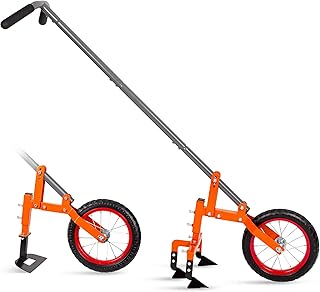
Best for: Vegetable gardens, raised beds, and flower beds where you want two tools in one. The 2-in-1 setup provides soil loosening and weed removal with a wheel-assisted push design to reduce effort. The adjustable handle supports different heights for comfortable operation. A caution: tool switching may require alignment checks to ensure attachments stay secure during use.
Hoss Single Wheel Hoe

Best for: Simple, shallow cultivation and weed control with a low center of gravity for stability. The universal toolbar supports a wide range of attachments, making this a flexible option for basic garden tasks. Limitation: lightweight design may be less durable under heavy use or tough soil conditions.
BILT HARD 10″ Flat Free Cart

Best for: Supporting tasks around the garden where extra hauling capacity matters, such as moving soil, tools, or harvests. This cart’s no-flat tires and rust-resistant construction help it endure outdoor use. Use it to transport materials between beds, not as the primary plow tool. Limitation: it is a cart, not a dedicated cultivator, so use it in conjunction with hand tools for soil preparation.
Varomorus High Wheel Cultivator

Best for: A modular garden tool with a universal toolbar, designed for compatibility with various attachments. This makes it a versatile choice for gardeners who want to expand capabilities over time. A caution: compatibility with specific attachments should be verified to ensure full functionality in your setup.
Buying Guide
What should I consider before choosing a one-wheel garden plow?
- Terrain and soil: Heavier, all-steel units are best for compacted soil, while lighter models suit softer soils and raised beds.
- Height and comfort: Look for adjustable handles or wheels that reduce bending and fatigue during long sessions.
- Attachment versatility: A modular toolbar or 2-in-1 tools provide flexibility for weeding, loosening, and seeding.
- Durability: All-steel constructions last longer in outdoor conditions but can be heavier to maneuver.
Should you choose wheel-assisted vs. pure hand tools?
- Wheel-assisted models reduce pushing effort and help maintain straighter rows, which is useful for longer beds and raised garden areas.
- Pure hand tools are lighter and can maneuver tight spaces more easily, ideal for small plots or precision work.
What size wheel matters for you?
- Smaller wheels improve maneuverability in tight spaces but may require more effort on hard soil.
- Large wheels roll over uneven terrain with less resistance and can handle deeper cultivation per pass.
How to maintain a one-wheel cultivator?
- Regularly clean metal parts to prevent rust and inspect for loose bolts after use.
- Lubricate moving joints as recommended by the manufacturer.
- Store in a dry place to extend the tool’s life.
What’s the right selection for different gardeners?
- Best for heavy-duty use and long-term durability: EarthWay 6500 High Wheel Cultivator.
- Better for smaller plots with two tools in one: Walensee 2-in-1 Wheel Hoe.
- Choose this if you want straightforward operation with a low center of gravity: Hoss Single Wheel Hoe.
- Opt for modular compatibility if you plan to add attachments: Varomorus High Wheel Cultivator.
FAQ
- What is a one-wheel garden plow used for? It loosens soil, controls weeds, and prepares seedbeds with minimal bending.
- Are wheel hoes suitable for all soil types? They work best on garden loams and loamy soils; very rocky soil may require lighter or different tools.
- Can attachments be swapped easily? Many models use universal toolbars or quick-change systems for easy swaps.
- Is a wheel hoe good for raised beds? Yes, especially models with adjustable handles and wheel-assisted designs.
- Do these tools replace a tiller? They are best for small plots or precision work and supplement larger tillers when needed.
- Which model is best for beginners? A lighter, wheel-assisted model with adjustable height is typically easiest to start with.