The best oats for deer food plots combine quick establishment, high palatability, and reliable growth across soil types. This guide highlights five top options suited for different planting schedules and wildlife goals. Whether you’re planting a fall plot for peak rut or a spring cover crop to protect soil, these seeds offer proven forage value for deer and other wildlife. Below, find a quick buyer’s table, followed by in-depth product sections and a practical Buying Guide to help you choose.
| Product | Best For | Key Benefit |
|---|---|---|
| Hale Habitat & Seed Forage Oat Seed | Beginner plots, small acreage | Certified seed with good germination |
| Evolved Harvest 5 Card Draw | All-season forage blends | High-protein mix with minerals |
| Whitetail Institute Oats Plus | Fall planting, high sugar | Very attractive oats, high sugar content |
| Tecomate Deer Food Plot Seed Forage Oats | All zones, fall emphasis | Well-rounded oat option for 1/2 acre plots |
| Rushmore Oats Seed For Planting | Spring forage, soil cover | Rapid establishment and weed suppression |
Hale Habitat & Seed Forage Oat Seed — 5 Lbs

Best for small to mid-sized plots where steady germination and simple management are priorities. Hale Habitat & Seed emphasizes certified seed for maximum germination and growth, with one 5 lb bag capable of seeding about 1/20 acre. This option suits hunters who want reliable performance without complex seed blends. It’s particularly suitable for new plots or where budget-friendly, straightforward oats are preferred.
Who it’s best for: beginner to intermediate plotters seeking predictable oat establishment with clear coverage. Why chosen: certified seed and value-driven packaging support consistent results. Cautions: results depend on standard soil preparation and watering; avoid overcrowding by over-planting.
Evolved Harvest 5 Card Draw Food Plot Seed
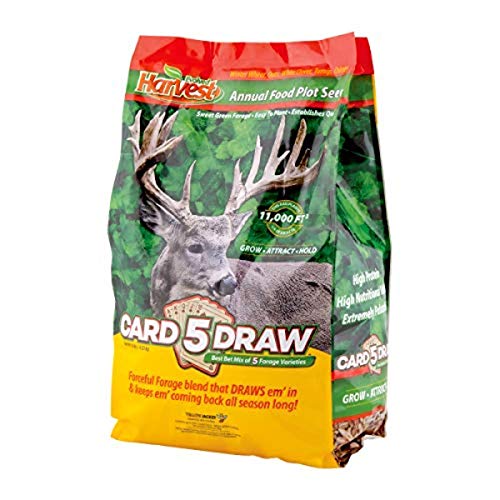
Ideally suited for outdoor spaces where multiple forage components are desired. The 5 Card Draw mix combines oats with perennial white clover, barkant turnip, chicory, and other elements to create a diverse, high-protein forage. It’s best for plots with varied soil conditions and for hunters who want a longer season of attractive deer forage. The blend is drought-tolerant and supports sustained nutrition across seasons.
Who it’s best for: mid-to-large plots seeking a resilient, mixed-forage option. Why chosen: high protein and mineral content appeal to deer and extend feeding windows. Cautions: as a blend, results depend on successful establishment of all components; poor soil may limit the clover and chicory outcomes.
Whitetail Institute Oats Plus — 22.5 Lbs

Best for fall planning when an oat-focused attraction is needed. Oats Plus is designed for early fall planting and is highly attractive to deer due to its high sugar content. The variety is prized for its palatability, and Whitetail Institute notes that its oats are particularly enticing to deer, sometimes treated as a premium option for high-traffic plots. This choice is ideal where you want quick, visible deer activity and strong early-season intake.
Who it’s best for: plotters targeting early-season deer traffic and high forage sweetness. Why chosen: premium oat product with proven deer appeal. Cautions: high sugar content means it may be more intensity-driven; monitor grazing pressure to avoid over-utilization.
Tecomate Deer Food Plot Seed Forage Oats (40lb)

Best for larger plots and all-zone planting with a fall emphasis. This Tecomate blend provides a practical seeding rate (40 lbs plants about 1/2 acre) and is designed for robust growth across different zones. The recommended planting depth is shallow, about 1/4 to 1 inch, which supports quick germination for food plots that need rapid establishment before peak deer activity. It’s a reliable choice for hunters with mid-sized to large plots seeking dependable oat cover.
Who it’s best for: larger plots where a straightforward oat base is desired. Why chosen: clear seeding rate and zone versatility. Cautions: fall-only planting suggests it’s less suited to spring-only strategies if you want year-round forage.
Rushmore Oats Seed For Planting — 50 Lb

Best for spring forage and soil protection, Rushmore Oats establish quickly in cool spring conditions, providing rapid early forage and dependable ground cover. This option is ideal for deer-focused plots that require swift growth to outcompete weeds and stabilize soil. It pairs well with other cover crops or brassicas in rotations and supports sustained grazing as the season progresses.
Who it’s best for: spring planners needing fast establishment and ground cover. Why chosen: rapid growth in cool conditions and weed suppression benefits. Cautions: spring-only strategies may miss late-season grazing if not integrated with additional forage options.
Buying Guide
- What habitat and planting window do you have? If you’re planting in fall, prioritize oats with rapid fall establishment like Oats Plus or 7 Card Stud blends. For spring, Rushmore and similar varieties offer quick germination.
- Plot size and seeding rate: larger plots require more seed and potentially higher-cost blends. Check bag coverage versus acreage to avoid under- or over-seeding.
- Palatability and seasonality: high-sugar oats attract deer quickly, but blends with clover or chicory offer longer season appeal. Consider whether you want a single oat base or a mixed-forage blend.
- Soil and climate compatibility: some seeds tolerate cooler springs better; others perform well across zones with consistent moisture. Use the buying table as a quick compatibility reference.
- Maintenance and rotation: oats can serve as a cover crop as well as forage. Pair with rye, clover, or brassicas to diversify nutrition and reduce erosion.
Frequently Asked Questions
- What is the best oats option for a new deer plot? Answer: A straightforward oat seed like Hale Habitat & Seed or Tecomate is often best to ensure reliable germination and straightforward management for beginners.
- Which blend attracts deer the fastest? Answer: High-sugar oats, such as Whitetail Institute Oats Plus, tend to attract deer quickly due to palatability and sweetness.
- Can oats be used as a cover crop? Answer: Yes. Oats establish quickly, protect soil, and can be used in rotation with clover or brassicas to balance forage and soil health.
- Should I plant oats in fall or spring? Answer: Fall planting is common for early-season forage and rut-time activity. Spring plantings work well for early forage and soil cover in cool conditions.
- Is a mixed-forage blend better than pure oats? Answer: Mixed blends offer broader season-long forage and minerals but may require more careful management to ensure all components establish well.
- What should I consider for plot size and seeding rate? Answer: Compare the seed bag coverage to your acres. Avoid under-seeding, which reduces forage density, or over-seeding, which can waste seed and hamper root development.