If you’re growing palm trees, you need nutrition that supports strong roots, lush fronds, and steady growth. This guide highlights five widely available palm fertilizers and explains who each product is best for. It’s ideal for indoor palms, outdoor yard specimens, and container-grown palms across all life stages.
Buyer-friendly summary table of selected products:
| Product | Size / Form | Best For |
|---|---|---|
| Miracle-Gro Shake ‘N Feed Palm Plant Food | 4.5 lbs, granular | General palm care for containers and in-ground plants |
| Farmer’s Secret Palm Tree Booster Fertilizer | 32 oz, liquid concentrate | All-life-stage palms, both outdoor and indoor |
| TPS NUTRIENTS Palm Tree Liquid Fertilizer | 8 oz, liquid | Indoor or outdoor palms; quick, easy mixing |
| Gardenera Premium Liquid Palm Tree Plant Fertilizer | 8 oz, liquid | Indoor palms needing organic nutrient balance |
| Perfect Palm Dual Action Palm Fertilizer | 7 lb, granular | Popular, US-made option; dual-action uptake |
Miracle-Gro Shake ‘N Feed Palm Plant Food
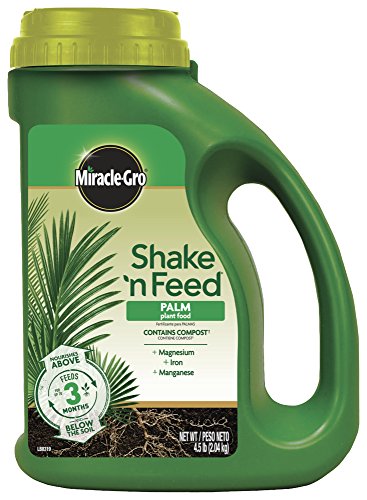
Type: Granular plant food formulated for palm trees, cycads, and tropical plants. It feeds for up to three months and includes magnesium, iron, and manganese to reduce yellowing of fronds. Best for containers or in-ground palms in homes or landscapes.
Who it’s best for: Home gardeners seeking a low-maintenance, slow-release option for mixed palm plantings or tropical setups. It’s particularly suitable for those who want longer intervals between feeding. A key consideration is the granule style, which may require careful application to avoid overfeeding in small pots.
Farmer’s Secret Palm Tree Booster Fertilizer (32 oz)

Type: Liquid fertilizer with a 4-15-12 macro-nutrient blend plus trace minerals. It is highly concentrated and designed for all palm life stages. It’s diluted with water and applied weekly at the drip line for best results.
Who it’s best for: Palm enthusiasts who prefer a concentrated liquid formula they can spray or mix weekly, suitable for both new plantings and established palms. Caution: follow dilution guidelines to prevent fertilizer burn on younger roots or sensitive varieties.
TPS NUTRIENTS Palm Tree Liquid Fertilizer (8 oz)
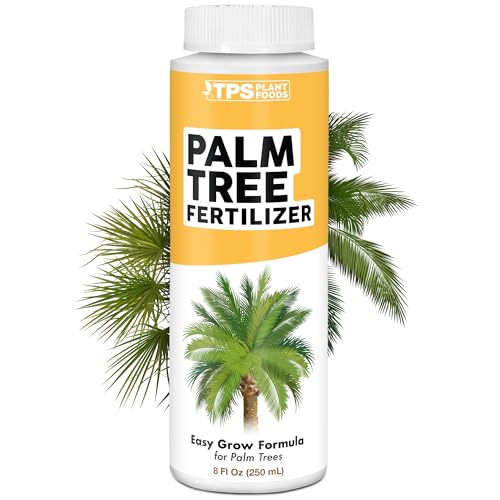
Type: Liquid fertilizer with a simple mixing ratio—two tablespoons per gallon of water. Suitable for both indoor and outdoor palms, designed to promote stronger roots and lush fronds.
Who it’s best for: Those who want a straightforward, easy-to-measure solution that can be integrated into regular watering. Better for frequent, moderate feeding rather than heavy quarterly boosts. Limitation: small bottle size may require more frequent purchases for larger setups.
Gardenera Premium Liquid Palm Tree Plant Fertilizer (8 oz)

Type: Organic-inspired liquid fertilizer with a balanced N-P-K ratio for indoor palms. Emphasizes pure organic nutrients to support healthy growth and vibrant fronds without synthetic additives.
Who it’s best for: Indoor palm owners who prioritize organic inputs and a gentler feeding approach. Best to follow mixing directions precisely to avoid under- or over-fertilizing potted palms. Limitation: organic blends may react differently with certain soil mixes; test in small batches first.
Perfect Palm Dual Action Palm Fertilizer (7 lb)

Type: Granular dual-action fertilizer designed to support magnesium and iron uptake across various soil types. It is a US-made option that provides high nutrient content for palms in different environments.
Who it’s best for: Gardeners seeking a popular, robust palm fertilizer with dual-action micronutrient uptake. Choose this if you want a well-known, heavy-nutrient formula and are able to apply in larger outdoor beds or containers. Caution: heavier granules may require careful spreading in small pots to avoid root contact with excess fertilizer.
Buying Guide: How To Choose Palm Tree Fertilizers
- Form and application: Granular options (like Miracle-Gro and Perfect Palm) release nutrients slowly and are low-maintenance. Liquid formulas (like Farmer’s Secret, TPS NUTRIENTS, and Gardenera) provide quicker uptake and easier mixing, ideal for frequent feedings or newly planted palms.
- Nutrient balance: Look for a balanced N-P-K ratio and mention of micronutrients such as magnesium, iron, zinc, and manganese. Palms often show yellowing if magnesium or iron is deficient, so formulas advertising these elements may help.
- Indoor vs. outdoor use: Indoor palms typically benefit from lighter, more organic blends and controlled feeding to avoid salt buildup. Outdoor palms might tolerate higher nutrient loads and broader soil types.
- Life stage: For new plantings, start with a lighter application and follow label directions closely. Mature palms may need higher weekly dosages or periodic feeding based on growth rates and stress conditions.
- Soil type and container size: In containers, ensure drainage and avoid over-fertilization. In-ground palms generally tolerate longer release formulas but still require periodic feeding aligned with seasonal growth.
- Organic vs synthetic: Organic blends can be gentler and improve soil biology but may require longer to show results. Synthetic or concentrated liquids deliver quicker results but require careful dosing to prevent root burn.
FAQ
- How often should I fertilize my palm? It depends on the product. Granular options typically feed for several weeks to months, while liquid formulas may require weekly or monthly applications per label guidance.
- Can I mix different palm fertilizers? It’s not recommended to mix products unless the manufacturer allows it. Use one product at a time to prevent nutrient imbalances or salt buildup.
- Which nutrient is most important for green fronds? Iron helps prevent yellowing of new fronds, while magnesium supports overall green coloration. Both are commonly included in palm-specific formulas.
- Should I fertilize palms in winter? Most palms reduce growth in colder months, so skip or greatly reduce feeding during dormancy unless the product label specifies year-round use.
- Is liquid fertilizer better for indoor palms? Liquid formulas offer quick nutrient uptake and precise control, which is often beneficial for potted indoor palms with limited soil volume.
- What should I do if my palm shows yellow fronds? Check for nutrient deficiencies (magnesium, iron), water quality, and root health. Adjust fertilizer type or schedule accordingly and ensure proper drainage.